
Vending machine service.
Built around uptime.
Keep your equipment ready for the next customer. Our vending machine service combines preventive maintenance, technical fault diagnosis and nationwide support across Ireland.
24/7 customer support line · Log any service case
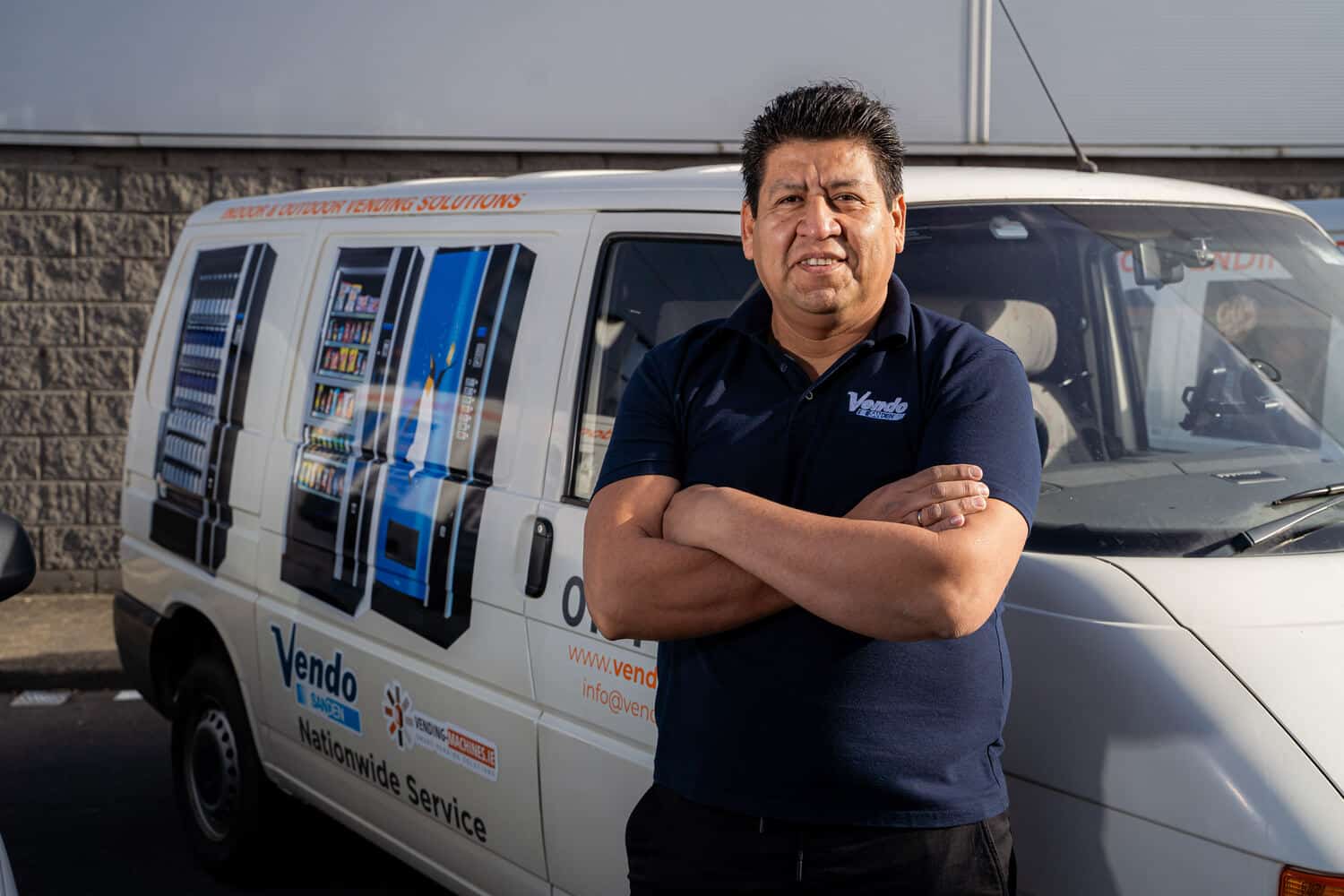
Our technical team, supporting vending equipment across Ireland.
When equipment stops,
we get to work.
Call our customer support line at any time to log a fault or service case. First, we review the symptoms and machine details. Then we agree the next action with you.
Our support line is open around the clock for case logging. Engineer visits are arranged according to the fault, location, access and service requirements.
Log the case
Share the machine model, site address, error message and a contact number.
Technical triage
We review the issue and identify whether guided checks or an engineer visit are needed.
Plan the repair
We arrange access and discuss any parts or additional work before proceeding.
Test & hand over
After the work, we check operation and explain the next steps for your equipment.
Choose the care your
equipment needs.
Compare monthly and annual service options. Each plan includes up to six corrective-maintenance call-outs per year, plus preventive maintenance. Parts are separate, so you can see the difference between service cover and repair materials.
G-Snack line
Snack and cold-drink vending equipment.
€120
per month + VAT
- Up to six corrective-maintenance call-outs per year.
- Two planned maintenance visits per year, every six months.
- Replacement parts charged separately.
G-Drink line
Dedicated cold-drink vending equipment.
€130
per month + VAT
- Up to six corrective-maintenance call-outs per year.
- Two planned maintenance visits per year, every six months.
- Replacement parts charged separately.
Countertop coffee
Compact coffee machines for workplaces and hospitality.
€140
per month + VAT
- Up to six corrective-maintenance call-outs per year.
- Three planned maintenance visits per year, every four months.
- Replacement parts charged separately.
Freestanding coffee
Floor-standing coffee vending equipment.
€150
per month + VAT
- Up to six corrective-maintenance call-outs per year.
- Three planned maintenance visits per year, every four months.
- Replacement parts charged separately.
Prefer pay-as-you-go support?
€150 + VAT engineer call-out, including the first 30 minutes on site. Further labour: €30 + VAT per 15 minutes. Abortive call charge: €90 + VAT. Parts are not included.
These standard rates apply Monday–Friday, 8am–8pm. Ask us about out-of-hours work. Confirm equipment eligibility, coverage and the service agreement before booking.
Your machine.
Your maintenance guide.
Select your machine line to explore the work, frequency and checks behind a professional vending machine service.
SandenVendo equipment careG-SnackTwo visits per year · Six-month service and annual deep service
Care for the whole machine.
Our G-Snack guide follows the supplied SandenVendo Snack Master HCD manual, revision 1. It covers the G-Snack Standard, Design Line and Touchscreen families listed in that manual. We check your model and fitted options before planning the work.
Preventive maintenance helps keep cooling, product delivery and customer-facing areas in good condition. The annual service goes further, with a deeper clean and a technical condition review.
At the six-month visit, we carry out the preventive inspection and service checks below. At the twelve-month visit, we repeat those checks and include the annual deep-service work. This is our service-plan schedule; the manual describes periodic preventive checks and a separate annual programme.
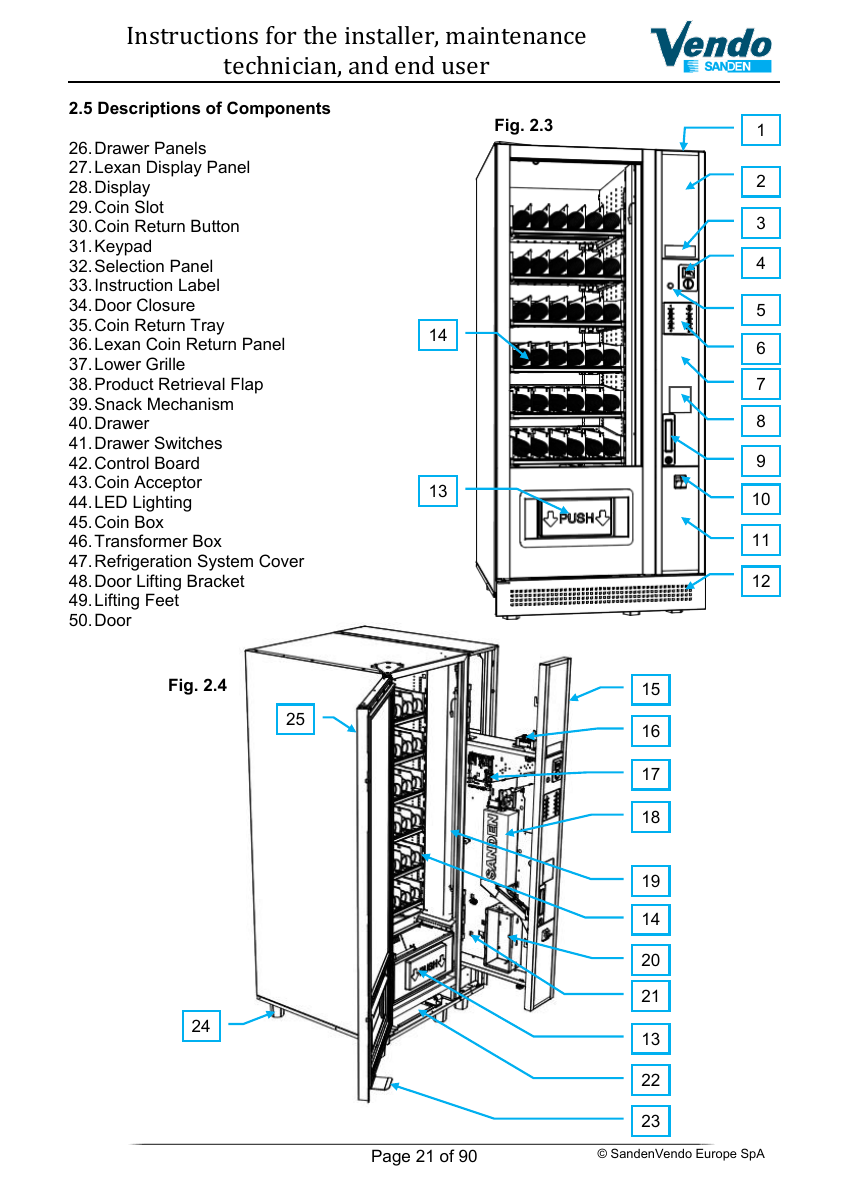
Every six months: your preventive service
We use the manual’s preventive checklist as the basis for the inspection. The work focuses on the following areas, with cleaning and further action matched to condition and the agreed service scope.
Cabinet & surroundings
Inspect the cabinet and surrounding area for rust, moisture and blocked airflow. Then check inside corners for water accumulation or humidity. This helps identify conditions that can affect reliability.
Seals & door condition
Inspect the door seals for deformation, wear and damage. Then clean them using suitable methods, without lubrication. Damaged seals need prompt replacement; parts are charged separately.
Cooling & ventilation
Check condenser cleanliness and normal operation of the compressor, condenser fan and evaporator fan. Next, inspect fan blades for foreign material and make sure airflow paths remain clear.
Condensate drainage
Check the evaporator outlet and drainage route. Condensed water should flow freely to the collection tank near the compressor, without blocked hoses or standing water.
Every sales selection
Test all sales selections for correct operation. Where a fault appears, assess the affected dispensing mechanism, motor or product-detection system before agreeing corrective work.
Power cord & condition
Inspect the cord and connector for damage or wear. If replacement is needed, use the same type specified for the machine. Technical access and electrical work stay with qualified personnel.
A closer look. A more thorough clean.
At the twelve-month visit, we add the manual’s annual programme to the six-month service checks. We plan access and downtime with you so the machine can be emptied, serviced and returned to use correctly.
- Prepare and isolate. Make the machine safe for cleaning and organise product removal. Electrical isolation is required before cleaning, and refrigeration components may remain hot after shutdown.
- Remove drawers and refrigeration assembly. Qualified personnel remove these components to reach the areas needed for the annual clean.
- Clean the components and cabinet interior. Thoroughly clean the drawer components, refrigeration assembly and internal cabinet. Protect electrical parts and use the approved cleaning methods.
- Assess machine integrity. Qualified personnel review the condition of the machine and its systems against the applicable requirements. Any defects or recommended repairs are explained to you.
- Reassemble and recover temperature. Refit the components, check connections and allow the machine to reach its correct operating temperature before products are reloaded.
- Check operation and explain follow-up work. Confirm dispensing and cooling operation, then discuss any parts or further corrective work identified.
Refrigerant is not an automatic annual top-up. The manual lists refrigerant work only if necessary. HCD equipment uses flammable R290, so any refrigeration intervention requires an appropriately qualified specialist and the correct model-specific procedure.
Your annual visit plan
The second visit combines the preventive checklist with the annual programme, rather than adding a third routine visit. Qualified personnel carry out technical access and dismantling.
Visit 1 · Month 6
Cabinet and surroundings, door seals, condenser and airflow, compressor and fans, drainage, all sales selections, and power-cord condition. Complete condition-led cleaning and identify any repairs.
Visit 2 · Month 12
Repeat the preventive checks. In addition, remove and clean the drawers and refrigeration assembly, inspect machine integrity, reassemble and check operation. Allow the correct temperature to recover before reloading products.
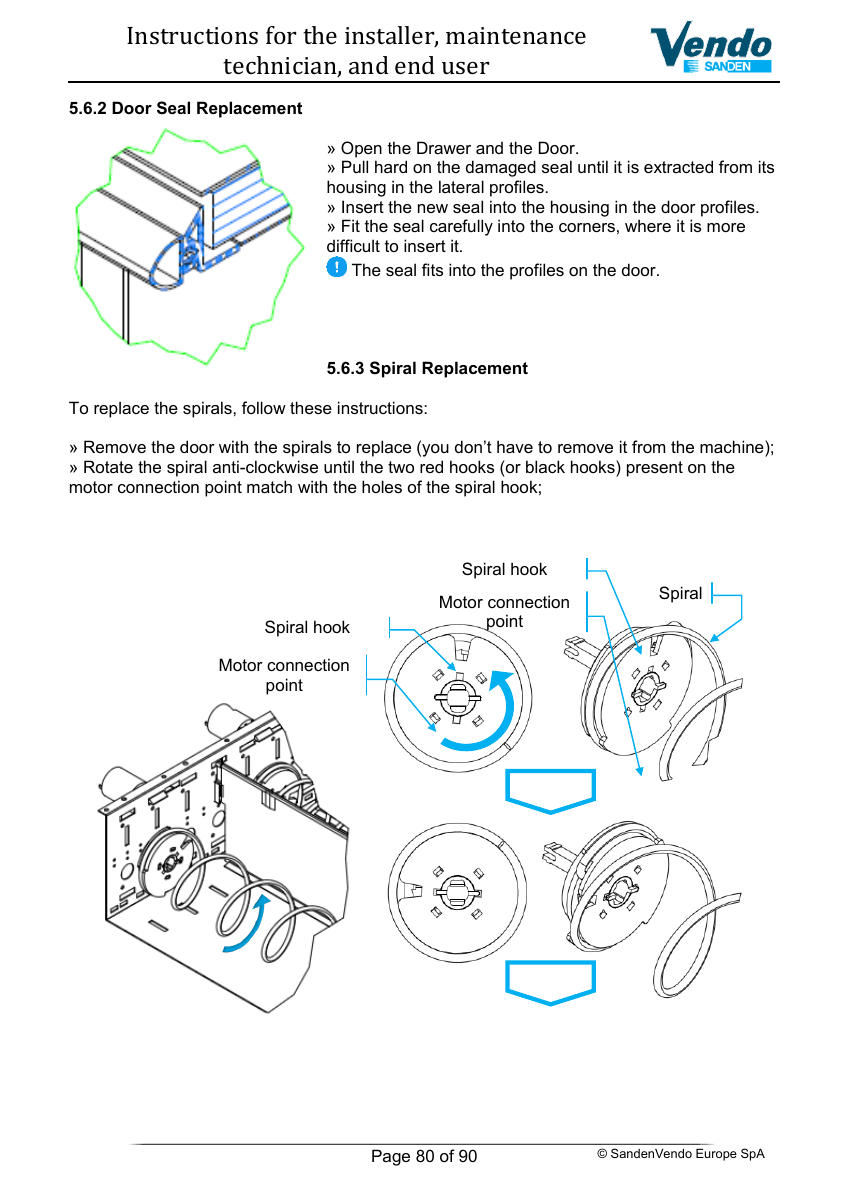
Clean carefully.
Maintain correctly.
- Use neutral detergents and suitable cloths. The manual limits compressed air to 2 bar.
- Do not use water jets, pressure washers, sharp scraping tools, abrasive cleaners, strong acids or alkalis, petrol, benzene or acetone.
- Keep water away from motor electrics. Use warm water only on LED bars and do not lubricate door seals.
- Isolate power before cleaning. Use appropriate protective equipment and follow cleaning-product safety information.
- Use original, model-compatible spare parts where the manual requires them.
These are customer-facing service expectations, not instructions to dismantle your machine. Contact our team for technical work.
Preventive care and corrective repairs
Planned maintenance follows the care schedule. Corrective maintenance addresses a fault, such as a failed selection, cooling issue or damaged component. Each service plan includes up to six corrective-maintenance call-outs per year. Replacement parts remain separate.
Your machine still needs routine operator care between visits. The service schedule does not extend any shorter manufacturer care intervals.
Technical basis: SandenVendo Europe, Snack Master HCD use and maintenance manual, revision 1 dated 7 July 2026. English sections 1.2, 2.2.1, 4.2.5 and 5.1–5.6; printed pages 5, 15, 56 and 76–81 (PDF pages 98, 108, 149 and 169–174). Illustrations © SandenVendo Europe SpA. Model and configuration must be checked against the machine’s own manual.
SandenVendo equipment careG-DrinkTwo visits per year · Six-month service and annual deep service
Cooling, delivery and condition.
Our G-Drink maintenance programme follows the supplied Drink Master HCD manual, revision 1. We inspect the complete machine, from its air paths and drainage to every drink selection.
Month 6 covers the preventive checklist below. Month 12 repeats it and adds the annual deep service. These are our service-plan intervals; the manual sets out periodic preventive checks and a separate annual programme.
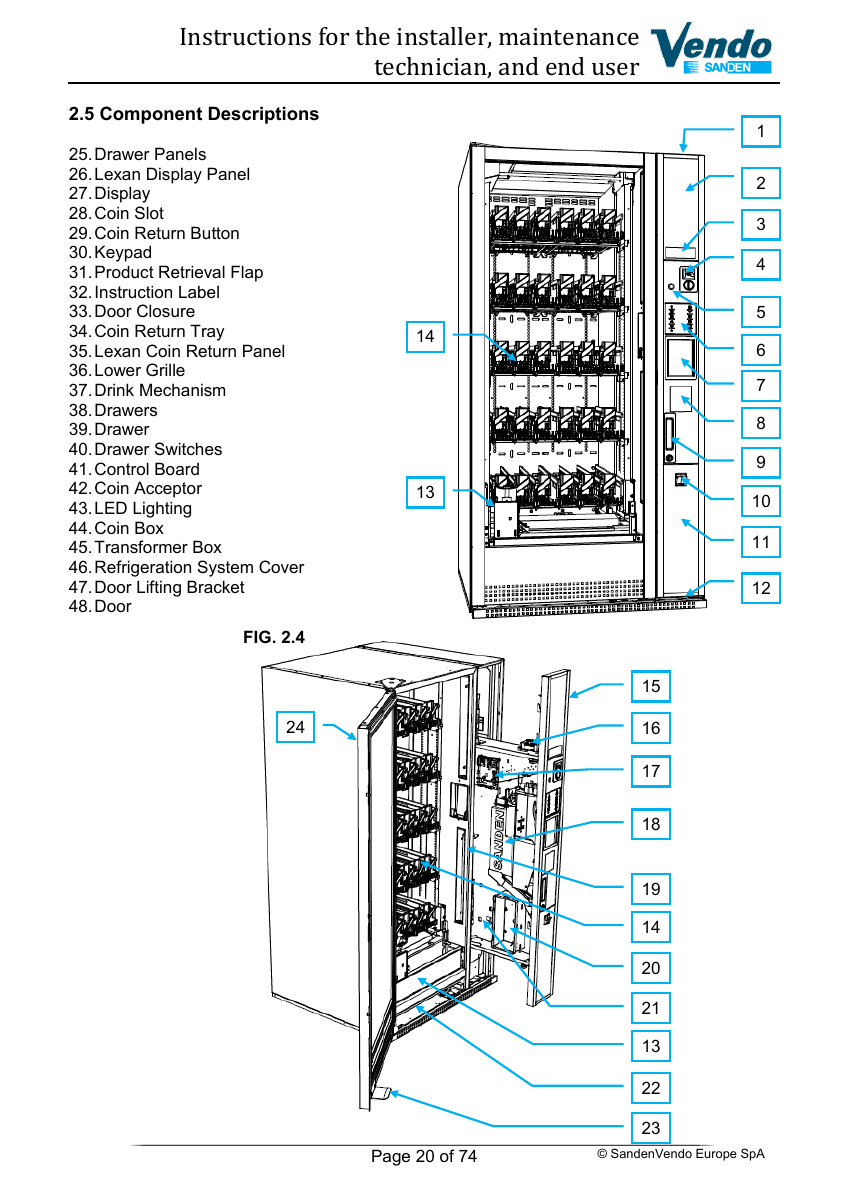
Every six months: your preventive service
The technician follows the manual’s checklist and carries out condition-led cleaning. Any defect that requires parts or additional repair is explained before further work.
Cabinet & airflow
Inspect the cabinet and surroundings for rust and blocked air outlets. Then check inside corners for water accumulation, corrosion or humidity, then identify the source of any abnormal moisture.
Door seals
Check the seals for wear, deformation and damage. Then clean with suitable methods and flag damaged seals for prompt replacement. Replacement seals are charged separately.
Condenser & cooling
Check condenser cleanliness and operation of the refrigeration system. Next, inspect the evaporator fan, compressor and condenser fan, making sure foreign material does not obstruct the fan blades.
Condensate drainage
Check the evaporator drain and the route to the condenser collection tank. Clear accessible obstructions as required so condensate can flow correctly. Investigate signs of standing water.
All drink selections
Test every sales selection and observe the fitted drink-delivery mechanism. Then check that products reach the collection area correctly. Investigate failed selections and report any corrective work needed.
Cord & connector
Inspect the power cord and connector for wear or damage. If replacement is needed, use the same specified type. Qualified personnel carry out technical access and electrical work.
The annual deep service.
- Prepare the machine. Arrange product removal and safe access, then isolate power before cleaning.
- Remove the drawers and refrigeration assembly. Qualified personnel dismantle these parts as required by the manual’s annual procedure.
- Deep-clean components and the interior. Clean the removed components and internal cabinet, protecting electrical parts and using approved methods.
- Review machine integrity. Check the condition of the machine and its systems against applicable requirements. Explain any defects and recommended repairs.
- Reassemble and restore temperature. Refit the components correctly and allow the machine to reach its set operating temperature before reloading drinks.
- Confirm performance. Repeat the operational checks, including cooling and sales selections, and explain any follow-up work.
Refrigerant work is condition-led. The manual calls for it only if necessary. It is not an automatic annual top-up. HCD refrigeration uses flammable R290 and requires an appropriately qualified specialist.
Your annual visit plan
Visit 1 · Month 6
Inspect cabinet, seals, airflow, condenser, compressor and fans. Check drainage, every sales selection, and cord condition. Complete condition-led cleaning and identify faults.
Visit 2 · Month 12
Repeat the six-month scope. Add drawer and refrigeration-assembly removal, deep cleaning, machine-integrity assessment and safe reassembly. Restore temperature before reloading.
Methods that protect the machine
We isolate power before cleaning and protect electrical components from moisture. Cleaning uses suitable neutral products; the manual limits compressed air to 2 bar. Water jets, pressure washing and aggressive solvents are unsuitable.
Clear scope. Practical follow-up.
We explain the condition found, work completed and any further action. Each plan includes up to six corrective-maintenance call-outs per year. However, replacement parts are charged separately.
Meanwhile, routine operator care continues between visits. Planned visits do not extend shorter manufacturer cleaning intervals. We check the exact model, fitted options and usage before servicing.
Technical basis: SandenVendo Europe, Drink Master HCD use and maintenance manual, revision 1, English sections 5.1–5.5, printed pages 58–61 (PDF pages 133–136); component illustration page 20 (PDF page 95). Illustrations © SandenVendo Europe SpA. Technical dismantling and internal work are for qualified personnel.
SandenVendo equipment careCountertop coffeeThree visits per year · Four-month service and annual hygiene programme
Care from water supply to cup.
This guide follows the supplied SandenVendo TSE/TSH manual, code 410679, revision 1. Espresso machines have a grinder and coffee brewer; those tasks apply only where these parts are fitted.
Our four-month programme brings together the manual’s component-care tasks and condition checks. It is our service interval, not a manufacturer-specified four-month cycle. In addition, at month 12, we also complete the manual’s annual programme.
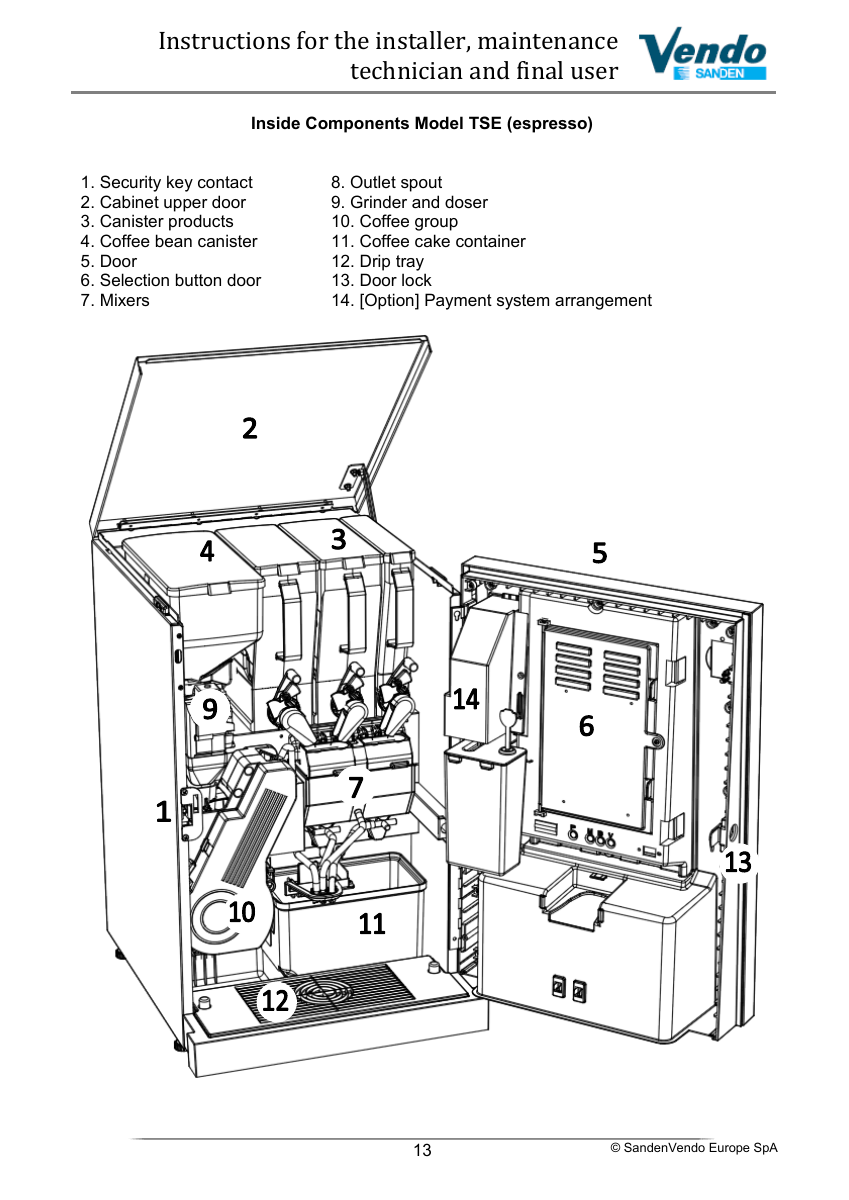
Every four months: your planned service
At each visit, we inspect the fitted equipment and service the following areas. Water hardness, drink volume and machine condition guide any additional work.
Mixers & ingredient path
Clean and sanitise suitable mixers, canister spouts and the drink-delivery area. Remove product residue from the aspiration channel and check that cleaned components fit correctly.
Brewer care, where fitted
Clean the espresso brewer and run the approved rinse programme. Next, inspect accessible brewer components and coffee-waste areas. Then check for residue and signs that seals or other parts need attention.
Waste & delivery area
Clean the drip tray, coffee-cake container where fitted, and accessible delivery surfaces. Then check the waste path and refit the components correctly before testing drinks.
Water treatment
Review water supply, fitted filter or softener, and usage. Then check for leaks and scale-related symptoms. Plan cartridge changes or resin regeneration according to the fitted system, water hardness and throughput.
Drink preparation
Run approved rinses after cleaning, then make test drinks. Then check mixing, delivery and consistency. On espresso equipment, review grinding quality and identify any adjustment needed.
Condition & next steps
Inspect serviced parts as they are refitted and check for leaks during operation. Discuss wear, hygiene findings and any corrective work. Arrange specialist boiler descaling when condition requires it.
Annual circuit hygiene and filter care.
The manual requires a thorough hygiene programme at least annually. Its schedule also lists the following annual tasks, with frequency affected by the number of selections.
- Change the water-filter cartridge. Replace the fitted cartridge in line with the annual schedule. The replacement cartridge is charged separately. Water quality or usage may require an earlier change.
- Sanitise the brewer’s internal filters. Complete the specified filter hygiene work on espresso equipment. This does not apply to an instant-only configuration without a brewer.
- Dismantle the food-contact circuit. Remove and fully dismantle the hydraulic parts and hoses that contact food products, as directed by the manual.
- Remove deposits and sanitise. Mechanically remove visible residue and films. Sanitise suitable components for at least 20 minutes, using a compatible product and its required concentration and instructions.
- Clean internal surfaces and reassemble. Sanitise the internal surfaces specified by the manual, rinse the components thoroughly, then refit them correctly. This completes the feed-circuit hygiene work.
- Check grinding and drink quality. Check grinding quality where a grinder is fitted. Run final rinses and test drinks, confirm operation and explain any further work needed.
Your annual visit plan
Visit 1 · Month 4
Service mixers, spouts, aspiration and delivery areas. Clean the brewer where fitted, check waste handling, review water treatment and make test drinks.
Visit 2 · Month 8
Repeat the four-month scope. Review usage and water conditions, inspect wear and arrange any treatment or specialist descaling that is due.
Visit 3 · Month 12
Repeat the planned scope and add the annual filter-cartridge change, brewer-filter sanitising where fitted, full food-contact circuit hygiene and grinding-quality check.
Water conditions can change the schedule
The manual links maintenance needs to water hardness, humidity, temperature and product use. Boiler descaling is specialist work and is planned when needed. A softener may need regeneration sooner than a planned visit; we review its schedule against the fitted device and water conditions.
Qualified personnel isolate the machine before dismantling. Cleaning uses compatible products, with thorough rinsing before return to use. Parts, cartridges and any separately agreed corrective work are identified clearly.
Clear scope. Practical follow-up.
We explain the condition found, work completed and any further action. Each plan includes up to six corrective-maintenance call-outs per year. However, replacement parts are charged separately.
Meanwhile, routine operator care continues between visits. Planned visits do not extend shorter manufacturer cleaning intervals. We check the exact model, fitted options and usage before servicing.
Technical basis: SandenVendo Europe, TSE/TSH use and maintenance manual, code 410679, revision 1 dated 7 September 2017. English sections 5.1–5.7, printed pages 35–40 (PDF pages 90–95); component illustration page 13 (PDF page 68). Illustrations © SandenVendo Europe SpA. Technical dismantling and internal work are for qualified personnel.
SandenVendo equipment careFreestanding coffeeThree visits per year · Four-month service and annual deep sanitising
Reliable drinks. Complete machine care.
This guide follows the supplied HS7-HN7 Touch manual, revision 2. The HS7 espresso model includes a grinder and coffee unit. The HN7 instant model does not require those espresso-specific tasks.
Our four-month service combines the manual’s periodic inspection and component-care procedures. The manual does not prescribe a four-month interval for each task. In addition, at month 12, we add its annual integrity check and deep-sanitising programme.
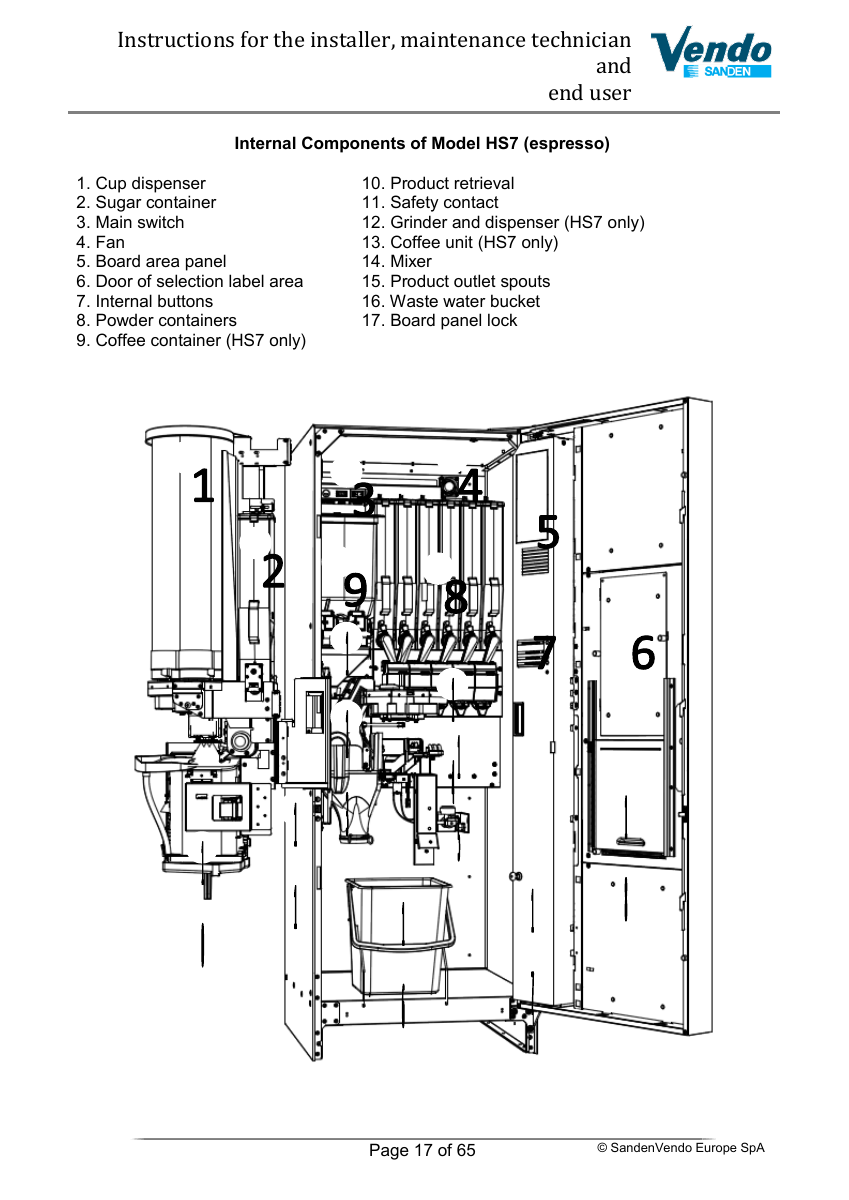
Every four months: your planned service
Each visit covers the machine’s condition, drink preparation and customer delivery systems. The technician matches the work to the model and fitted options.
Cabinet, airflow & power
Inspect the cabinet and surroundings for rust or blocked air outlets. Then check internal corners for water or humidity. Next, inspect the power cord and connector, and flag any damage requiring the specified replacement.
Mixers & product path
Clean and sanitise suitable mixers, nozzles, product spouts and suction components. Remove residue from the aspiration channel. Finally, refit parts correctly to support consistent drink preparation.
Cup delivery & sensors
Clean the cup-detection sensors and accessible delivery area. Then check the fitted cup dispenser and observe cup delivery during sales tests. Then clean payment-device sensors according to their own instructions.
Espresso unit, HS7 only
Clean and disinfect the coffee unit using the manual’s procedure. Then check the coffee-waste area and fitted brewer components. Also review espresso preparation and grinding quality; these tasks do not apply to HN7 instant equipment.
Waste & water condition
Clean the wastewater bucket and relevant waste areas, including the HS7 grounds collection. Then check for leakage and scale symptoms. Also review fitted water treatment according to its own instructions and actual usage.
All sales selections
Test every sales selection after cleaning and reassembly. Confirm mixing, cup detection and delivery. Then check the fitted payment function and explain any faults, wear or further work identified.
A deeper clean of the complete food-contact circuit.
- Assess machine integrity. Qualified personnel check the condition of the machine and its systems against applicable requirements, as set out in the annual programme.
- Remove and dismantle food-contact parts. Remove the hydraulic components and pipes that contact food products, then dismantle them fully under the manufacturer’s procedure.
- Remove residue mechanically. Brush away visible deposits and product films before sanitising. Inspect the removed parts for wear or damage.
- Sanitise thoroughly. Treat suitable components in a compatible sanitising solution for at least 20 minutes. Follow the product’s required dilution and instructions, and clean the specified internal surfaces.
- Rinse and reassemble. Thoroughly rinse treated components and refit them correctly. Protect electrical parts and check the system for leaks before returning it to service.
- Check grind and final operation. On HS7 espresso equipment, check grinding quality and adjust as directed by the manual. Test drink selections and delivery on both HS7 and HN7 models.
Water treatment and boiler descaling are reviewed according to the fitted system, water quality and condition. This manual does not specify the same blanket annual filter-cartridge change listed in the countertop manual.
Your annual visit plan
Visit 1 · Month 4
Complete cabinet and power checks, mixer and delivery-area care, cup-sensor checks, waste-area cleaning and all-selection tests. Service the coffee unit on HS7 models.
Visit 2 · Month 8
Repeat the four-month scope. Review water and usage conditions, check wear and identify any treatment, parts or specialist work needed.
Visit 3 · Month 12
Repeat the planned scope. Add the annual machine-integrity check, full food-contact circuit dismantling and sanitising, thorough rinsing and HS7 grind adjustment where needed.
Prepared safely. Returned ready for use.
Qualified personnel isolate power before technical dismantling. We use suitable cleaning products and avoid water jets, abrasive cleaners and aggressive solvents. Boiler descaling requires specialist attention and is arranged according to condition.
After reassembly, we test the serviced systems and explain the findings. Higher usage or demanding water conditions can require additional care between planned visits.
Clear scope. Practical follow-up.
We explain the condition found, work completed and any further action. Each plan includes up to six corrective-maintenance call-outs per year. However, replacement parts are charged separately.
Meanwhile, routine operator care continues between visits. Planned visits do not extend shorter manufacturer cleaning intervals. We check the exact model, fitted options and usage before servicing.
Technical basis: SandenVendo Europe, HS7-HN7 Touch use and maintenance manual, revision 2. English sections 5.1–5.6, printed pages 51–56 (PDF pages 116–121); component illustration page 17 (PDF page 82). Illustrations © SandenVendo Europe SpA. Technical dismantling and internal work are for qualified personnel.
Nationwide reach.
Practical coordination.
From city offices to hotels, factories and leisure venues, service planning starts with the realities of your site. We coordinate machine access, fault information and the work required to help reduce disruption.
For multiple locations, share your equipment list and addresses. We can discuss a service schedule across your estate and prioritise the machines that need attention.
The right information.
A more focused visit.
- Machine make, model and serial number.
- Site address, access times and local contact.
- Error messages and a description of the fault.
- Photos of the issue, where safe to obtain.
- Details of recent changes or previous repairs.
If equipment appears unsafe, stop using it and contact support. Internal electrical and refrigeration work is for qualified personnel.

Our company team celebrating Business All-Star recognition.
Technical care.
Company-wide pride.
Choose a vending partner with a long-term interest in your equipment. Our team brings together equipment knowledge, practical support and an understanding of the businesses that depend on vending every day.
Vending-Machines.ie has achieved five consecutive years of Business All-Star recognition, from 2021 to 2025. Our Prestige Awards recognition includes Vending Machine Supplier of the Year in the Republic of Ireland for 2025/26.
A reputation you
can read for yourself.
Explore our customer reviews and see why businesses choose Vending-Machines.ie. This live Google review gallery shares feedback on our company, team and customer experience.
Your service questions.
Can I log a fault outside normal working hours?
Yes. Our customer support line is available 24/7 to log any service case.
How is an engineer visit arranged?
Call our 24/7 customer support line to log the issue. Our team reviews the fault and agrees the next action with you. On-site visits depend on the machine, location, access and service arrangements.
How many corrective-maintenance call-outs are included?
Each service plan includes a maximum of six corrective-maintenance call-outs per year. This limit applies to both monthly and annual payment options. Preventive maintenance is also included in the plan.
Are replacement parts included?
No. The listed service plans include up to six corrective-maintenance call-outs per year, plus preventive maintenance. However, replacement parts are charged separately. We discuss the work required before proceeding.
Maintenance schedules and booking
How often should vending machines be serviced?
G-Snack and G-Drink plans include two planned visits per year, every six months. Countertop and freestanding coffee plans include three visits per year, every four months. Annual work is incorporated into the relevant visit; routine operator care continues between visits.
Can you support several sites?
Yes. Contact us with your machine list and site locations to discuss nationwide maintenance and service coordination.
Do I still need to clean the machine between visits?
Yes. Daily and routine operator cleaning remain essential, especially for coffee and food-contact areas. Follow the machine instructions and ask our team if you need guidance.
Can I book a one-off engineer visit?
Yes. Pay-as-you-go support is available at the listed standard rates. Contact us to confirm the machine details, location, access and any out-of-hours requirements.
How do I choose the right service plan?
Tell us whether you have a G-Snack, G-Drink, countertop coffee or freestanding coffee machine. Then share its model, age, usage and service history so we can confirm a suitable plan.
Keep your next
service simple.
Log a fault, arrange maintenance or discuss a service plan. Our team will help you identify the right next step.
24/7 customer support line.
Here to log your service case, day or night.
Plan your vending machine service
For planned maintenance, use our contact form and include your machine model, site location and preferred service option.
For a current fault, call the support line so your case can be logged.