How much caffeine is in bottled iced tea from a vending machine?
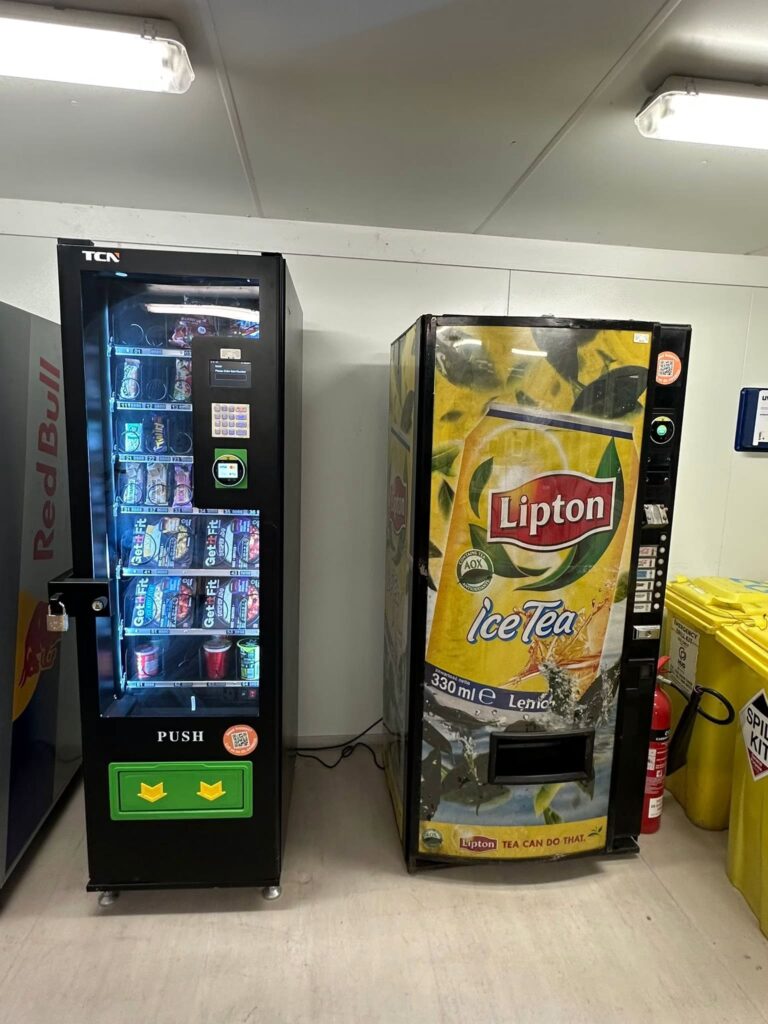
There is no single caffeine figure for bottled iced tea. You need the exact drink, the market it was made for and the amount in the bottle you plan to buy. A large picture of a lemon or a tea leaf on a vending machine cannot give you those details. Start with the label on the product in the selection.
Identify the bottled iced tea before comparing numbers
Write down the brand, flavour, variety and pack volume. A zero-sugar variety and an original variety can look similar through the glass. The front of a branded cabinet may also outlast several changes of stock. Use the actual bottle or the current product description beside its selection number. If you can only see the branding on the door, ask the operator which product is inside.
Manufacturers can publish different information for different markets. For example, Lipton’s US iced tea FAQ directs readers to individual product facts for caffeine content. A figure from that service describes the identified US product. For a bottle sold in Ireland, contact the supplier named on its label and ask for the caffeine figure for that exact formulation.
Put the figures on the same basis
A figure per serving is useful only when you know how large the serving is. A figure per 100 ml is easier to scale across pack sizes. Multiply the stated amount per 100 ml by the volume you intend to drink divided by 100. Keep the units with the result. Milligrams per bottle and milligrams per 100 ml are different answers.
Take an illustrative example. Suppose a supplier confirms 5 mg per 100 ml for a particular drink. A 330 ml pack would contain 16.5 mg and a 500 ml pack would contain 25 mg at that same concentration. These are arithmetic examples, not product claims. Substitute the value confirmed for the drink in your hand before using the comparison.
What if the caffeine amount is missing?
Read the ingredients and look for the manufacturer’s contact details. A reference to tea extract can help identify the recipe, but the ingredient name alone cannot supply a precise milligram figure. Equally, a nutrition table showing sugar per 100 ml answers a different question. If you need an exact answer, ask the supplier directly or choose a drink whose information meets your needs.
For a workplace enquiry, send the supplier a photograph of the front and back of the pack and its barcode. Ask whether the answer refers to one bottle, one serving or 100 ml. Keep the reply with the product record so the person answering at reception can explain both the value and its source.
Help staff compare drinks at the machine
Use specific product names on any drinks information sheet. A single entry for “iced tea” becomes misleading when a second flavour or a larger bottle arrives. Record the date you checked the details and update the entry at the next stock change. Avoid using the cabinet artwork as evidence of the current range.
When comparing iced tea with another drink, put both on the same basis first. Then compare the actual packs available for purchase. Two drinks can have the same amount per 100 ml and still deliver different totals because one comes in a larger bottle. Showing both figures lets the customer choose the comparison that matters to them.
If you are planning a workplace drinks range, contact Vending-Machines.ie with the pack sizes and product information your staff need.
Related guide: comparing caffeine in sugar-free energy drinks.