
Caffeine in Vending Drinks: Read the Can, Not Just the Brand
Two cans with similar branding can contain different amounts of caffeine. Before choosing a drink from a vending machine, check the exact product and pack size. For operators, a useful drinks range starts with clear information rather than broad promises about energy or concentration.
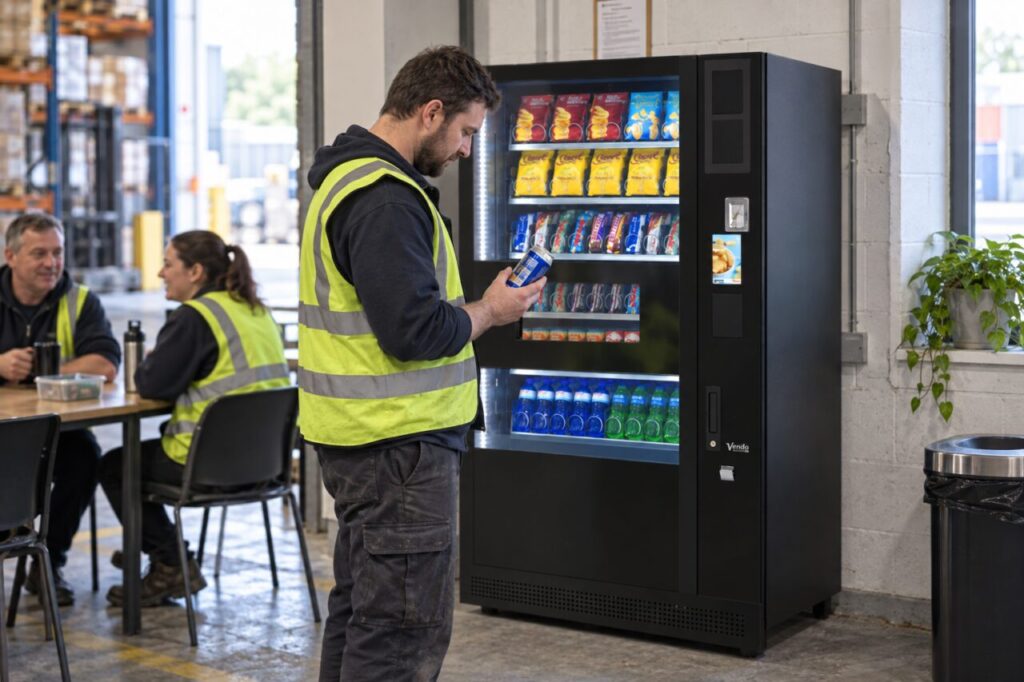
Find the information on the current can
Read the caffeine statement, ingredients and any accompanying warning on the actual product. Do not infer the caffeine content from a sugar-free claim or the colour of the packaging. If the information is not visible before purchase, ask the operator for the current product details.
The FSAI’s food-labelling material explains the specific caffeine statements required for relevant beverages and foods. Follow the warning on the product; this article does not set an individual consumption limit.
Compare the whole container
Check whether the amount is stated per 100 ml or per serving, then compare it with the container size. A larger can may contain more caffeine even where the per-100-ml figure is identical.
For illustration, a drink labelled 30 mg per 100 ml would contain 75 mg in a 250 ml can. This is a hypothetical calculation, not a claim about any stocked drink. Use the figures and units on the pack in front of you.
Keep vending labels specific
Operators should identify the exact flavour and size in their stock records. A replacement version can need a fresh information check even if the brand name remains unchanged. Do not leave an old description beside a new can.
Avoid adding unsupported claims about better work performance, fitness or health. Customers need factual product information and readable prices to make their own selection.
Plan a range that offers a choice
Ask the site which product categories people want and consider clearly identified alternatives alongside caffeinated drinks. Keep feedback about preferences separate from personal health information.
Review recurring questions with the refill team. If customers cannot distinguish two similar products through the glass, improve the selection description or placement without obscuring the original label.
For help planning a site, contact our team or explore our fully managed vending service. Related reading: understanding sugar-related drink claims.