
Can One Vending Machine Serve Two Different Staff Groups?
One vending machine may suit two staff groups when both can reach it, the product range serves their needs and stock remains available between refills. The decision becomes harder when the groups use different entrances, take breaks together or expect very different refreshments.
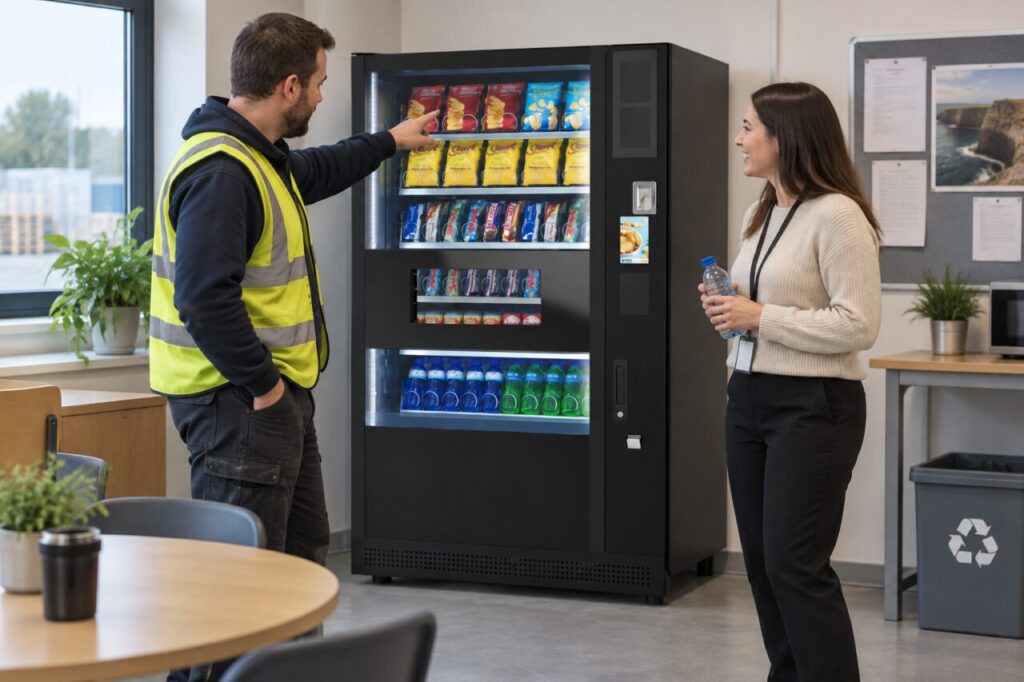
Instead of dividing the cabinet equally from the outset, assess the shared service as a whole. The question is whether each group can make a convenient purchase at the time it needs one, without creating avoidable queues or leaving popular selections empty.
Check access before combining demand
Walk the route from each team’s working area to the proposed location. Include access doors, reception procedures and the times when those routes are available. A machine can be physically close but inconvenient if staff need to leave a secure area or take a long detour.
Consider who else uses the shared space. Contractors, visitors and cleaning teams may add demand that is missing from the employee headcount. Equally, some staff may never use the machine because their breaks take place elsewhere.
Ask representatives from both groups to explain a normal day. Their answers should shape the site assessment and the choice of vending equipment.
Map where the busy periods overlap
Write a simple timetable showing each group’s usual break windows. Separate simultaneous demand from demand spread across a shift. Two groups with staggered breaks may use one machine comfortably, while a smaller combined workforce with one short break may need a different arrangement.
Use an observed trial where possible. Note how many people approach, how long they spend choosing and whether others abandon the queue. These observations are more useful than assuming that every employee will buy once per day.
Do not treat a fast individual transaction as proof that the whole break will run smoothly. Customers also read labels, discuss choices and collect their items. Allow for that real behaviour.
Build a shared range with purposeful differences
Start with categories both groups want, then identify a few differences worth testing. One team may request filling snacks while another prefers lighter options. Ask about acceptable prices and pack sizes as well as favourite brands.
Keep the selection understandable. Several similar products can occupy space without giving customers a meaningful additional choice. Conversely, removing every familiar option to make room for a specialist request may disappoint regular users.
A combination machine is one category to discuss when both snacks and drinks are required. The supplier must confirm the actual product layout, capacity and suitability of the proposed model.
Allocate space using evidence, not equal shares
Equal numbers of selections for each team do not necessarily produce a fair service. A high-demand drink may need more capacity than a slow-selling snack, even if both were requested by the same number of people.
Agree an initial range and a review point. Record requests alongside purchases and stock-outs. A selection that sells little because it is frequently unavailable should not automatically be removed for lack of demand.
Ask whether refilling can be planned around the combined demand. More visits, additional capacity or a different location may be preferable to repeatedly changing products when the real problem is access or stock availability.
Define what would justify a second machine
Before installation, agree the evidence that would trigger another discussion: repeated queues, missed breaks, persistent stock shortages or one group’s inability to access the service. These are review signals, not automatic promises of more equipment.
Give both teams one route for feedback and appoint someone to consolidate it. This prevents the product range changing in response to whichever group last spoke to the supplier.
For a shared workplace, discuss the two groups together when requesting an assessment. A useful proposal should explain how access, product choice and replenishment will work for both, and what will be reviewed after launch.