
Choosing a Coffee Vending Machine: Test a Real Morning Queue
A coffee vending demonstration should show more than one attractive drink. For a workplace, the important question is whether the proposed setup can serve the actual morning routine: different choices, people arriving together and a limited time before work resumes.
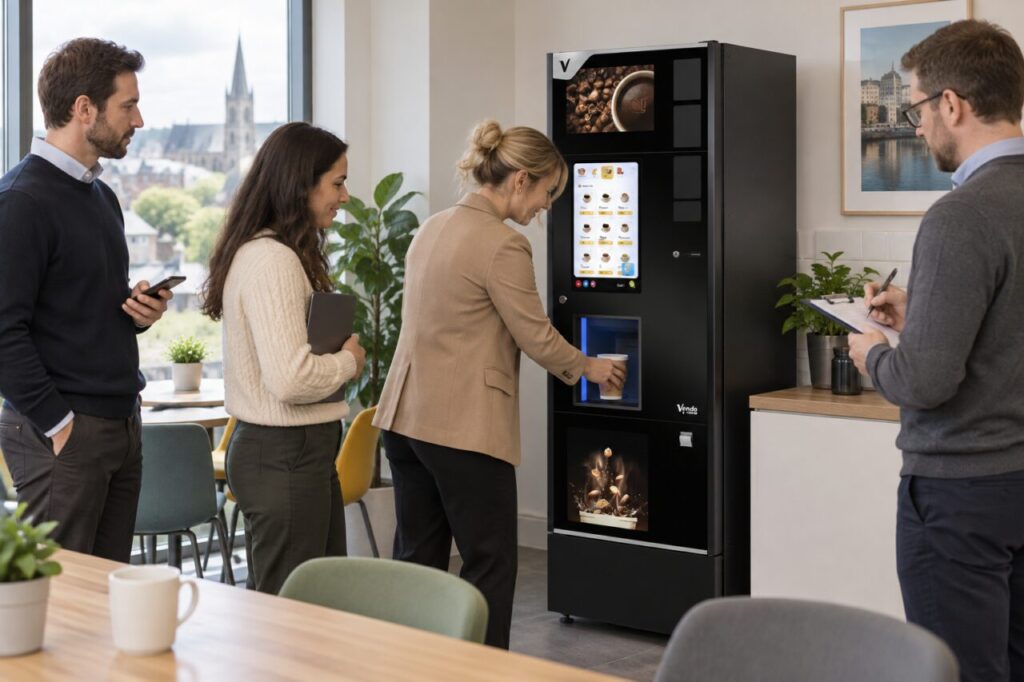
Ask for a demonstration built around your likely use. It can help reveal practical questions about the menu, payment sequence, cup collection and replenishment before the equipment is installed.
Bring a realistic drink order
Ask a small group of prospective users what they usually choose. Turn those answers into a short test sequence, including the drinks you expect to be common and any options that matter to your team.
Avoid testing only the quickest or simplest selection. A menu with several preparation methods should be demonstrated using the proposed configuration. Confirm which ingredients, cup sizes and optional features are actually included in the quotation.
Explore the coffee vending options available with your supplier, then compare the shortlisted setup against that real order. A wide menu is useful only when the drinks people want are practical to provide.
Measure the whole customer journey
Observe the time from approaching the machine to leaving with the drink. Include reading the menu, making a selection, paying where required and collecting the cup.
A supplier’s stated preparation time may describe a particular drink under particular conditions. It does not automatically represent how quickly a group of unfamiliar users will pass through the area.
Run the same short sequence more than once and record what slowed people down. Someone may be uncertain about cup placement, another may need to read ingredient information, and another may be waiting for space to move away safely.
Look at where people stand and collect
Check how a queue would fit around the proposed machine position. Customers should be able to approach, make their selection and leave without blocking those waiting behind them.
Consider where people put down a bag or collect any permitted extras. A cramped collection area can remain awkward even when the machine prepares drinks quickly.
The demonstration should also include users with different access needs where practical. Ask them to explain difficulties rather than assuming that a readable screen or reachable button proves the entire journey is convenient.
Include the routine work behind the drinks
Ask the supplier to show the replenishment and cleaning tasks relevant to the exact model. Establish which tasks belong to site staff and which are included in a service arrangement.
Discuss what happens during a busy period if cups or ingredients need attention. The answer should cover who notices, who acts and whether the machine is temporarily unavailable.
If the proposal involves alternative cup sizes or supplies, check compatibility before ordering them. Our coffee vending cup guide explains why replacement cups deserve their own check rather than being treated as interchangeable.
Agree what a successful demonstration means
Set practical acceptance points before comparing suppliers. These might include a clear menu, acceptable drinks, a workable queue and an understood daily-care routine. Record comments individually before discussing the group’s view.
Avoid turning one good demonstration into an unsupported promise about daily output. The workplace environment, maintenance routine and actual demand will still affect the experience. Ask what follow-up review can be arranged after installation.
Keep the test notes with the proposal so that the chosen configuration is not confused with another demonstration model. When you discuss coffee vending for your site, share the expected drink mix and break pattern. This helps make the decision about the service people will use each morning, rather than the appearance of a machine on a quiet showroom visit.