
Coffee Vending Water Hardness: What Should Your Site Check?
Coffee vending water hardness is worth checking before installation and when the water supply changes. Coffee ingredients and recipes matter, but the water entering the machine also needs to suit the equipment. Start with the actual supply at your site and ask the service provider how it should be tested and treated.
Why does water hardness matter?
BRITA’s guide to water types and coffee explains that water composition affects drinks and equipment. In particular, high carbonate hardness can contribute to limescale deposits. Other characteristics can matter too, so “hard” or “soft” is not a complete specification for a coffee installation.
A neighbour’s filter choice is not enough to establish what your machine needs. Your building may use a different supply arrangement or existing treatment. Record where the machine receives its water and tell the installer about any treatment already in place.
Ask for a site-specific check
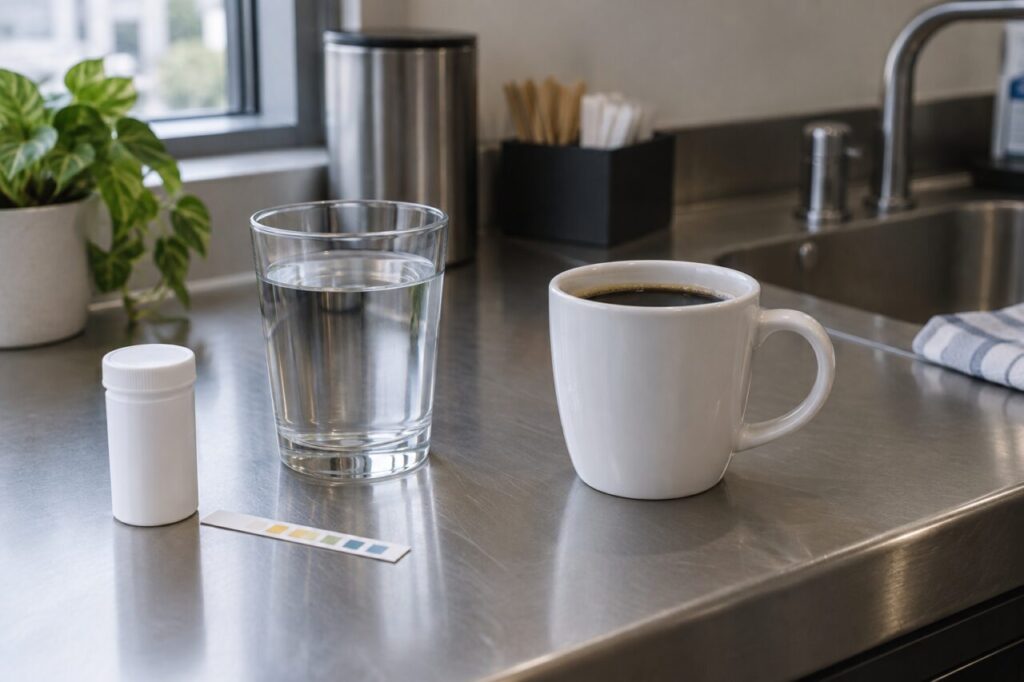
Arrange for the provider to assess water from the intended connection. Ask which measurements are needed for your machine and keep the results with its service information. If a test kit is used, follow that kit’s sampling and reading instructions; a photograph of an unidentified strip is not a dependable specification.
- Identify the exact supply point and any existing filter.
- Record the test date, method, results and units.
- Check the machine manufacturer’s water requirements.
- Get the recommended treatment and settings documented.
There is no single hardness target to apply to every vending coffee machine. Ask the installer to explain how the recommendation matches both the measured supply and the equipment.
Make filter maintenance somebody’s responsibility
Keep the filter type, installation date and replacement guidance in the site record. Agree who monitors usage and who arranges replacement. A filter fitted at installation still needs the maintenance specified by its manufacturer and service provider.
When responsibilities are split between the landlord, catering team and vending operator, name one contact to coordinate them. Include this in your vending service agreement discussion, particularly if another contractor manages the building’s water treatment.
Investigate a change without guessing
If coffee taste changes, record when it started, which drinks are affected and whether there was recent plumbing, filter or ingredient work. That gives the technician a useful starting point. Water is one possible factor; cleaning, ingredients and recipe settings may also need checking.
Leave treatment adjustments and descaling to the agreed procedure for the machine. For a new site or a recurring drinks-quality issue, contact our team with the machine details and your water-treatment record.