
Before Buying Connected Vending: Bring Your IT Team into the Discussion
Connected vending can involve several parties: the equipment supplier, payment provider, site operator and the organisation responsible for the building’s network. Bringing the IT team into the discussion before an order is placed helps identify requirements while choices are still open. The aim is to confirm an approved connection for the proposed arrangement, not to assume that every machine uses workplace Wi-Fi or needs the same access.
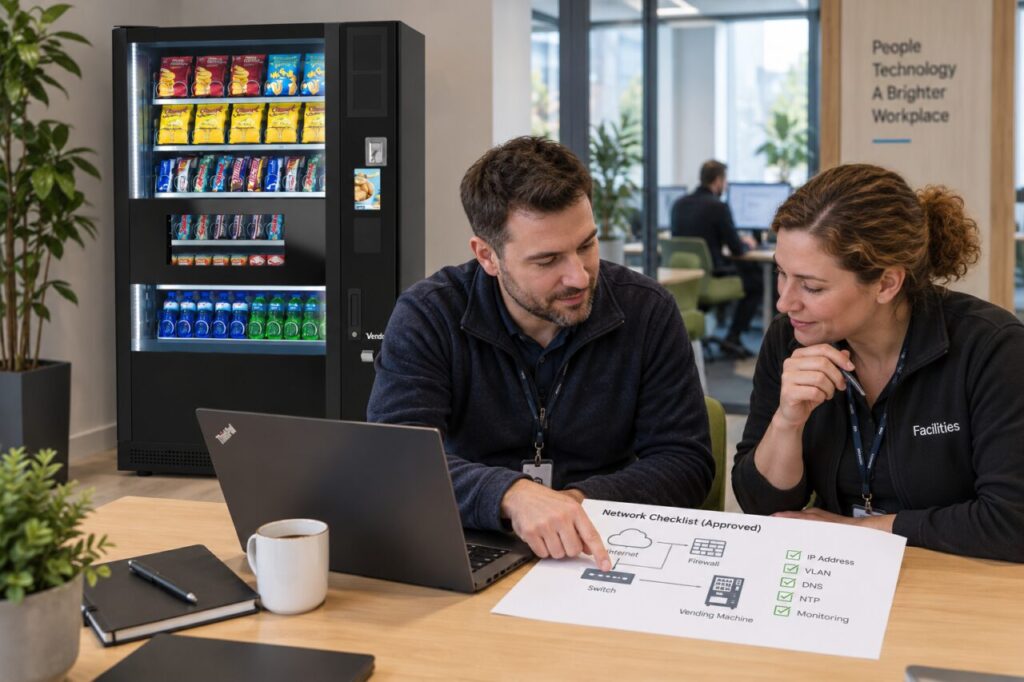
Ask what actually needs a connection
Request a plain-language description of the proposed setup. Which functions depend on connectivity, and which provider supplies it? Payment processing, remote reporting and other services may have different arrangements. Ask the supplier to explain the specific proposal rather than combining all connected features into one general requirement. Do not infer the connection type from the presence of a screen or payment terminal.
Give the IT contact the model, configuration and intended position. If the provider supplies its own mobile connection, ask what assessment is required at that location. If a site network is proposed, let the IT team obtain the relevant requirements through its approved process. Do not put passwords or sensitive network details into a general buying brief or public customer notice.
Identify the approval path before delivery
Find out who can authorise the connection and what lead time they need. A facilities contact may be able to arrange physical access without having authority over network services. Treat these as separate responsibilities. Record the outstanding approval and its owner so a delivery date is not mistaken for confirmation that every supporting service is ready.
Ask whether proposed changes to the machine’s position would require another assessment. Signal conditions and building arrangements should be checked at the actual site rather than assumed from a demonstration elsewhere. If there is an alternative connection option, request its requirements and costs in writing. Avoid informal workarounds such as sharing a staff hotspot simply to get through a handover.
Make the acceptance test understandable
Agree which customer and operator functions need to be demonstrated after installation. The relevant provider should define the test and any safe procedure for a failed connection. The site team should be able to describe the observed result without diagnosing equipment they have not been trained to service. Record when and where the check occurred and which functions were included.
Also ask what happens during an interruption. Do not assume that offline payments, delayed reporting or automatic reconnection are supported by the proposed configuration. Obtain the provider’s explanation of expected behaviour and the customer’s visible experience. Where a service is unavailable, the site needs a clear reporting route and accurate notice, not an unsupported promise that every purchase will still work.
Leave a usable contact map
Keep a concise record of which organisation handles equipment faults, connectivity questions and payment issues. Include ordinary support contact details, the machine identifier and the information each team requests. Store credentials through the organisation’s approved system rather than alongside a public machine label. Review the contact record if the IT provider or site operator changes.
When comparing vending equipment and service options, treat connectivity as a shared implementation requirement. A clear agreement before purchase helps the supplier and workplace coordinate the final setup. It also gives staff a sensible first action when reporting a problem, without asking them to change network settings, bypass controls or make assumptions about the cause.
Send an enquiry describing your location and who manages the site’s connection requirements.
Related guidance: Buying a Vending Machine: Who Owns the Payment Account?.