
Contractors Using Office Vending: Give Visitors a Clear Service Introduction
Visiting contractors may spend a full day at your workplace without knowing how its vending service works. They may not know where it is, whether they can use it or whom to contact about a problem. A short introduction can answer those questions without assuming that every workplace benefit applies to every visitor.
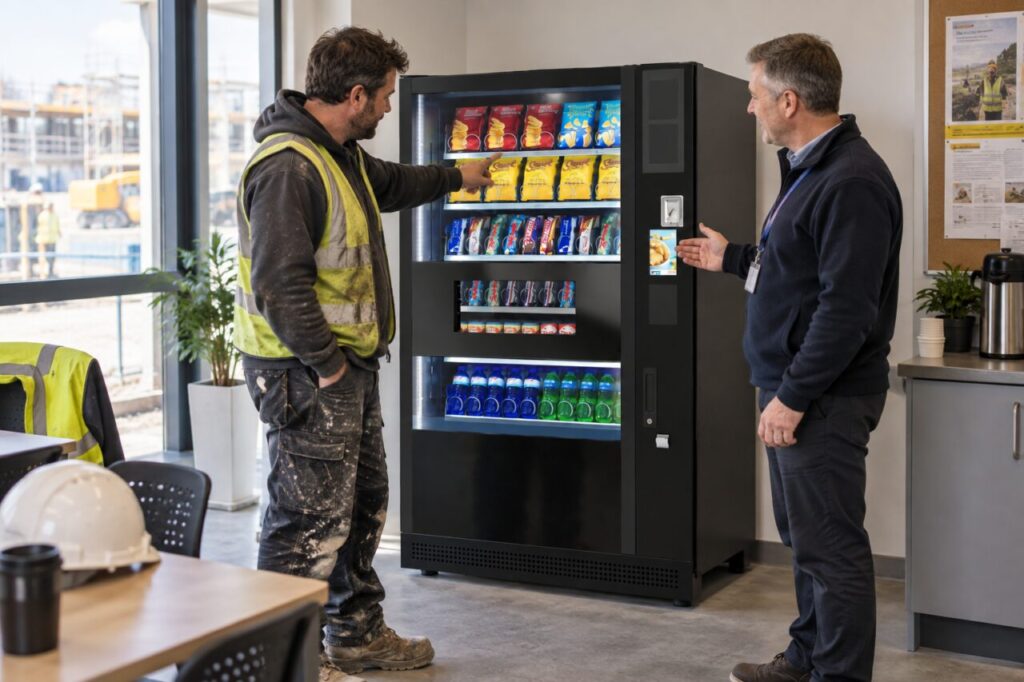
Start with the actual site policy. The purpose is to explain the available service, not to grant access or subsidies that have not been agreed. Keep the message practical so a host or reception colleague can give the same clear information to each new group.
Confirm who can use the area
Check whether the vending location sits within the contractor’s authorised access area and when it is available. Do not direct visitors through a restricted door simply because it is the shortest route. Use the building’s normal visitor arrangements and identify a host where an escort is required.
Explain any opening-hour limitation before a long or late shift begins. A machine may be operating while the route to it is closed. The contractor needs to know the service they can actually reach during their visit, rather than the facilities available to permanent staff at other times.
Explain payment and eligibility clearly
Describe the payment methods supported by the actual installation. If staff receive a benefit or allowance, explain whether it applies to contractors according to the approved policy. Avoid vague language such as everything is free that could be misunderstood as a promise about products or eligibility.
Where the arrangement is uncertain, ask the responsible workplace contact to clarify it before communicating the benefit. Our staff allowance planning guide shows why the eligible group and product scope need to be defined separately from the machine’s technical capabilities.
Show the normal purchase journey
Point out how to identify a product, check its price and follow the displayed instructions. If a short demonstration is appropriate, use the supplier’s normal customer process. Do not share operator codes, keys or service access as part of a visitor introduction.
Make the collection point easy to identify. A visitor may be familiar with a different type of machine and look in the wrong place after paying. A simple explanation of the installed equipment is more helpful than assuming that all vending interfaces work in the same way.
Keep product information accessible
Explain where customers can find the information provided for the products they are considering and how to ask the operator a question. Do not make dietary assurances from the colour of a wrapper or a general description of the machine’s range. Refer the customer to the actual product information and responsible provider.
If contractors will be on site for an extended period, invite practical feedback about unavailable products or service times through the normal channel. Keep a product request separate from a promise to stock it. The operator still needs to assess suitability and the agreed range.
Give one clear reporting route
Tell visitors how to identify the machine and where to report a purchase problem. Include the site location if the operator serves several buildings. Reception should know whether it simply directs the customer or records the initial report under the service arrangement.
Our office vending page is a starting point for reviewing the wider workplace service. Include regular contractors and visitors in the discussion when they are expected users, so access, payment and customer guidance reflect the people who actually use the refreshment area.
For a workplace service enquiry, contact our team.