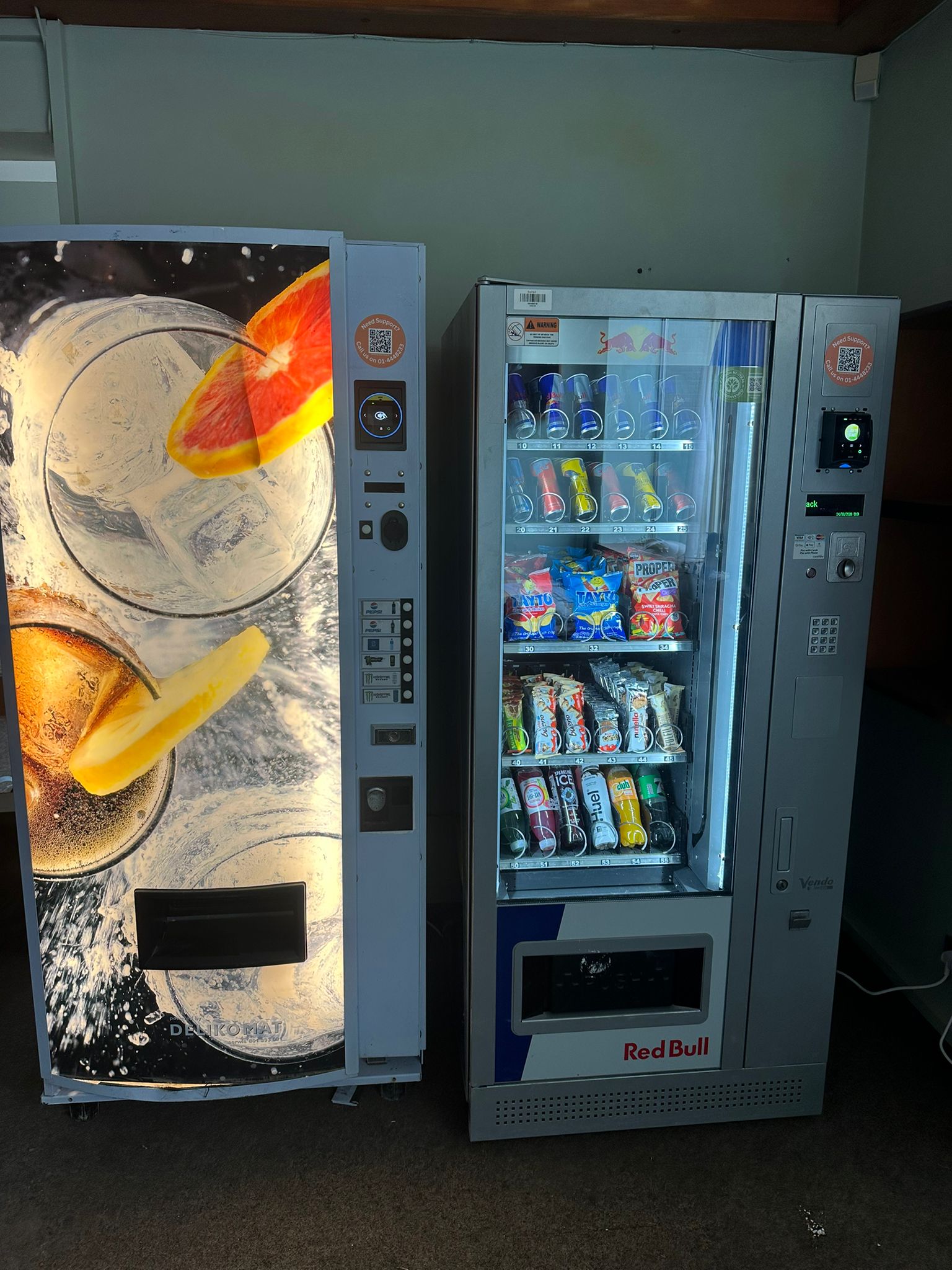
How much does it cost to stock a vending machine for the first time?
The cost to stock a vending machine starts with the products you can actually load and the cases the supplier will sell you. Work out both figures before placing the order. The value of stock in the cabinet may be lower than the cash you need for the first delivery, because a partly used case still has to be purchased in full.
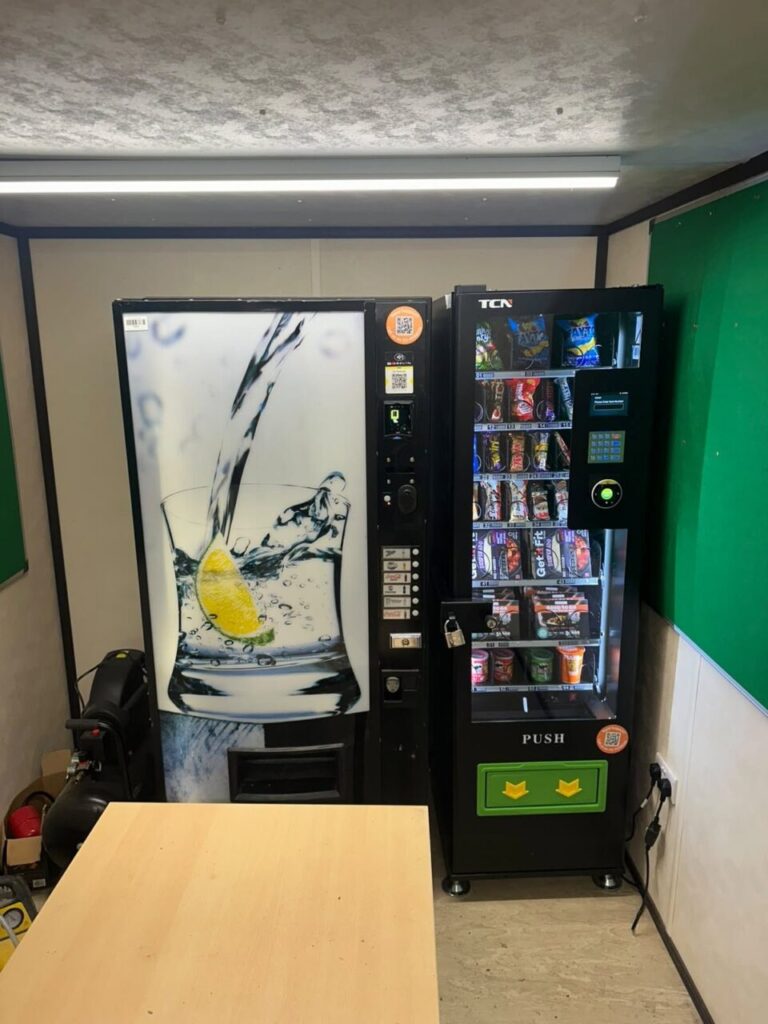
Count saleable spaces by product
Ask the operator for a shelf plan using the actual packs. Write down the units each row holds, how many rows are assigned to each item and the intended opening quantity. If a product occupies two rows, add the two capacities together. Do not assume that the number of selections printed on the brochure equals the number of packets needed to fill the cabinet.
Start with a short list of familiar products and check the longest period between visits. A full row of a slow product can tie up money that you would prefer to spend on a faster line. You can choose an opening quantity below maximum capacity where appropriate. Record the reason so a subsequent stock check does not mistake the deliberate gap for missing units.
A worked first-order example
Imagine a small trial with three products. Your plan calls for eighteen crisp packets, ten bars and twelve bottles. The wholesaler offers crisps in cases of twelve at an assumed €9 per case, bars in cases of twelve at €12, and bottles in cases of twelve at €10.80. These are illustrative costs on one consistent basis, not current Irish wholesale prices.
You need two crisp cases, one bar case and one bottle case. The order costs €40.80 before any delivery charge on these assumptions. The cabinet receives €13.50 of crisps, €10 of bars and €10.80 of bottles, or €34.30 in total. Six crisp packets and two bars remain outside the machine, worth €6.50 at those case costs. That difference is stock still owned by the operator. It is not an unexplained loss or an immediate profit.
Include the cost of getting the order onsite
Ask the supplier about minimum orders, delivery charges, tax treatment and any container deposits. Compare quotations on the same basis. If one quote includes transport and another adds a charge at checkout, write both totals beside the stock quantities. Keep refundable amounts distinct in your budget and ask the supplier to identify them clearly on the invoice.
Check date markings and storage instructions before accepting a large case. An operator buying an entire case to place a handful of units in one row needs somewhere suitable to keep the balance. The FSAI guidance on vending machines covers appropriate storage and temperature arrangements. Our guide to snack date labels explains what to look for on individual packs.
Use the first refill to adjust the estimate
At the first refill, record opening units, actual sales, removals, remaining stock and any rows that ran empty. Update the order from those observations. If a product sold out early, note when it became unavailable. If a product hardly moved, see whether the label and price were clear before assuming customers disliked it. This produces a better second order than buying the same number of cases again by habit.
For help choosing a snack machine, send the proposed range, case sizes and refill days with your site enquiry. Ask the supplier to show what the initial order will leave in storage as well as what it puts on display.