
Employer-Funded Vending Trial: Set a Clear End-of-Trial Review
An employer-funded vending trial needs an ending decision as well as a launch date. Before the trial begins, agree what will be reviewed and who will decide whether to continue, change or stop the arrangement. Otherwise a temporary experiment can drift into an assumed permanent benefit without a clear assessment.
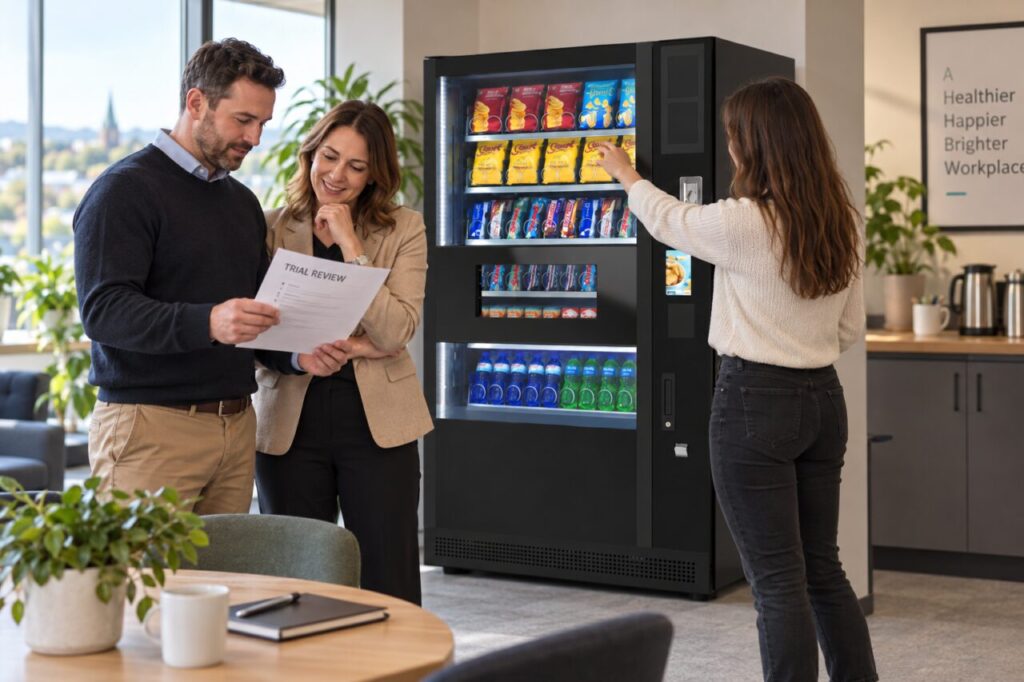
Employer-funded products are different from a machine offered without an upfront equipment cost. Make the arrangement explicit with the provider. This guide concerns a workplace trial in which the employer funds some agreed use; it does not suggest that every free-vending enquiry includes free products or identical commercial terms.
Define the trial question
Choose the practical question the trial should answer. It might concern whether the arrangement meets a particular staff need, whether the range is suitable or whether the agreed budget is workable. Avoid promising a result that cannot be measured from the information available during a short trial.
Record the start, planned finish and review date. Give the decision-makers enough time to consider the findings before staff expect the next period to begin. Confirm with the provider what notice or arrangements are needed for any change, rather than assuming a workplace review date automatically controls the service agreement.
Agree the information to review
Use the reports actually available under the arrangement. Ask which quantities, costs and availability information can be supplied, and what each figure includes. Do not assume that a dashboard provides every desired measure or that a simple count can explain why staff selected particular products.
Add a small amount of anonymous practical feedback where useful. Ask whether the range met the intended need or whether products were unavailable at important times. Keep personal dietary details and individual purchase histories out of the general review unless there is a separate justified process for handling them appropriately.
Interpret the trial in context
Note unusual circumstances such as a quiet week, a closure or a one-off event. These can affect the observations without proving that the arrangement will perform the same way throughout the year. Compare the trial against its stated question and assumptions rather than treating every change as a success or failure.
Distinguish service availability from customer preference. Low use could reflect limited access or missing stock as well as lack of interest. Discuss these possibilities with the provider using the available evidence. Avoid attributing the outcome to a particular cause unless the records actually support that explanation.
Communicate the decision clearly
Once the responsible people have decided, explain what happens next and when. If the arrangement changes, give staff clear information about the supported payment or access process. Do not leave a trial notice in place after its terms no longer apply, and avoid promising an extension before it is agreed.
The article on employer-funded availability at set times covers a related communication issue. Keep the final review separate from day-to-day operating instructions. One explains the future decision; the other tells people how to use the current arrangement correctly.
When exploring workplace vending options, ask how a proposed trial can be assessed using the information the provider can supply. A useful review records the question, the evidence, its limits and the decision. It gives the next planning discussion a clear starting point without claiming that a short trial guarantees a long-term result.
Contact our team to discuss the scope and review points for your proposed arrangement.