
Empty Vending Selections: Should You Add More Choice or More of a Popular Item?
An empty vending selection can look like an obvious invitation to add another product. Sometimes that is useful. In another location, the better question may be whether an existing popular item needs more allocation. Decide what problem you are trying to solve before changing the range.
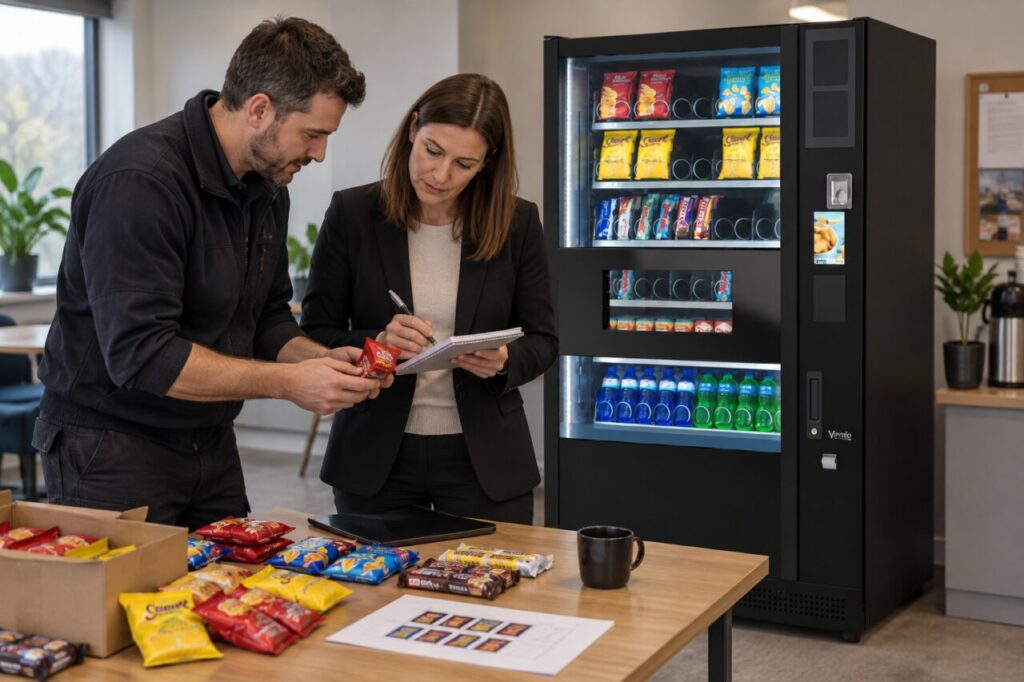
The available options depend on the cabinet and product compatibility. Ask the responsible supplier or operator to assess the layout; do not assume that every empty position can accept any pack or can be changed by the site team.
Establish why the selection is empty
Ask whether the space is intentionally unused, awaiting a product, temporarily unavailable or affected by an issue that needs attention. Those are different situations. A technical restriction should not be treated as spare merchandising capacity until the provider confirms it is available for use.
Check the current agreed layout and the actual cabinet. If they differ, clarify which version is current before discussing additions. A product plan that exists only in an old email may not describe the machine’s present configuration.
Identify an unmet customer need
Look for a specific gap in the offer rather than a desire to fill every space. Customers may want a different type of snack, a particular pack format or better availability of an item already sold. Record the evidence supporting the request and which users it represents.
Avoid describing a small number of comments as universal demand. Combine feedback with the information available from the service and include uncertainty. The aim is a useful range for the location, not the largest possible list of products.
Compare variety with availability
Adding a new item creates a different opportunity from increasing the allocation of an existing one. The first may serve a preference currently missing; the second may address an item running out before a later break. Ask which outcome matters more at the site.
Our availability review guide helps distinguish demand questions from stock gaps. A product that repeatedly becomes unavailable deserves a different discussion from one that remains stocked but attracts little interest.
Check the operating consequences
Discuss pack compatibility, refill responsibilities and stock held outside the machine. Another product may introduce a separate ordering line and a new quantity to manage. Do not assume that a broader range is automatically easier or more economical to operate.
Ask the provider what the proposed configuration can support and which checks are required before changing it. Keep customer-facing product and price information consistent with the approved setup. A physical change without a corresponding information update can confuse buyers.
Make the trial understandable
Agree one defined change where practical, then record the date and intended result. For example, the question might be whether an additional allocation keeps a popular item available through the later break. A different trial might test demand for a genuinely missing type of product.
Choose a review period with the provider that reflects ordinary use and note any unusual event during it. If several changes happen at once, be cautious about attributing a result to one of them. Keep the conclusion proportionate to the evidence.
The vending equipment range is a starting point for discussing suitable layouts, but the final allocation should follow the location and approved configuration. An empty selection is a planning question, not a requirement to add another item immediately.
Contact our team with the current layout and the customer need you would like to address.