
Ending Vending Hire Early: Separate Notice from the Collection Booking
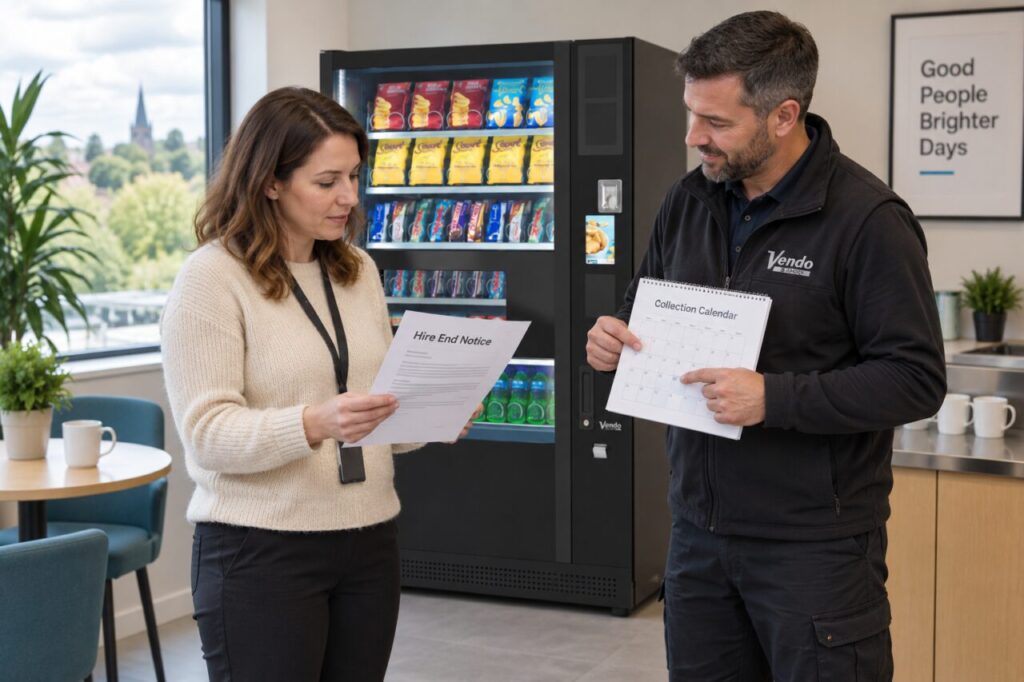
If your workplace wants to end vending hire earlier than planned, start with the actual agreement and the provider’s written response. Asking when a machine can be collected does not necessarily settle the commercial end date. Keep the notice process, any agreed charges and the physical collection arrangements distinct, then connect them in one clear record so neither team has to infer what the other intended.
Identify the arrangement you actually have
Check the named provider, equipment reference and agreement type. Hire, equipment finance and a managed service can involve different arrangements, so do not apply the wording from an unrelated website guide to your own contract. Our leasing information is a starting point for finance enquiries, not a substitute for the terms of an existing hire agreement.
Find the relevant notice and early-ending provisions in the accepted documents. Ask the provider to explain the process and any proposed financial consequences for your circumstances. This article does not establish a right to cancel or a standard notice period. Where the wording or amount is disputed, use the organisation’s appropriate commercial or professional advice route rather than relying on a collection booking as resolution.
Send a clear, authorised request
State the equipment, site, requested end date and reason for the enquiry. Make clear whether you are asking for an early-end proposal or giving notice through an agreed process. Use the contact and method required by your arrangement. An informal conversation with a refill visitor may be useful context, but ask who is authorised to receive and confirm the commercial instruction.
Keep the response with the agreement and check that it addresses the date and equipment you intended. If the provider proposes a different date or conditions, bring those back to the authorised decision-maker. Avoid telling staff the service has ended while the request is still under discussion. Clear status language protects the site from making operational plans around an unconfirmed assumption.
Agree how the period before collection works
Ask whether the machine will remain available, whether refilling continues and who handles customer enquiries during the transition. Confirm what should happen to any stock, payment arrangements or site notices. Do not stop a service or alter equipment settings independently just because a future collection has been discussed. Follow the responsibilities agreed with the provider for the remaining period.
If the site is closing or access will become restricted, explain that promptly. Collection planning may require a suitable route, authorised contacts and coordination with other work. Ask what information the collection team needs and who will attend. Do not move the equipment yourself to make a deadline unless an appropriate authorised arrangement has specifically been made for the handling.
Record collection and account closure separately
At collection, retain the agreed equipment and condition record and note any outstanding item. Then ask for the final commercial position through the proper account route. The machine leaving the building and the account being settled are related events, but they are not interchangeable evidence. Keep the confirmed end date, collection date and final correspondence visible in the same folder.
If collection is rescheduled, ask whether that affects any other agreed terms rather than assuming it does or does not. Record the answer and update the site contacts. A short written timeline helps finance and facilities understand what remains to be done without repeatedly asking the operator to reconstruct the history. It also makes a future service decision easier to review fairly.
Contact our team with the existing agreement reference when discussing a change to your arrangement.
Related guidance: Before Hiring a Vending Machine, Ask What Happens at the End.