
Employer-Funded Vending: Explain What Happens When an Included Item Runs Out
An employer-funded vending offer needs a clear answer for the day an included item is unavailable. Staff may assume that any alternative is covered, that a paid purchase will be reimbursed or that the machine can substitute automatically. None of those assumptions should be left unresolved. Agree the fallback communication with the employer and operator before the first shortage creates conflicting advice.
Define what the funded offer includes
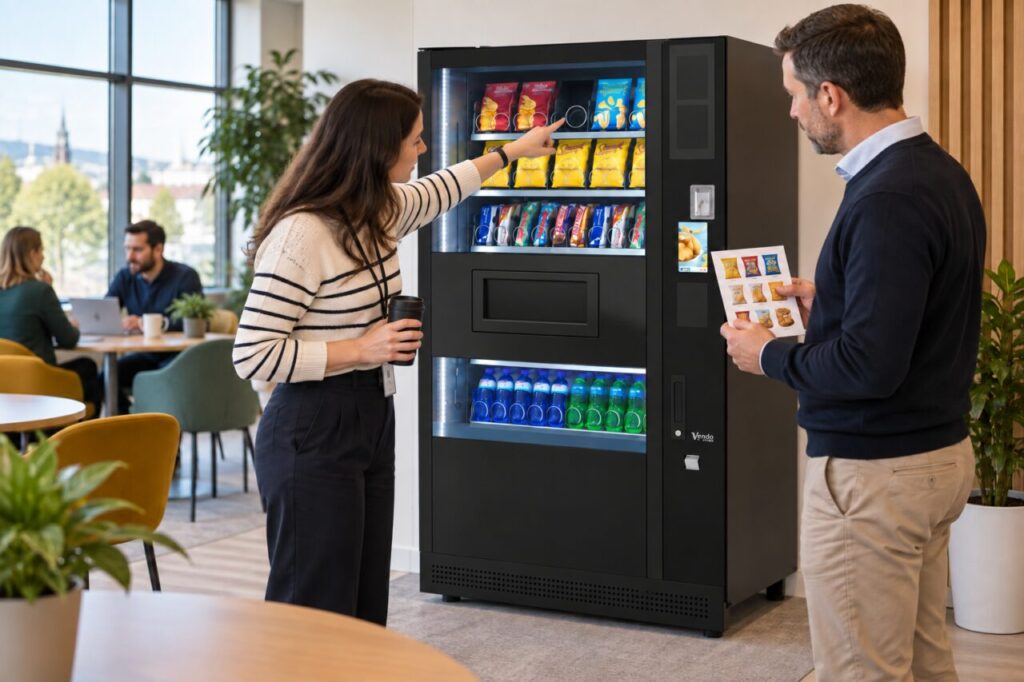
Start with the actual arrangement: which products or categories are included, who is eligible and how customers use the offer. Keep this explanation separate from ordinary paid purchases that may also be available. The term free can be misleading if it hides a limited employer-funded selection. Staff should be able to recognise the scope before choosing an item.
Discuss the proposed range and funding arrangement alongside the site’s workplace vending options. Do not assume that a particular machine supports eligibility checks, automatic substitutions or spending controls. Ask the provider to confirm the real process and communicate only what has been agreed. A product range decision and a payment-system capability are related but distinct questions.
Agree the permitted alternatives
Ask whether another included product may be selected when the preferred one runs out. If an alternative is outside the funded range, make its status clear before purchase. Do not encourage staff to buy first and seek reimbursement later unless that is an expressly approved employer process. A helpful informal suggestion can otherwise create an expectation that finance or the operator cannot honour.
Consider a simple example: the included snack is unavailable but a different snack is displayed nearby at a normal selling price. Can the customer tell whether it is covered? If the answer depends on asking a colleague who happened to attend the launch meeting, the information needs improvement. Put the approved explanation where customers encounter the choice and keep it concise.
Separate a stock report from a benefit request
The operator needs a clear report identifying the unavailable product and machine location. The employer may separately need to answer a question about the funded offer. Explain those routes so a customer is not passed between teams without understanding who can make the relevant decision. Neither reception nor a refill visitor should be expected to invent a change to the funding arrangement.
Avoid promising a replenishment time unless the responsible provider has confirmed it. If an update is available, state it accurately and explain where future information will appear. If no time is confirmed, say that the item has been reported. Honest, limited information is more useful than a confident estimate repeated around the workplace and later mistaken for a service commitment.
Review recurring shortages constructively
Keep a proportionate record of which included items are repeatedly unavailable and when the observations occur. Distinguish a one-off supply issue from a pattern that may justify a range or replenishment discussion. Do not infer exact unmet demand merely from an empty position. Use the information available to the operator and employer to decide what further evidence is needed.
Any agreed change to the funded selection should be reflected in the customer instructions and relevant product records together. Remove obsolete notices so staff do not rely on an offer that has changed. Clear fallback information does not prevent every shortage, but it helps people understand their options and preserves the boundary between the employer’s benefit and the operator’s ordinary retail range.
Ask about a workplace vending arrangement.
Related guidance: Employer-Funded Vending: Explain Which Products Are Included.