
Are vending machines profitable in Ireland?
Vending machines can be profitable, but the useful question is whether a particular machine can earn enough at a particular location after its costs. A busy building and a full cabinet do not answer that question. You need realistic sales assumptions, a product margin and a complete view of the work involved.
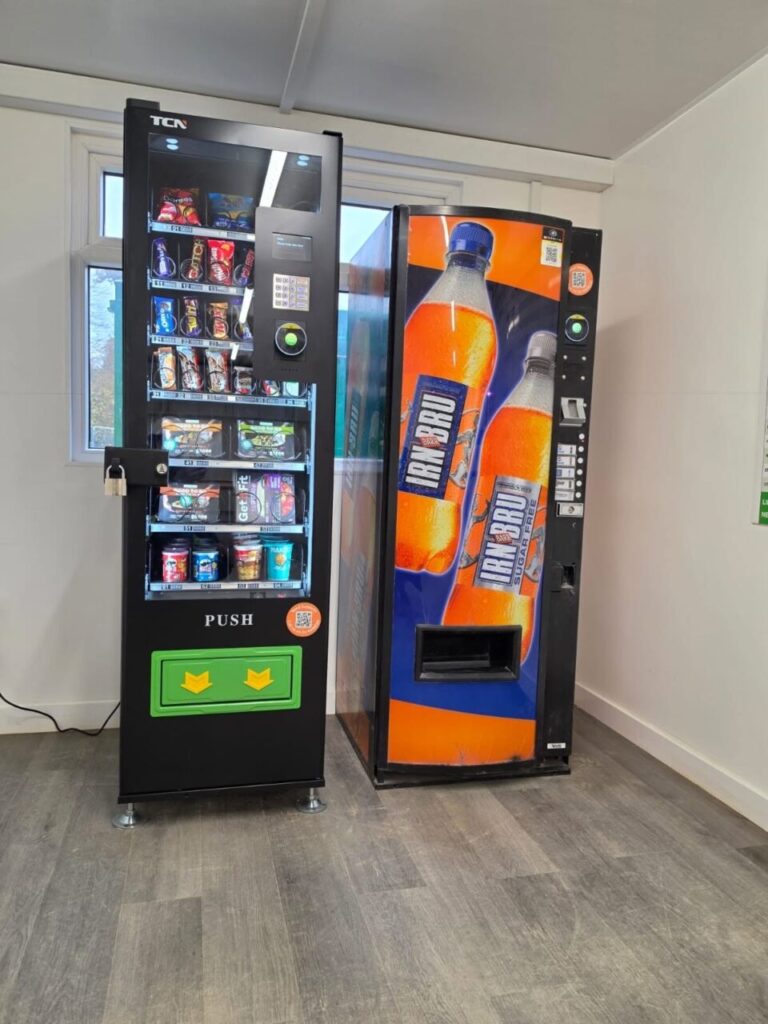
Start with customers, not the cabinet
Count the people who can actually use the proposed machine during ordinary opening hours. A building’s total headcount can be misleading if many staff work remotely, use another entrance or leave before the relevant break. Ask about shift patterns, nearby shops, existing refreshments and whether customers can easily reach the vending area.
Next, separate potential customers from purchases. One hundred people on site does not mean one hundred daily sales. Before making a buying decision, collect practical evidence such as attendance patterns and requests for refreshments. If a trial is available, agree its duration and the information you will review. Avoid treating a launch-day rush as a normal trading week.
Work out the contribution from each sale
The selling price is not your profit. Start with sales income and subtract the cost of the products sold. Then allow for variable costs such as payment charges or sales-linked site commission where these apply. Use actual supplier and service quotations. Keep VAT treatment consistent and ask your accountant how it should appear in your own forecast.
Here is a simplified arithmetic example, not an Irish market average or a promised return. Suppose each sale contributes €0.80 after the variable costs included in your calculation. Suppose the remaining monthly operating costs are €240. You would need 300 sales a month to cover those costs: €240 divided by €0.80. That is 15 sales per day across 20 trading days.
At 500 sales, the same assumptions leave €160 after those monthly costs. This is not automatically take-home profit. Finance costs, tax, equipment depreciation and your own labour still need attention if they are outside the example. Changing the contribution to €0.60 would raise the break-even requirement to 400 sales. Small changes matter.
Include the costs that are easy to overlook
List electricity, connectivity, payment services, restocking travel, cleaning supplies and maintenance. Add the time spent ordering stock, driving, loading, checking dates and handling enquiries. A machine near an existing service route can have a different operating cost from an isolated machine that needs its own journey. Measure the arrangement you expect to run.
Stock purchases also require cash before every item sells. Slow-moving lines can occupy space that better-selling products could use. Review sales by selection, but do not replace every quieter choice after one week. Some customers value a particular option. Use a review period that captures normal demand and note any holidays, closures or unusual events.
Check cash flow as well as profit
The Local Enterprise Office’s financial-projection guidance explains that cash-flow estimates track money moving into and out of a business. That distinction matters when you pay for equipment and stock before sales arrive. A promising annual margin does not remove the need to fund the first few months.
Build a monthly forecast with a cautious case as well as your expected case. Reduce sales, allow an unexpected repair and check what happens during a quiet month. Keep actual spending and receipts so you can compare results with your forecast. Revenue’s record-keeping guidance explains the business records required for tax purposes.
Choose the arrangement that fits your goal
If your aim is to run a vending business, compare machine ownership and support options against your budget and available time. If you mainly want refreshments for staff, a managed service may be a more useful comparison than becoming an operator. These are different decisions, with different responsibilities and ways of assessing value.
To judge whether vending machines are profitable for you, ask for a proposal based on your actual site and build the numbers around it. Our investment guide covers the longer-term buying decision. Contact us with your location and expected usage for a practical discussion.


