Is an isotonic drink the same as an electrolyte drink?
An isotonic drink and a drink with electrolytes can be the same bottle, but the words answer different questions. Electrolytes such as sodium are ingredients dissolved in the drink. Isotonic describes the concentration of dissolved particles compared with body fluids. A bottle can advertise added electrolytes without making an isotonic claim. When buying a drink from a vending machine, look for the description of the actual variety.
What an isotonic drink label tells you
Take the manufacturer’s description of Lucozade Sport as an example. Its product questions and answers explain that its regular isotonic sports drink contains carbohydrate and electrolytes. The same manufacturer describes a zero-sugar fitness drink with added electrolyte separately. A familiar brand name across two bottles does not turn their recipes into interchangeable choices. Look for the full name beneath the logo.
If you want to know about carbohydrate, use the nutrition table. Read the figure per 100 ml, then check the size of the bottle. For example, an illustrative drink containing 6 g carbohydrate per 100 ml would provide 30 g in 500 ml. That is a worked example, not a specification for the brand above. If you drink half the bottle, use the volume you actually consume instead.
Three details to compare at the machine
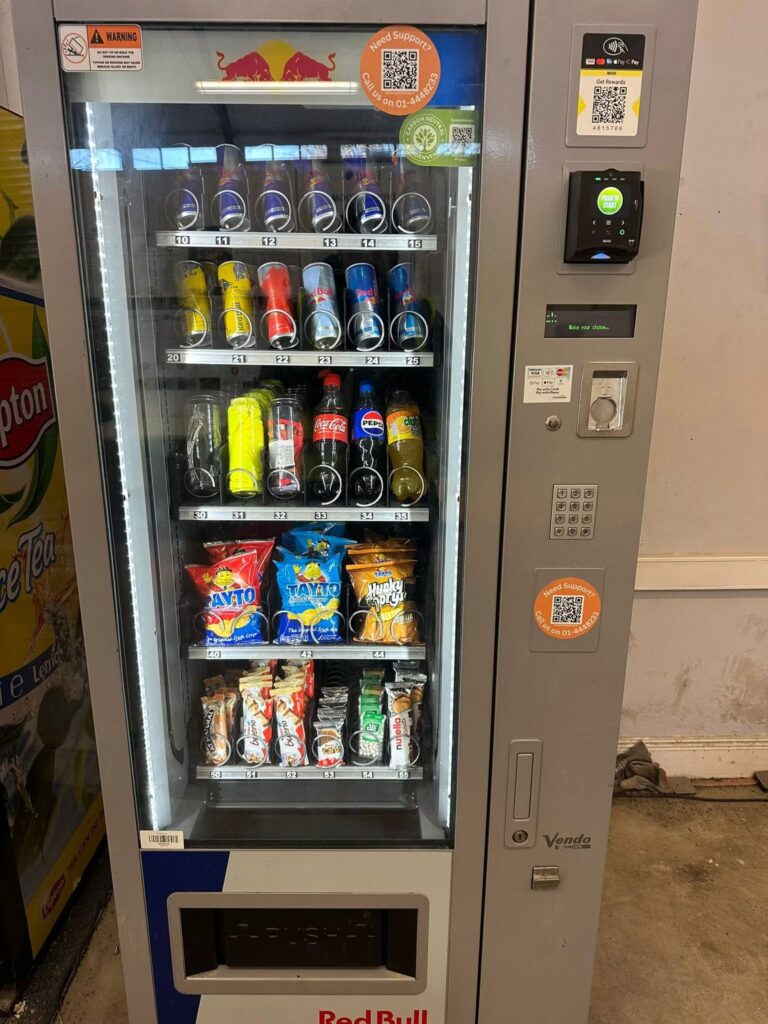
First, check what the bottle calls itself. A drink described as a sports drink, an electrolyte drink or an energy drink can sit in the same refrigerated row as other soft drinks. A sports-themed label tells you little about the recipe. If avoiding a particular ingredient matters to you, read the ingredients for that purpose rather than relying on the way the machine groups its products.
Next, compare the same quantities. One bottle might print figures for a single serving, while another uses the entire bottle on the front. Turn both comparisons into a value per 100 ml before deciding which contains more carbohydrate. Then return to the whole pack to see what you will buy. Finally, check the price against that specific volume. A higher shelf price and a higher price per litre are different things.
How to specify a sports venue vending range
Ask the buyer what customers have actually requested. A club asking for its usual isotonic drink has given a more precise brief than one asking for cold drinks after training. Write the requested variant, flavour and bottle size on the order. If an alternative is proposed, get its current product sheet before changing the selection description. Substituting a zero-sugar variant changes a meaningful part of the offer.
In a public waiting area, people may simply want a cold drink with their lunch. Display water and other choices clearly alongside sports drinks and leave the customer to choose. Avoid promising a particular performance result on the price strip. The useful facts here are the product identity, volume, price and the label the customer can check before making a decision.
If staff ask about caffeine as well, see our separate guide to sugar-free energy drinks and caffeine. For help arranging a drinks machine, bring a list of the exact bottles your venue wants to sell and which alternatives it would accept.