
Choosing vending snacks with a ‘may contain’ warning: what to check
A snack may have an allergen highlighted in its ingredients, a separate ‘may contain’ statement, or both. These pieces of information answer different questions. Someone choosing from a vending machine needs to be able to check the information for the exact product on sale. A familiar wrapper, a description such as ‘plant-based’ or a recommendation from a colleague is insufficient to establish suitability for a food allergy.
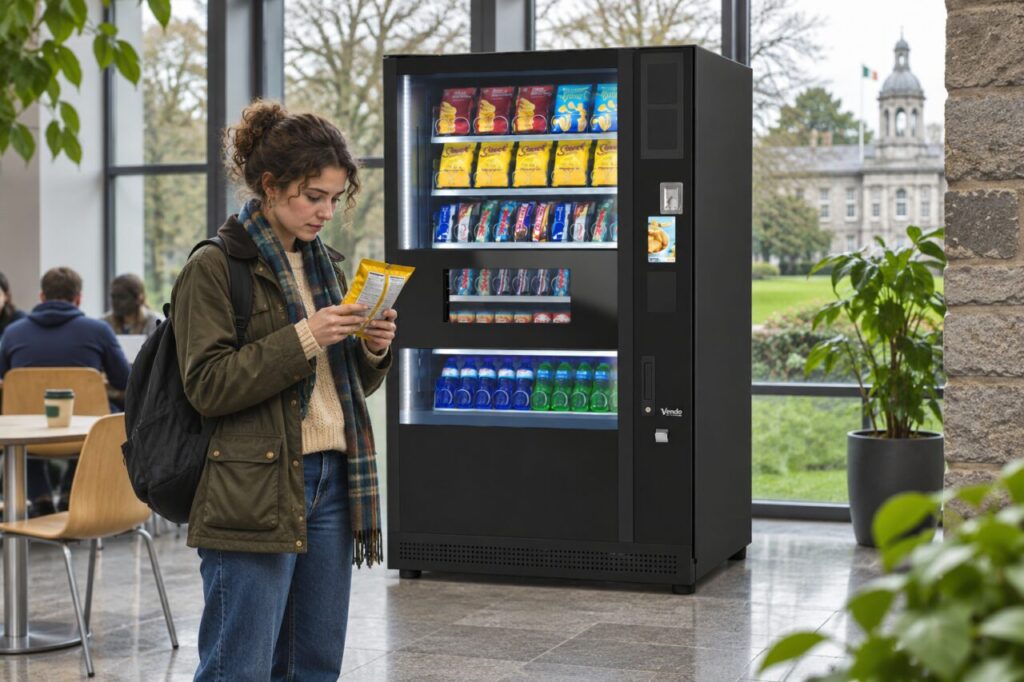
Read the ingredients and the precautionary statement
The Food Safety Authority of Ireland explains how specified allergens used as ingredients must be identified and emphasised in the ingredients list of prepacked foods. It also explains that a precautionary warning can identify a possible risk from cross-contamination. A warning about possible presence does not give a customer a measured amount or a reliable way to compare one product’s level of risk with another. See the FSAI guidance on allergen labelling.
Look for the particular allergen that matters to you. Similar names, flavours and pack colours can conceal important differences in the wording. Read the actual warning as well as the ingredient list. If you are unsure whether the item suits your allergy, seek appropriate guidance and choose only when you have sufficient information. Avoid testing a product by tasting it.
Check the precise product before purchase
A glass-fronted machine may show only the front of the packet. Ask the operator or site contact how customers can access current product information for the precise selection. If a screen or folder gives details, match the brand, variety and pack size to the item behind the glass. A photograph of a different format from the same brand can lead you to information for another recipe.
After collection, read the pack itself before eating it. If the label differs from the information displayed at the machine, keep the item and packaging and report the discrepancy through the operator’s customer route. Give the site, machine reference, selection and the wording that differs. There is no need to disclose a complete medical history to report a product-information mismatch.
Give the refill team a changeover rule
For site operators, a substitution is more than an update to a stock count. Compare the replacement product’s label with the description and any information being shown before purchase. Decide who updates the record, who checks it and when the new stock can be loaded. During a changeover, two different packets behind one selection code can make a single displayed ingredient list unreliable.
Hold back an unverified substitute until the responsible food business has checked how it will be presented. The guide to milk allergens and lactose-free products gives a specific example of why a marketing description cannot replace the relevant allergen information.
Make questions easy to resolve
Keep a clear contact route for staff and visitors, particularly when reception is closed. Ask the operator how it traces the current pack to its supplier information and how it will correct an outdated display. The response should identify the product and the evidence available, with uncertainty made clear where the information cannot be verified.
When discussing snack vending for your workplace, include access to current product information in the buying brief. The range is only usable if customers can make an informed decision about the food actually in front of them.
Ask how product information is managed for your vending range