
Micro-Market Shelf Gaps: Help Customers Find an Available Alternative
An empty shelf position in a micro market can leave customers unsure whether a product has moved, sold out or been removed from the range. A useful response is clear information and an easy route to available choices. Avoid treating every alternative as interchangeable: customers may care about the exact product, ingredients, pack size or price.
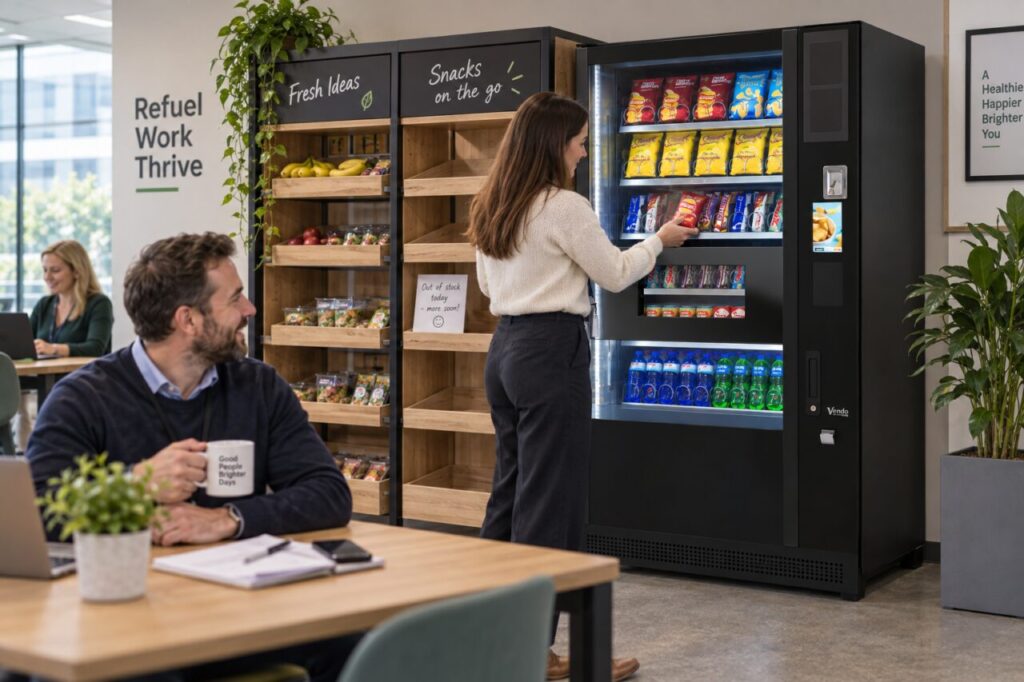
Establish what the gap means
Ask the operator whether the item is temporarily unavailable, in a different position or no longer part of the planned range. Do not publish a refill time unless it has been confirmed. Keep the explanation short and accurate. A temporary gap does not need a complicated notice, but it should not remain surrounded by information that suggests the product is available.
Review the wider micro-market and vending arrangement when deciding how customers should navigate the area. Open shelves and a nearby vending machine may offer different purchase routes. Make the location and payment process of an alternative clear rather than assuming customers will know which items belong to which part of the service.
Offer a route to choice, not an unsupported substitute
Point customers towards available products in the relevant area without claiming that one is the same as another. A different flavour, size or brand may not meet the person’s needs. Let the actual pack information and displayed price support the choice. Avoid inventing dietary or nutritional comparisons based on a product category or an informal similarity.
If staff are asked for help, give them an accurate availability explanation and a route to the operator for unresolved questions. They should not need to guess why a product disappeared. A practical response might identify where the current snack selection is displayed while making clear that the customer should check the individual product information before choosing.
Keep shelf and checkout information aligned
When a product moves, update the relevant shelf information through the authorised process. An old label can make a new item appear to have the wrong name or price. If the shelf remains empty, avoid placing an unrelated product in that position simply to make it look full. The operator should manage the range and associated information together.
Check how the customer identifies the chosen item at checkout. The guide to matching pack and checkout product names covers that step in more detail. An availability problem should not be solved by creating a new identification problem. Customers need to understand what they are buying and follow the correct purchase process for that item.
Where a nearby vending machine holds an alternative, explain that the machine’s own displayed selection and payment process apply. Do not imply that a shelf payment covers a vending purchase or that products can be moved between the two systems informally. Keep the arrangement consistent with the operator’s supported process and the site’s customer instructions.
Use repeated gaps as useful feedback
Record recurring unavailable items and the times they are observed. Separate an empty position from confirmed lost demand: a customer seeing a gap may choose another item or buy nothing, and the reason may be unknown. The record is evidence of availability, not a reliable estimate of lost sales unless additional valid information supports that conclusion.
Discuss repeated gaps with the operator alongside actual purchase information and refill arrangements. The cause may be temporary supply, stocking practice or a range decision. Avoid assuming the answer is always a larger order. A proportionate review considers the exact product and the site’s pattern rather than making every empty shelf a reason to expand the whole range.
The goal is a customer experience that remains understandable when availability changes. Accurate explanations, current product information and clear purchase routes help people make their own choices. They also give the operator better feedback about where the service is falling short, without promising equivalent products or a refill schedule that has not been agreed.
Discuss a suitable workplace vending and micro-market arrangement.