
Changed Your Mind at a Micro Market? Make the Return Route Clear
A customer may pick up an item in a micro market and decide not to buy it. Another may notice an incorrect item in the checkout basket, while a third may ask about something already paid for. Those are different situations, and the service should explain the appropriate route for each.
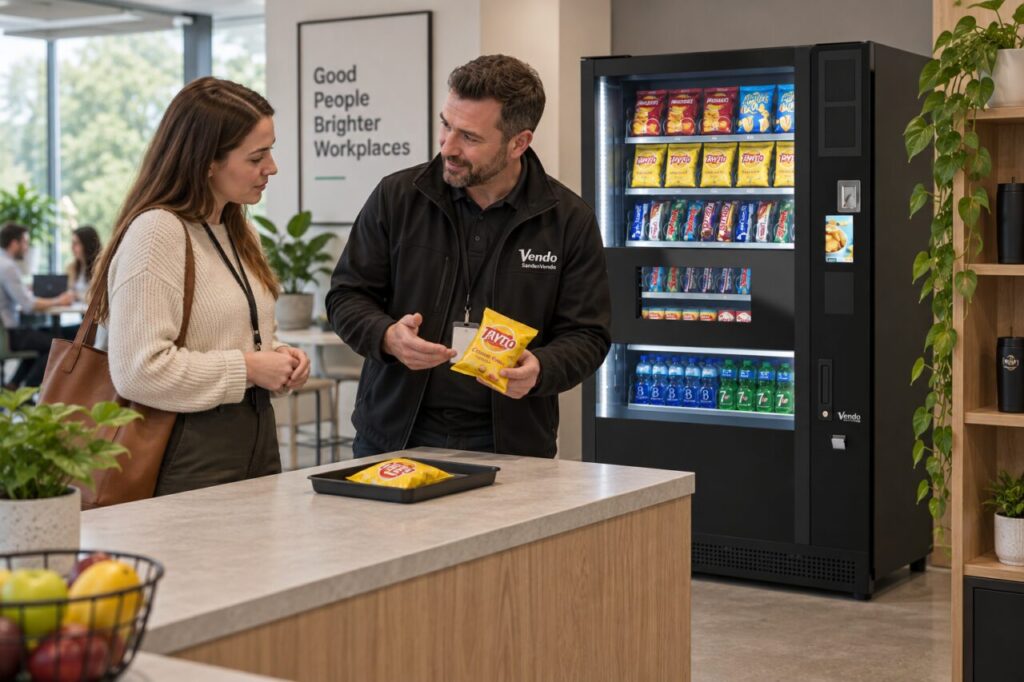
Where a micro market sits beside vending machines, the distinction matters even more. Customers should not have to guess whether to use the market checkout, the vending support contact or a member of site staff. Agree clear instructions with the operator before launch.
Separate the stages of the purchase
Map what happens before checkout, during checkout and after payment. Ask the operator which actions customers can complete themselves and which need assistance. Do not assume that a checkout correction and a refund use the same process or are available through the same control.
Use a simple demonstration with approved test items to check the instructions. The purpose is to make the process understandable, not to create a new return policy at site level. Any promises about refunds or product handling should come from the responsible business’s agreed procedure.
Agree how unwanted items are handled
Ask the operator where a customer should place an item they no longer want and how staff should respond. The answer may depend on the product and its condition. Avoid a general instruction to return everything to the shelf, particularly where the item’s handling history is uncertain.
Site staff should follow the operator’s food-handling procedure and ask for guidance where they are unsure. A labelled holding point may be part of an agreed process, but it should not be invented without a responsible person checking it. Do not let an unclear return route become an unattended pile of products.
Check the customer-facing wording
Keep instructions short and specific to the installed system. Explain where to ask for help and how to identify the relevant purchase or product without requesting unnecessary personal information. A customer should be able to distinguish an assistance notice from a general advertisement.
Test the wording with someone unfamiliar with the setup. Ask them what they would do if they selected the wrong item before paying, then ask about a problem after payment. If both answers are unclear, revise the instructions with the operator rather than adding more small print.
Distinguish market and vending transactions
A product bought through a vending machine should follow that machine’s support route. A market item should follow the relevant checkout process. Do not direct a customer to scan an item at an unrelated machine or repeat a payment because the original route is confusing.
Our guide to the two purchase journeys covers the wider introduction. Clear physical signs and a consistent service contact can support the distinction, but they must reflect the actual equipment and arrangements at your site.
Review recurring confusion
Record the type of question customers ask, without collecting unnecessary personal details. If the same misunderstanding repeats, examine the sign, product location or checkout instruction involved. The appropriate response may be a clearer explanation rather than a change to the range.
When considering micro markets alongside traditional vending, include this exception journey in the planning discussion. A service should work when a purchase goes smoothly and when someone needs help correcting a simple mistake. Keep the agreed process accessible to the staff who will answer those questions.
To discuss a suitable unattended retail arrangement, contact the team with your site layout and customer support needs.