
Micro-Market Reusable Bags: Keep Personal Shopping Separate from Unpaid Goods
A micro market can sit beside vending equipment while using a different purchase sequence. Customers may choose products from open shelves and complete a separate checkout. When personal bags and shopping baskets are mixed together, it can become unclear which items have been selected, paid for or brought from elsewhere. A simple, consistent layout can help customers follow the intended process without feeling watched or mistrusted.
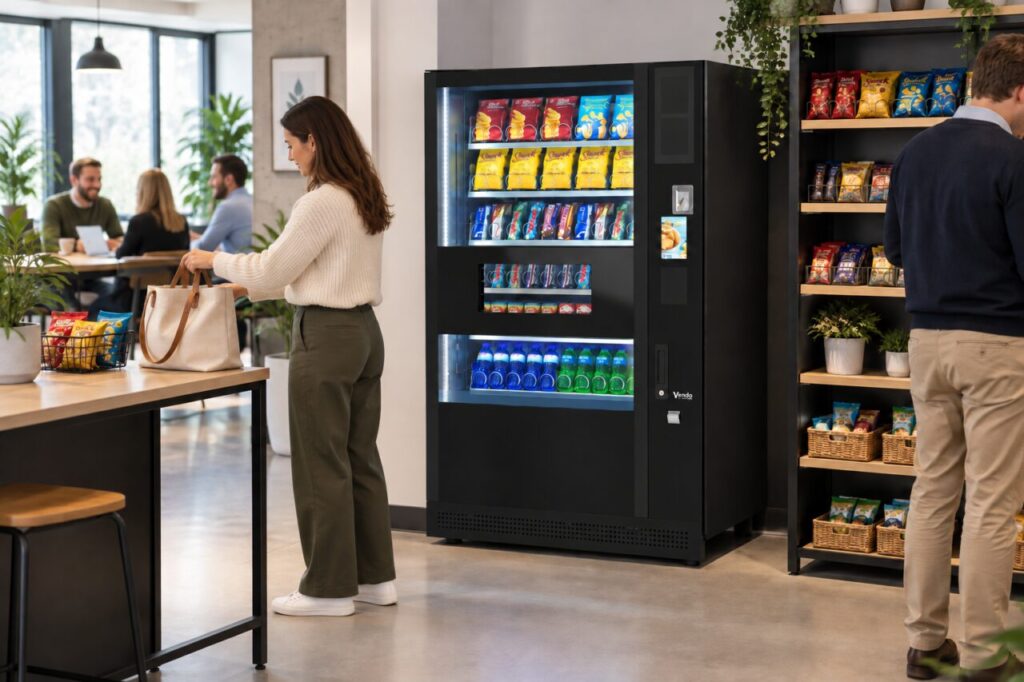
Explain the local shopping sequence
Ask the operator to describe the actual journey from shelf to payment to packing. Do not assume every micro market uses the same checkout technology or basket process. Identify where the customer should keep selected items and when they should place purchases in a personal bag. The instructions should reflect the equipment and arrangement actually installed at the site.
The distinction between micro markets and vending machines is useful when both are present. A vending customer commonly receives an item through the machine’s purchase process, while an open-shelf arrangement needs a clear checkout step. Explain the difference in the site’s instructions rather than relying on customers to infer it from the appearance of the furniture.
Give items a clear place
Consider where a customer can put a personal tote, coat or other belongings without mixing them with products awaiting checkout. This need not require elaborate furniture. The available arrangement should simply support the intended sequence and keep the checkout surface usable. Avoid blocking the route or creating a storage point that interferes with access to adjacent vending equipment.
If baskets or trays are provided, explain their purpose consistently. A customer should not have to guess whether a tray marks paid goods or is simply available for carrying selections. Keep any labels short and aligned with the operator’s process. Test the layout with an ordinary shopping example before adopting wording that sounds clear in a meeting but is ambiguous at the counter.
Avoid assumptions about personal belongings
The aim is to improve clarity, not to make accusations based on what someone carries. Staff should use the site’s agreed approach if a customer asks about an uncertain item or checkout step. Do not introduce informal bag searches, individual purchase tracking or public questioning as a substitute for a clear process. Any security arrangements require their own appropriate policy and review.
Give customers a straightforward way to correct a mistake or ask for help. For example, someone who begins packing before finishing checkout should be able to understand the next step without embarrassment. Explain the actual operator-supported procedure rather than improvising a refund, cancellation or additional payment. The layout and instructions should help people complete the purchase correctly the first time.
Walk through a mixed shopping visit
Test a visit involving a personal bag, two open-shelf products and an item bought from the adjacent vending machine. Can the customer keep track of which purchase steps are complete? If the sequence is confusing, adjust the instructions or arrangement with the operator. Do not assume the checkout can recognise an item already purchased elsewhere or automatically combine separate transactions.
Review the arrangement when shelving, checkout equipment or the neighbouring vending layout changes. Keep the information current and remove contradictory notices. A small amount of thoughtful space planning can make a self-service area easier to use, especially for first-time visitors. The desired result is an understandable shopping sequence, with personal belongings and purchased goods kept clear without adding unnecessary rules to an ordinary break.
Discuss a workplace self-service area with the team.
Related guidance: Micro-Market Product Names: Match the Pack to the Checkout.