
A Missed Vending Visit: Record the Cause Before Changing the Schedule
A missed vending visit can lead quickly to a request for more frequent service, a different arrival time or a new contact. Before changing the regular schedule, establish why the planned attendance did not produce the expected result. An unavailable entrance, an absent escort, a provider delay and a misunderstanding about the booking are different problems. A useful record helps the site and operator agree the right correction instead of repeating the same disruption.
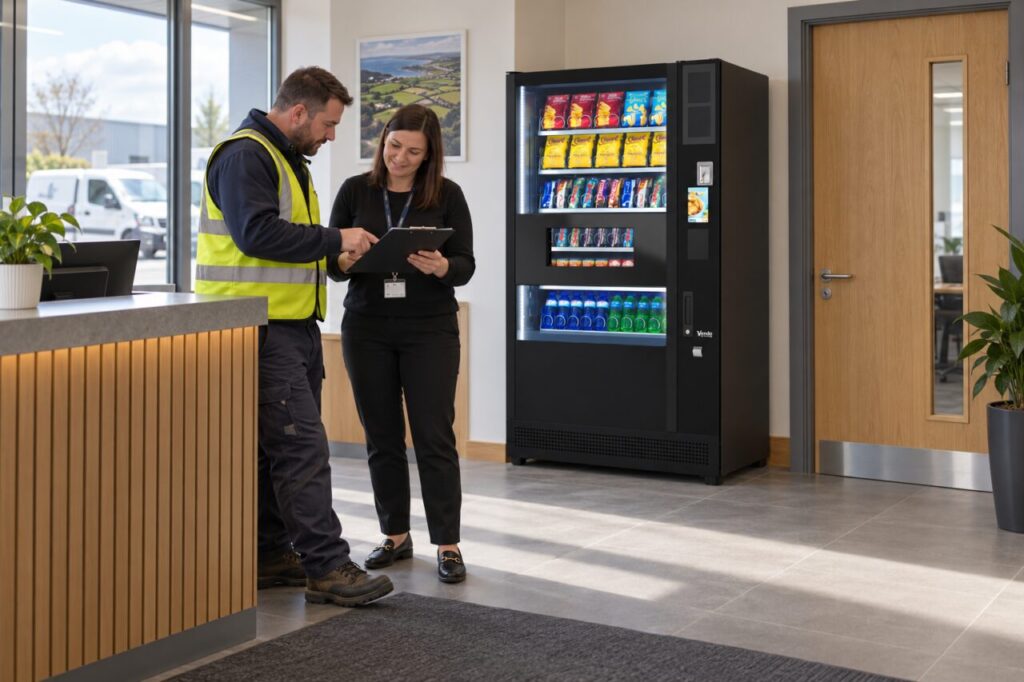
Establish the expected and actual events
Find the confirmed booking or service arrangement and identify what was expected on that date. Check the agreed window, location and task. Distinguish a specifically booked visit from an estimated routine attendance. Ask both the site contact and provider for the facts they can confirm. Avoid turning an unanswered phone call or a reception recollection into a complete account of what happened.
Record whether the provider arrived, whether access was obtained and whether any work was completed. A visit that reached reception but could not enter the vending area is not the same as a visit that never arrived. Include relevant times and the contact attempts made, without adding blame or speculation. Where accounts differ, mark the point as unresolved and ask the responsible people to clarify it.
Address the immediate service need
Tell the provider what the site now needs, based on actual conditions. Identify unavailable selections, a reported fault or another specific requirement rather than simply stating that the machine urgently needs attention. Keep a maintenance issue distinct from a refill request. The provider needs to know the task in order to confirm the appropriate response, and a stock visit should not be assumed to resolve an unrelated equipment fault.
Agree the next attendance and its dependencies through the authorised contacts. Confirm access, escort availability and the relevant task before circulating the new time. Do not promise staff that the machine will be fully available immediately after the visit unless the provider has confirmed the scope. If customers need an update, communicate the known position and support route without inventing a completion time.
Match the correction to the cause
If access failed, correct the access arrangement and check that reception or security has the current details. If the contact was unavailable, agree a suitable backup within the site’s rules. If the provider’s route changed, ask how future changes will be communicated. These actions address the actual failure more directly than adding visits to a schedule while leaving the same access or communication problem in place.
Where the problem was insufficient stock despite a completed visit, treat that as a separate review of demand and refill planning. Use the relevant records rather than classifying it as a missed attendance. Similarly, a customer may not have seen an operator who attended outside their own working hours. Confirm the event before changing performance records or using it as evidence for a wider service decision.
Review patterns before making permanent changes
Keep the incident with the agreed action and later outcome. If similar problems recur, compare their causes over a meaningful period. Several missed visits for different reasons may require several small corrections rather than one large schedule change. Record the limits of the evidence, including any booking that was never clearly confirmed, so the review does not imply a level of certainty the records cannot support.
For operators building a vending business, a factual missed-visit record supports practical route and customer discussions. For site hosts, it gives the provider a clear account of the problem and the conditions for the next visit. Close the record when the agreed action has been checked, and update the standing instructions only where the incident shows that they need to change.
Contact our team to discuss the service needs of your premises.
Related guidance: Building Alarm Hours and Vending Visits: Arrange Authorised Access.