
Several vending machines need service on one site: ask how visits are counted
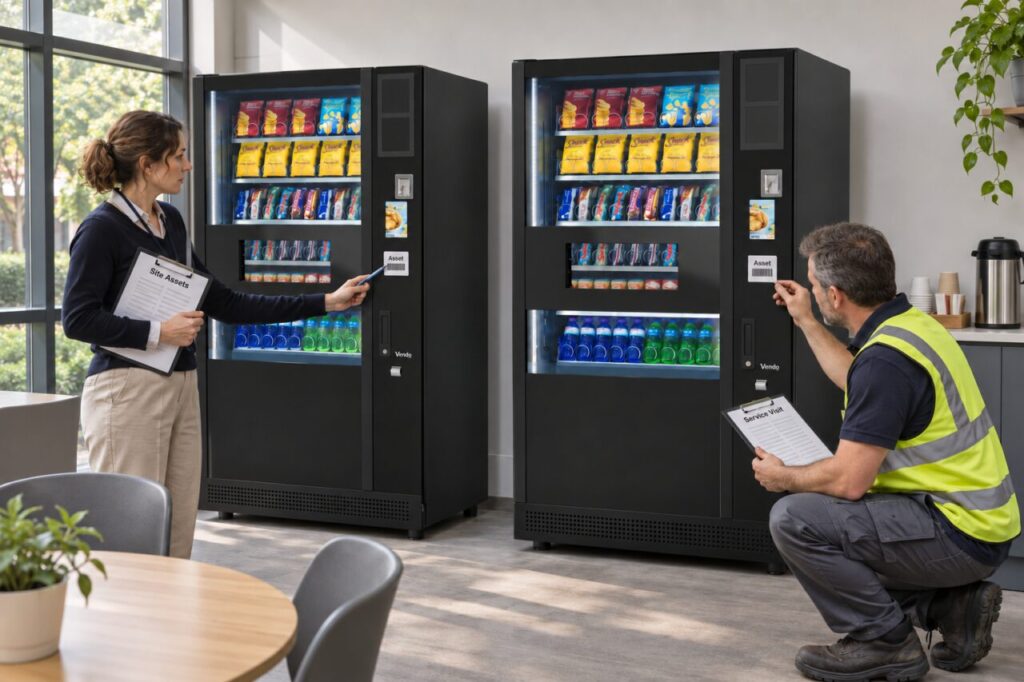
Two vending machines stand in the same staff room, and both need attention. Before booking service, ask whether the supplier counts a visit per attendance, per machine or per fault. One van arriving once does not necessarily mean one unit of cover, and two machines do not necessarily mean two separate travel charges. The applicable agreement should resolve those questions.
Identify every machine and symptom
Provide the model, asset reference and a short description of the issue for each cabinet. Keep the symptoms separate even if they appeared on the same day. A shared power or connectivity event may be relevant, but the service team needs to decide how the cases relate. Do not merge everything into a vague report that the vending area is not working.
Tell the supplier which machines are under a plan and which, if any, are outside it. Ask whether the plan is attached to a specific asset, a machine category or a site-wide arrangement. Retain the schedule of covered equipment. A new cabinet installed beside an existing one should not be assumed to inherit the first machine’s service entitlement.
Clarify what one call-out uses
Ask the supplier to apply its terms to the actual proposed visit. If both cabinets are inspected, how many included call-outs are used? If one repair cannot finish because a part is needed, how is the return counted? If another fault is reported while the engineer is there, does it require a new case or approval? Record the answers before relying on a yearly allowance.
Our published service plans describe included corrective call-outs and planned maintenance. Confirm the coverage schedule and counting basis for your equipment. Do not multiply or pool those allowances across several machines without written agreement. The purpose is to understand the offered service, not to infer a benefit from an ambiguous heading.
Break down the additional charges
Request a breakdown of attendance, labour and parts where charges fall outside cover. Ask whether any shared travel element is charged once and how labour on each machine is recorded. If two engineers are required, check that basis too. A lower apparent call-out count may still involve more labour, while a combined visit could reduce repeat access arrangements at the venue.
The annual cover comparison can help organise a year of estimated costs. Use clearly stated scenarios rather than predicting a fixed number of failures. Keep planned visits separate from corrective work, and make sure a combined appointment does not accidentally remove a planned check that one machine still needs.
Close each equipment record properly
After the visit, keep a result for every machine: work completed, unresolved issues, parts required and whether it is available for customers. A general note saying service complete can hide the fact that only one cabinet was repaired. Update customer notices individually and retain the case references so a later report connects to the correct history.
When buying several vending machines for one location, discuss the ongoing service arrangement as a group while retaining individual asset identities. Clear records help the supplier plan a useful combined visit and help the venue check the invoice. They also prevent an assumption about shared cover from surfacing only when an urgent repair is needed.