
Buying Multiple Vending Machines: Keep Site Differences in One Schedule
Ordering several vending machines together does not mean every site needs exactly the same arrangement. The cabinets may look alike while access times, customer groups or operating responsibilities differ. A simple site schedule helps a buyer compare those differences before approving an order and helps the supplier understand where each machine belongs.
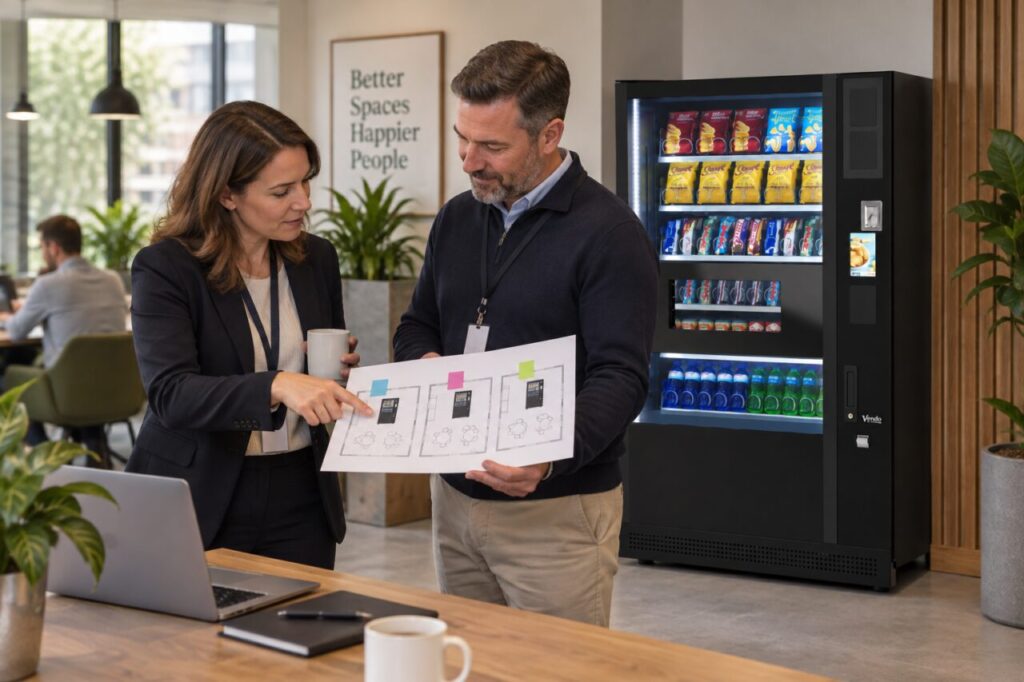
Begin with the requirements at each location rather than copying the first site’s proposal repeatedly. The schedule should make exceptions visible without replacing detailed specifications. Its purpose is to connect the overall order with the practical conditions at each building, room or service point involved in the project.
Give each location a clear identity
Use a consistent site name, building and room description. Avoid labels such as machine one if different teams number the equipment differently. Include the delivery contact and the person responsible for the service brief, using appropriate internal records rather than publishing personal contact details in a document intended for customers.
Where the final position has not been agreed, mark it as unconfirmed. A blank field can easily be mistaken for a requirement that does not apply. Identify who must resolve each outstanding point and when the information is needed, especially if access or room readiness affects the delivery sequence across sites.
Separate shared requirements from exceptions
List the requirements that genuinely apply everywhere, then record exceptions against individual locations. These may concern payment arrangements, product preferences, available space, visitor access or the handover audience. Ask the supplier which differences require a different configuration and which can be handled through the agreed operating process.
Do not describe two machines as identical simply because their photographs match. Link each schedule row to its written specification and quotation reference. If a configuration changes during the discussion, update the affected row and check whether the change has implications for other locations before presenting the order for approval.
Keep delivery and operation connected
A purchasing team may organise delivery while a local manager handles the machine afterwards. Include enough information to connect those responsibilities. For example, the delivery contact may be available only during office hours even though the intended users work shifts. The handover needs to reach the person managing the continuing service.
Plan the order of visits using confirmed site readiness rather than assuming every room will be ready together. If one location is delayed, ask the supplier how that affects the remaining schedule. Do not change delivery destinations informally: equipment, accessories and paperwork should continue to be associated with the correct order line.
Review the schedule at handover
Use the schedule to check that each location receives the equipment and accessories intended for it. Record confirmed asset identifiers when available and connect them to the ongoing service record. A discrepancy should be raised against the relevant location, rather than described vaguely as a problem with the whole batch.
After installation, hand over the current schedule to the person coordinating the sites. Keep a dated record of subsequent changes so the document remains useful. A central overview is particularly helpful when one site changes its contact, product brief or access arrangement without the other locations changing at the same time.
When discussing vending machines for several sites, bring the schedule to the supplier conversation. The shared-building decision-maker guide also helps clarify approval roles where several organisations are involved, without assuming that one person’s decision covers every location or every future service change.
Request a multi-site discussion with the locations and known differences listed clearly.