
Introducing a New Vending Snack: Set the Trial Question Before Stocking It
Before adding a new snack to a vending machine, decide what you want to learn. You may be testing whether customers want a different flavour, a different portion size or another price point. If several things change at once without a clear question, sales figures alone may not explain why the product succeeded or disappointed.
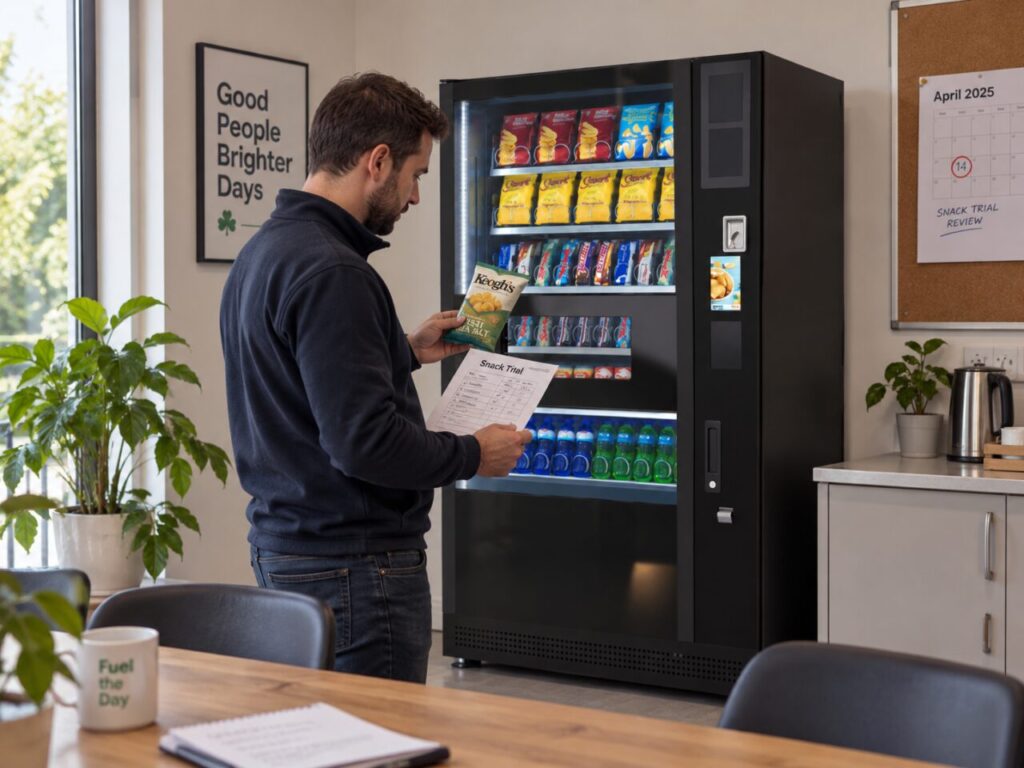
Write the question before ordering the first case. This gives the operator and site contact a shared purpose for the trial and helps avoid treating every new item as a permanent range expansion. The result should support a practical decision about the site’s product mix.
Choose one main question
Define the need behind the suggestion. A request for more variety is broad; a request for a smaller savoury snack at the afternoon break is more specific. Confirm that the proposed product is suitable for the equipment and the agreed range before treating it as a candidate for customer testing.
Do not turn a few informal comments into a claim that most users want the item. Record where the idea came from and describe it honestly. A small trial can explore a suggestion without pretending that you already have measured demand for the exact product.
Record what is changing
Note the product, pack size, price, selection position and quantity allocated. Record which item it replaces, if any. These details help explain the result later, particularly when a new product is more visible or more frequently replenished than the comparison item.
Keep the rest of the relevant arrangement as stable as practical. If a wider price change or workplace event occurs during the trial, record it. You do not need a laboratory experiment, but you do need enough context to avoid attributing every sales change to the new snack alone.
Give the item a usable opportunity
Agree a trial period that includes the relevant customer attendance pattern and a reasonable chance to purchase. Confirm how the operator will monitor availability. A product that sells out early cannot be assessed in the same way as one that remained available throughout the busiest breaks.
Our availability and low-sales guide explains this distinction. Keep a note of replenishment and any unavailable period so low recorded sales are not automatically interpreted as dislike or weak demand.
Collect feedback that explains behaviour
Ask brief questions related to the trial’s purpose. Did the pack size suit the intended break? Was the product easy to identify? Was the customer choosing it instead of another line or making an additional purchase? Avoid leading wording that encourages people to praise the new option.
Keep feedback proportionate and aggregate where possible. A few comments can suggest an explanation, but should not be presented as a representative survey. Compare them with availability and sales context, and note where the evidence remains too limited for a confident conclusion.
Decide the next step deliberately
At the review, compare what you observed with the original question. Options might include keeping the product, changing its allocation, testing a different candidate or stopping the trial. Record the reason and any condition that would justify looking at the idea again later.
When discussing a vending range for your site, use this record to show what customers actually experienced. A useful trial produces learning even when the answer is not to keep the product, because it improves the next selection decision instead of leaving another unsupported opinion.
For help discussing your workplace product range, contact our team.