
Empty Before the Night Shift? Audit Vending Availability by Break
Strong daily vending sales can hide a poor experience for the night shift. If the popular products sell out during the afternoon, later staff may see only the items nobody chose. Review what is available at each break, alongside sales totals, before deciding that the machine needs more of everything.
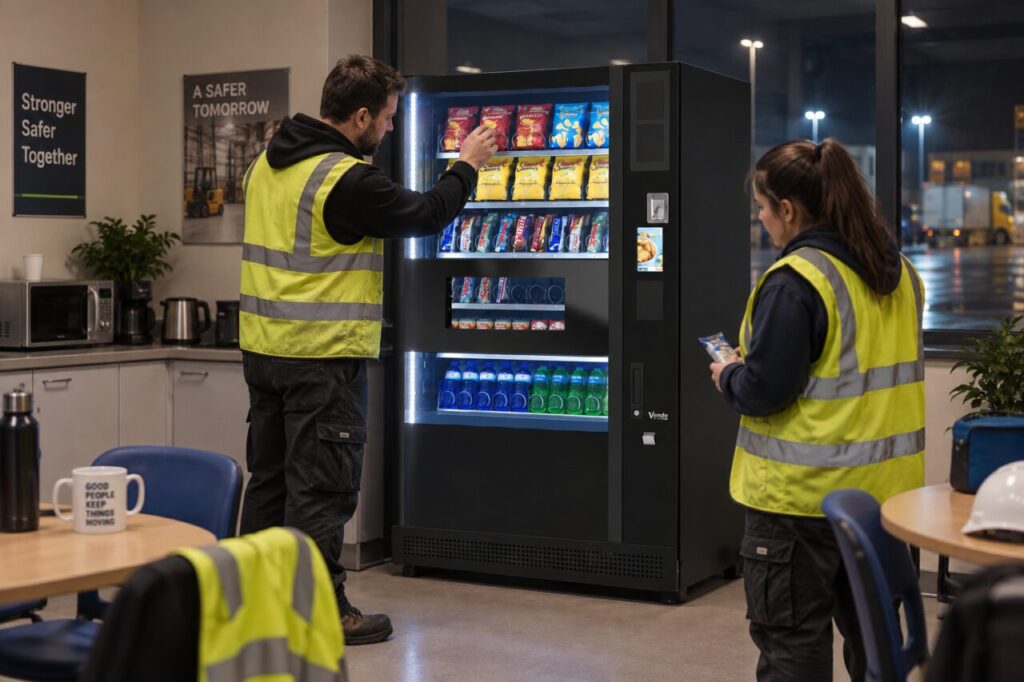
Record what each shift actually finds
Choose a representative working week and note the machine’s condition shortly before the main breaks. Record missing products, empty selections and whether a suitable alternative remains. Include unusual circumstances such as overtime, a closed canteen or a delivery delay so they are not mistaken for normal demand.
Ask the later shift which missing choices caused a problem. Keep the question specific: “What did you try to buy, and when?” is easier to act on than a general request for favourite snacks. No individual employee’s purchase history is needed for this exercise.
Match observations with reports
Where your system supports it, ask the operator for sales by time and product. Nayax describes sales analytics and inventory tools within its vending management offering. Confirm which reports and update intervals are available on your own installation rather than assuming every connected reader provides the same view.
Compare the report with the physical observations. Low sales after midnight may mean low demand, but they may also mean the requested item was unavailable. Record the period when a selection was empty so those possibilities remain visible.
Agree one controlled change
Discuss an earlier refill, a different allocation of existing shelf space or a small product-range adjustment. Ask the operator to check pack suitability and machine configuration before changing selections. Avoid adding many new products at once, because it becomes harder to identify which change helped.
A trial could reserve more existing capacity for a frequently missing drink while keeping the refill schedule unchanged. Alternatively, test a different service time first. Use our break-time capacity guide when the problem is a concentrated queue rather than missing stock.
Review availability, waste and access together
Repeat the same break-time observations after the change. Check whether later staff found their intended choices, whether more stock remained unsold and whether the service visit fitted the site’s access arrangements. Agree the review date in advance.
The aim is a service that works across the working day, not simply a fuller machine at one convenient inspection time. Talk to our team about your shift pattern, existing refreshment options and the gaps you have recorded.