
Night-Shift Vending Feedback: Separate Faults, Stock Gaps and Product Requests
A message saying the night-shift vending is poor can describe several different problems. A machine may have a fault, a popular selection may be empty, or employees may want a different range. Separate those issues so the responsible team can take the right next step.
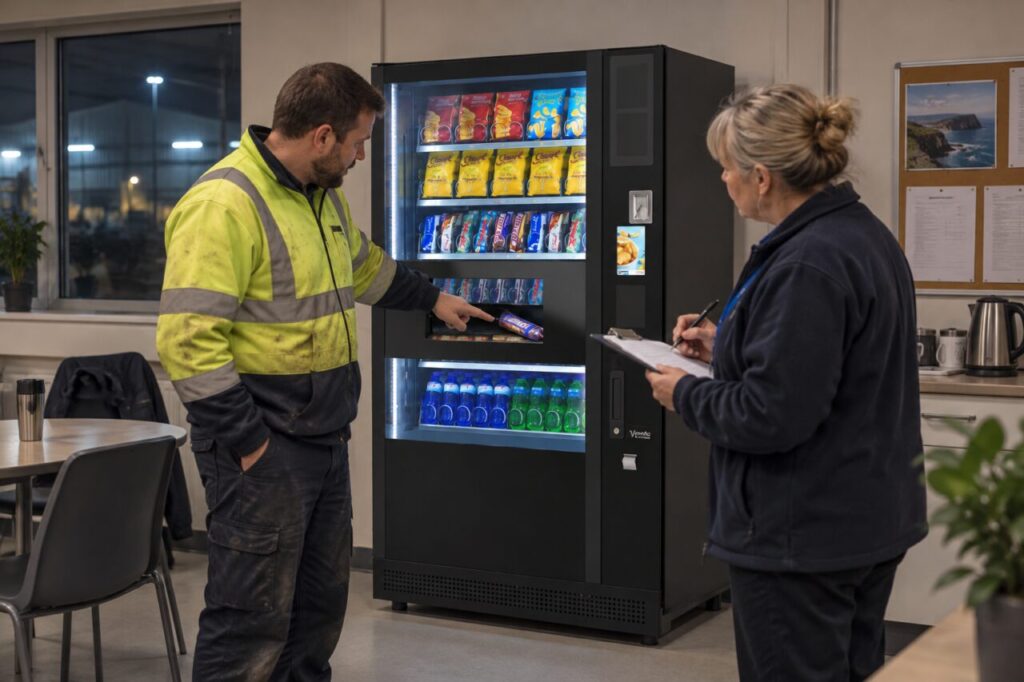
The purpose is not to make staff complete a long form before they receive help. A short, clear report should make urgent problems easier to identify while preserving useful feedback about the everyday service.
Identify the immediate customer problem
Start with what happened rather than an assumed cause. If a purchase did not complete or a product was not delivered, record the location, approximate time and the observable result through the provider’s support process. Employees should not need to diagnose the machine.
If the equipment appears damaged or unsafe, use the site’s appropriate reporting procedure and prevent use as directed by the responsible team. Do not treat a safety concern as an ordinary suggestion for the next range review.
Record stock gaps at the relevant time
For an unavailable item, note the product or selection and when the gap was observed. The timing matters because an item available during the day may be gone before the later shift. A daytime inspection alone may not represent the service experienced by overnight staff.
Avoid claims such as always empty unless there is a clear record supporting them. Several dated observations give the operator a stronger basis for reviewing allocation or refill planning. Keep unknown periods unknown rather than turning a few checks into continuous evidence.
Keep preferences separate from faults
A request for a different snack or drink is valuable, but it should not be confused with broken equipment. Explain what type of option is missing and which customer need it would serve. The provider can then assess availability, compatibility and the practical range.
Include the people who actually work the shift when collecting preferences. A daytime survey may miss their experience. Our preference-survey guide provides a way to ask focused questions without claiming that a small response represents everyone.
Give each category a clear route
Agree who receives purchase problems, stock observations and product requests. The routes may share a contact, but the record should still make the type of issue obvious. Staff should not have to guess whether to contact reception, facilities or the vending provider.
Our managed-service information distinguishes case logging from technical attendance under the service arrangement. Keep the site’s own instructions accurate: a contact being available does not establish an immediate on-site response for every report.
Report the outcome back to the shift
When an issue is reviewed, explain what was confirmed and what action was agreed. A technical visit, a stock adjustment and a product trial are different outcomes. Avoid telling staff that everything is fixed when a separate range request is still awaiting a decision.
Choose a follow-up that checks the original concern at the relevant time. If the question involved availability before an overnight break, a morning photo of a full machine does not settle it. Ask for observations that correspond to the experience being reviewed.
Use the findings when discussing vending arrangements for the whole workplace. Clear feedback helps the service account for different shifts without relying on assumptions made during ordinary office hours.
Contact our team with the site details and the specific service question you want to address.