
A No-Upfront-Cost Vending Proposal: Agree the Site Responsibilities
A vending proposal described as having no upfront equipment cost can still involve practical responsibilities for the host site. The useful question is what the arrangement includes and what the workplace must provide. Clarifying those boundaries helps you judge the offer and prepare for a reliable service.
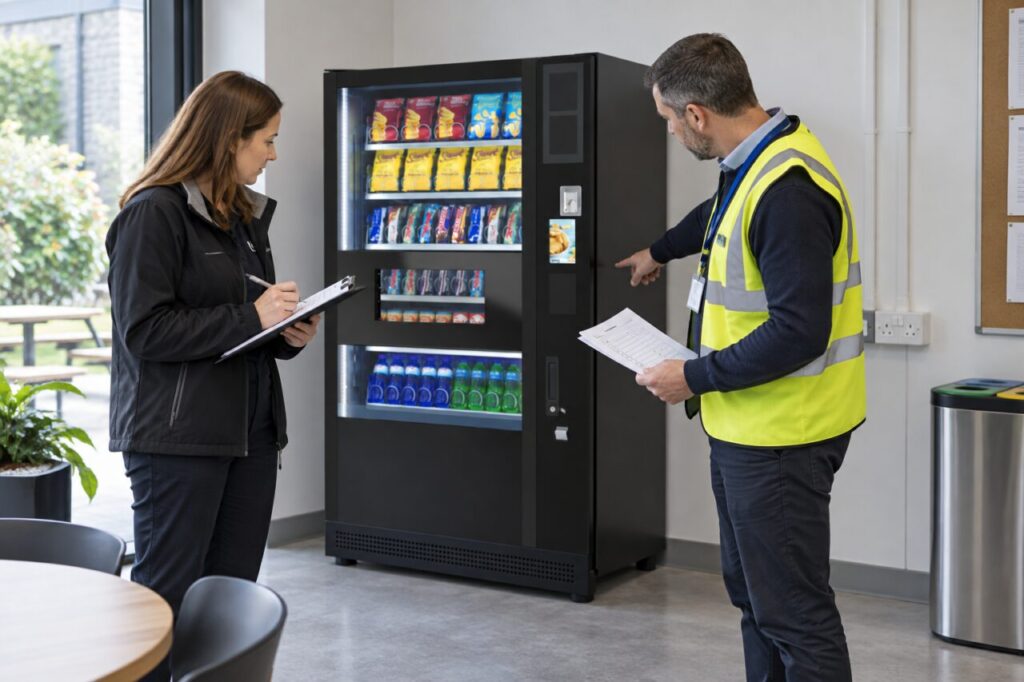
Do not assume that a headline offer applies automatically to every building or that no upfront cost means every ongoing item is included. Ask for a site-specific proposal and the conditions that apply.
Clarify the meaning of the offer
Ask which equipment and services are included and what eligibility or site assessment is required. Establish who owns the machine, who operates it and how the arrangement is funded. The explanation should be understandable without relying on a promotional headline.
Our healthy vending service page introduces the service discussion. Use the written proposal to confirm the actual scope for your workplace. Keep any optional items or excluded work visible so the person approving the arrangement can assess the whole commitment.
Agree space and utility responsibilities
Identify who provides the location and who confirms that it meets the machine’s requirements. Ask the supplier to specify the relevant installation conditions for the proposed model. Site staff should not guess electrical requirements or carry out technical work merely to get the service started.
Discuss the treatment of electricity and any other agreed site resources explicitly. Do not assume that responsibility follows automatically from ownership of the cabinet. Record the agreed boundary and the contact who can answer facilities questions before delivery or a later change.
Confirm access between visits
The operator needs a workable way to reach the machine under the agreed service. Explain reception hours, visitor procedures and any restrictions affecting stock movement. A location that suits customers may still need planning for replenishment and technical assistance.
Ask what the host should do if access arrangements change. A locked room, new security desk or revised delivery window can affect the existing plan. Give the operator one clear contact for exceptions rather than expecting them to negotiate a new arrangement at every visit.
Divide everyday tasks clearly
Discuss responsibility for replenishment, machine cleaning, surrounding-floor cleaning and customer enquiries. These activities are related but not interchangeable. Confirm which tasks are performed by the operator and which remain with the building team.
Our service agreement questions provide a useful starting point. Record how the host reports a fault and whether the host can approve product or layout changes. Keep technical intervention with the appropriate provider rather than treating any nearby employee as the machine operator.
Review changes to the workplace
Ask how the arrangement is reviewed if attendance, opening hours or the refreshment offer changes. A new canteen or a substantial reduction in site use may affect the original assumptions. Do not assume a particular outcome; ask what process the actual agreement provides.
Create a two-column responsibility summary with operator tasks on one side and host tasks on the other. Add a named contact for any shared task and record who makes the final decision. Review the summary against the full agreement rather than allowing the short version to introduce different terms or omit a condition.
Keep the agreed responsibilities accessible to the site manager and the person covering their absence. A short summary can prevent confusion while the full agreement remains the reference for terms. Contact our team with your venue, expected users and available space to discuss an arrangement whose practical responsibilities are as clear as its headline offer.