
Free Breakfast Meetings and Office Vending: Interpret the Change in Morning Sales
A free office breakfast meeting can reduce some morning vending purchases while increasing others. Staff who have already eaten may skip a snack but still buy a cold drink later. Before changing the range, separate the effect of the event from the office’s ordinary pattern of demand.
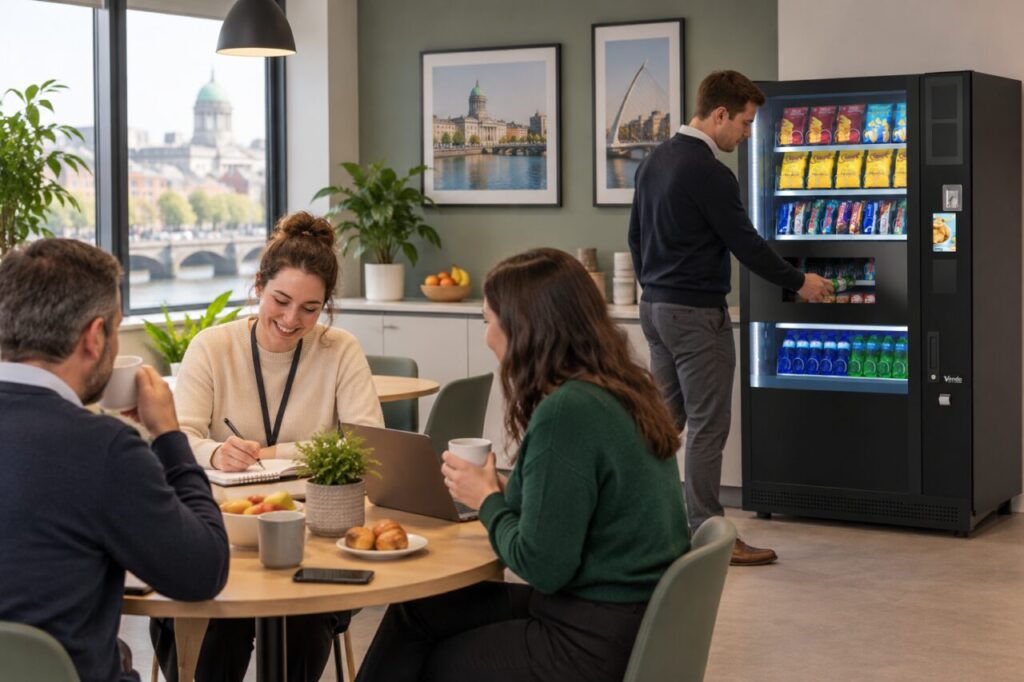
The purpose is not to compete with a staff benefit. It is to keep vending useful alongside the other refreshments available. A few clear observations can prevent an exceptional meeting day from being treated as evidence that a previously useful product should disappear permanently.
Record the event alongside the sales period
Note the meeting date, approximate attendance, timing and broad refreshments provided. Keep this at event level; individual eating habits are not needed. Establish whether the vending report covers the same morning, the full day or a longer period that includes ordinary office activity.
Compare similar weekdays where possible. A Monday breakfast and a quiet Friday are not a clean test of the event’s effect. Attendance, working hours and other food availability may differ. Mark those differences instead of attributing every movement in sales to the breakfast meeting.
Look at product categories and purchase times where the available reporting supports them. If you only have daily totals, state that limitation. Do not invent an hourly pattern from a single end-of-day number or assume an aggregate report identifies precisely when each customer changed their behaviour.
Distinguish substitution from a timing change
Ask whether the meeting replaced a normal purchase, postponed it or brought extra people into the office. These are different practical possibilities. A reduction in morning snack sales may sit alongside stronger afternoon demand, leaving the whole-day picture less dramatic than the early result suggests.
Check product availability before interpreting low sales. If a popular drink was sold out after the meeting, the recorded total reflects what could be purchased. It does not reveal the full amount people might have wanted. A simple availability note can stop a misleading comparison.
Avoid treating one colleague’s comment as a universal preference. A short question to the office organiser may explain the event, while a small amount of general feedback can identify an unmet need. Use that feedback to frame the next observation, not as proof of a measured office-wide trend.
Adjust the service proportionately
For an occasional breakfast, a temporary stock adjustment may be more appropriate than a permanent range change. Discuss it with the operator using the date and expected attendance. Do not request a large special order without considering what will happen to any remaining stock after the event.
For a regular breakfast programme, compare several occurrences with ordinary days. Keep track of whether the offer itself changes. A substantial breakfast one month and tea with biscuits the next are not equivalent conditions, even if both meetings have the same title in the office calendar.
The office vending service should complement the workplace’s real refreshment arrangements. Describe the recurring programme and the gaps staff still experience, such as later breaks or access after catering finishes, rather than assuming vending must repeat the meeting’s food offer.
Review customer usefulness as well as sales
Ask whether staff can still find a suitable drink or snack when the breakfast is over. A financially sensible adjustment should not remove the basic offer people rely on during the rest of the day. Keep any experiment narrow enough that its effect can be understood.
Agree a review date and the evidence needed to retain or reverse the change. Document the event context beside the decision so a future manager does not mistake it for a general decline in office demand. That creates a useful explanation for the stock plan without overclaiming what the data proves.
Related guidance: Breakfast-Time Vending Snacks: Test What Customers Can Use on the Move.
Planning or reviewing vending at your site? Contact the team with your location, equipment details and the question you would like to resolve.