
The Office Kitchenette Is Closed: Plan Temporary Vending Demand Without Overpromising
When an office kitchenette closes for repairs or refurbishment, staff may turn to vending more often. That does not mean a vending machine can replace every function of the kitchen. Plan the temporary arrangement around what people will actually lose, what the installed equipment can provide and how long the disruption is expected to last.
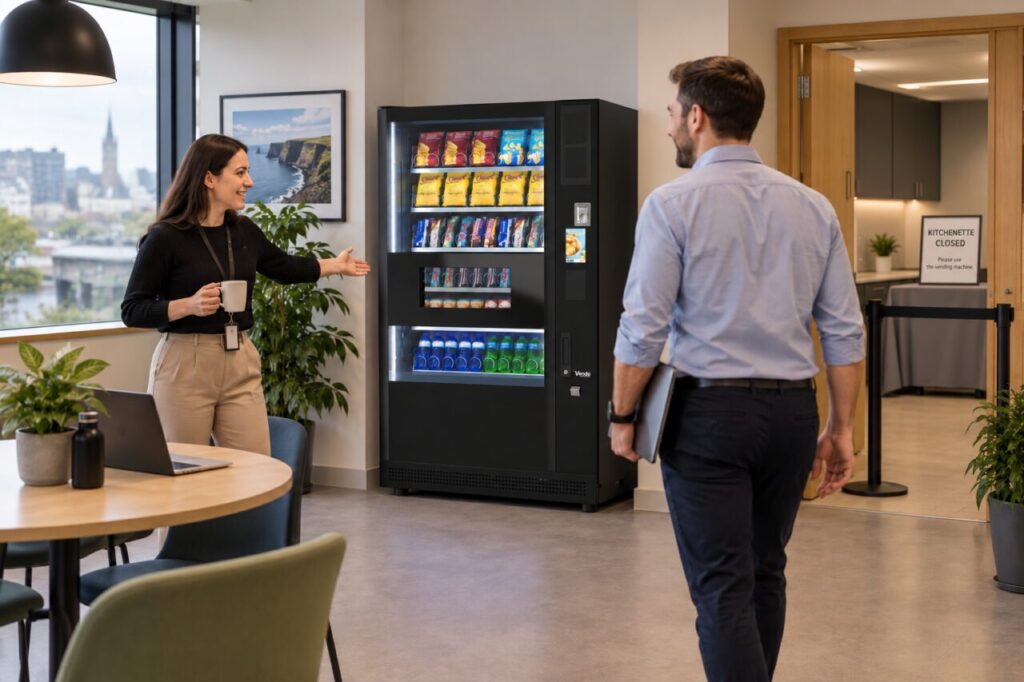
Identify the missing facilities precisely
List the facilities affected by the closure, such as ordinary access to a kettle, refrigerator, sink or seating. Confirm the actual scope with the facilities team instead of relying on a broad notice that says the kitchen is closed. Different losses create different needs. A snack-and-drink machine does not restore food storage, washing facilities or a place to prepare a meal.
Ask where staff can obtain the facilities that remain necessary outside vending. Keep those arrangements in the closure communication. This prevents the machine being presented as a complete substitute when it only offers part of the refreshment solution. Be especially clear about any temporary route to water or other workplace facilities that the responsible site team has arranged.
Give the operator a realistic demand brief
Share the anticipated closure dates, usual staff attendance and the expected changes in purchasing. Include whether another kitchen remains open elsewhere and whether temporary refreshments will be supplied. These details help the operator discuss a proportionate stock plan. Do not estimate demand simply by multiplying the full headcount by an assumed daily purchase.
Agree how changes will be reviewed if the work lasts longer than expected. A short closure may need a modest adjustment, while an extended project may justify a wider discussion. Any extra replenishment or range change needs confirmation; it should not be promised to staff merely because the machine is already on site.
Keep the temporary offer understandable
Explain what the machine currently sells and how customers pay. If the employer intends to fund purchases during the closure, agree the mechanism and limits first. Do not tell staff to buy privately and assume reimbursement without an approved process. The managed-service funding options can inform the discussion, while the actual scheme remains subject to agreement.
Consider the area around the equipment too. More people may now use the same point during a break, so keep the customer route and collection space clear under the building’s arrangements. Do not store refurbishment materials beside the machine or use the vending area as a temporary dumping place for kitchen contents. Ask the facilities team to resolve space conflicts before they affect normal access.
Plan the return to normal use
Record when the kitchenette reopens and tell the operator. Demand observed during the closure should not automatically become the permanent forecast. Review remaining stock, outstanding temporary arrangements and the wording of staff notices. Remove or update information that no longer applies through the site’s normal communication process.
Compare the closure period with normal operation using the dates and attendance context. If staff discovered a useful vending option they had not used before, that feedback may support a lasting range discussion. If demand falls after the kitchen returns, it may simply reflect the restored alternatives. Avoid treating either movement as proof of a general sales trend.
When reviewing office vending, include planned building work in the conversation. A clear temporary plan describes what vending can contribute, what remains available elsewhere and who will review changes. It supports staff through the disruption without making promises that the equipment or service arrangement cannot fulfil.
Related guidance: An Office Event Is Coming: Plan Vending Demand Before and After It.
Planning or reviewing vending at your site? Contact the team with your location, equipment details and the question you would like to resolve.