
Office Lunch and Vending Snacks: Decide What Gap the Range Should Fill
Before expanding an office vending range, ask what people need alongside the food already available at the workplace. A snack between meetings, a drink with a packed lunch and a complete meal are different needs. A clear role for the machine makes product discussions more useful than trying to make one range solve everything.
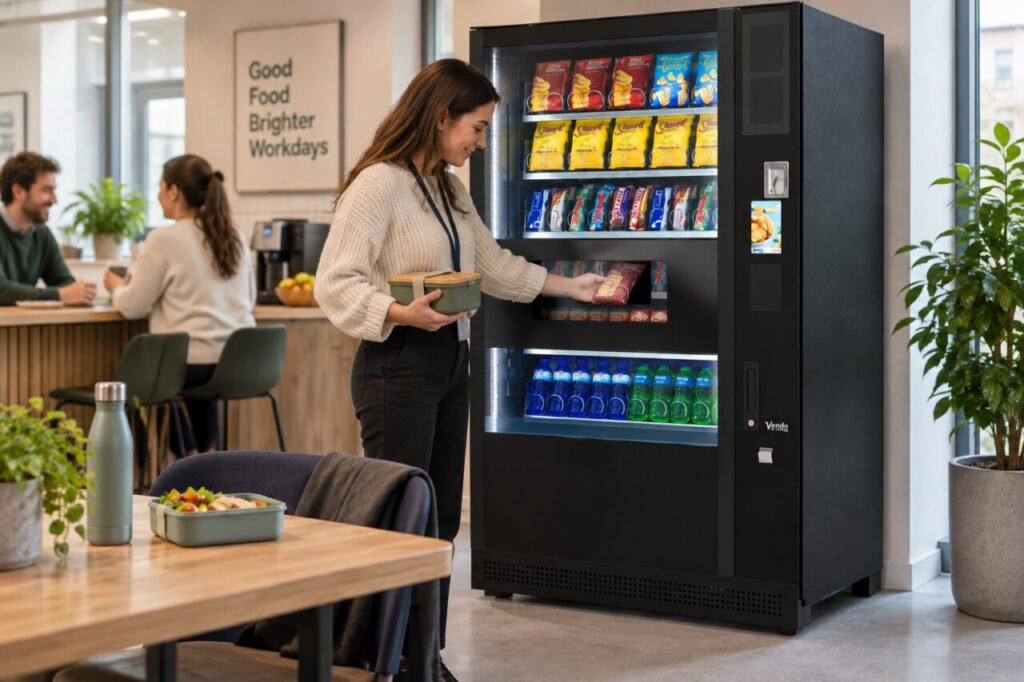
Start by describing the gap rather than labelling the whole workplace as hungry or busy. The appropriate equipment, products and service arrangement depend on what is being offered and when customers need it. Do not present an ordinary snack range as a complete meal service.
Map the existing lunch options
List the food options people can realistically use during their break. Include a canteen where available, food brought from home and nearby options within the actual time allowed. Note when those options operate rather than assuming that a service available at midday also serves an early or late shift.
Ask what vending should add to that picture. It might provide a small snack, an additional drink or another clearly defined choice. Keep this initial question separate from choosing brands. The same popular product can have different value depending on what customers already have available.
Ask about occasions rather than favourites alone
A favourite-snack question can produce a long list without explaining when people would buy it. Ask whether the need occurs before lunch, with lunch or later in the afternoon. Use a short voluntary feedback method and summarise the answers without collecting unnecessary personal details.
Distinguish a request for more variety from a request for a different type of service. If people want meals, raise that requirement explicitly with the supplier. Do not simply add more snack selections and assume the underlying request has been answered.
Keep product descriptions precise
Describe products by what they actually are and use the current pack information when discussing dietary or nutrition details. Avoid making broad health promises for the whole range. A familiar brand name or appealing wrapper is not enough to establish whether a particular product suits an individual’s needs.
For better-for-you discussions, give customers access to the relevant product information and compare like with like. Our guide to reading nutrition information per pack explains one useful distinction. The workplace should not turn a vending preference survey into personalised dietary advice.
Connect the range to the break pattern
Ask the operator how the proposed role affects stock quantities and review timing. A drink bought with lunch may have a different demand pattern from a snack bought during a morning meeting break. Treat those as questions to test at your site rather than universal rules about office customers.
Keep the machine’s suitability for the intended products part of the discussion. Do not add a new food category solely because it would fill a gap. The supplier should confirm the appropriate equipment and operating arrangements for the products you actually plan to offer.
Review whether the gap is being met
After an agreed period, ask whether customers can find the intended options when they need them. Consider availability and feedback alongside sales. A popular item that repeatedly runs out may need a different action from an available item that attracts little interest.
Discuss the result through the office vending service conversation. A useful range has a clear purpose within the workplace, with honest limits and a manageable review process. It does not need to claim that every snack purchase replaces lunch or solves every food-service requirement.
To explore a suitable workplace range, contact the team with the gap you want to fill and your existing food arrangements.