
The Office Adds a Shared Fridge: Review Vending Demand After the Change
Adding a shared fridge changes the refreshment choices available in an office. Staff may bring more lunches or drinks from home, but the effect on vending is not automatically a reduction across every product. Review what people actually buy after the change, while keeping attendance and other workplace changes in view. A measured range review is more useful than immediately removing selections or assuming demand will stay unchanged.
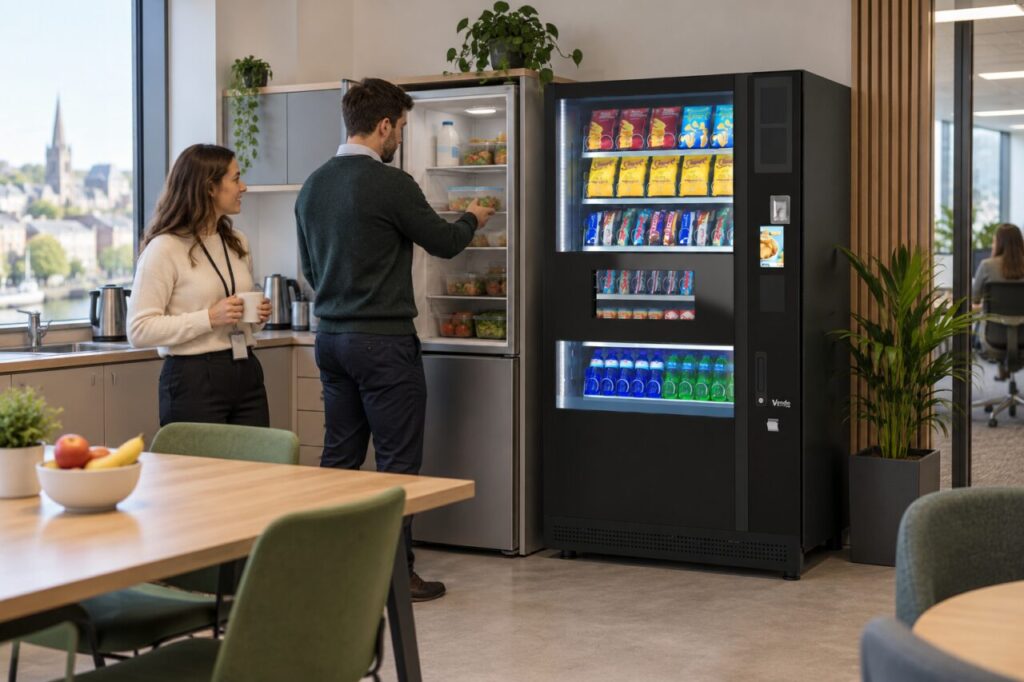
Record when the new option became available
Note the fridge’s introduction date and any related changes, such as new kitchen seating or a staff communication campaign. Ask whether it is available to all shifts and whether people can use it on the days they attend. These details help explain what changed in the refreshment environment without needing to record the contents of employees’ lunches.
Keep the review at an aggregate level. You do not need to monitor who brings food or identify individuals in sales reports. Compare the overall pattern with the office’s working days and occupancy. A quiet week caused by annual leave is not good evidence that the fridge alone changed demand.
Compare product groups and time periods
Look at drinks, snacks and other relevant categories separately. Staff bringing a main meal may still buy an afternoon snack, while chilled drinks could follow a different pattern. Use comparable periods long enough to include normal attendance variation. Record stockouts and machine downtime so that lower recorded sales are not mistaken for lower customer interest.
If transaction timing is available through the agreed reporting setup, compare broad periods such as lunch and afternoon breaks. Do not assume that a particular purchase represents a missed lunch or a dietary preference. The useful question is which products and quantities continue to serve the office, not why a named person chose them on a particular day.
Make a small, reviewable range adjustment
Discuss the evidence with the operator before changing the layout. One modest adjustment may be easier to evaluate than replacing several categories at once. Keep track of what changed, when it changed and the reason. Check product suitability, pack size and customer information alongside popularity; a range decision should still work reliably in the selected equipment.
Our office vending page outlines the workplace context, while fully managed vending places stocking within the agreed operator arrangement. If your site uses that service, share observations and requests with the operator rather than adding your own products to the machine or changing its selection labels.
Review convenience as well as totals
Ask staff whether the vending range still offers useful choices when they forget lunch, work late or want a quick drink. Keep those comments separate from measured sales and label them as feedback. A small number of requests can identify a useful question to test, but it does not establish a guaranteed level of demand for a new product.
Set a review date and compare the revised range with the recorded starting point. Include any further changes to attendance or kitchen access. If demand has shifted, update refill quantities and the site brief with the operator. If it has not, retain the evidence rather than forcing a change merely because a new fridge was installed. The purpose is a refreshment service suited to the office’s actual habits and access needs.
Related guidance: Office Vending at Weekends: Review Demand Separately from Weekdays.
Planning or reviewing vending at your site? Contact the team with your location, equipment details and the question you would like to resolve.