
Office Vending for Early Starters: Check What Is Available Before Reception Opens
Office vending may be available before reception opens, but the early shift can have a different experience from staff arriving later. The room may be harder to find, a preferred product may have sold out overnight or the usual person who explains payments may not be present.
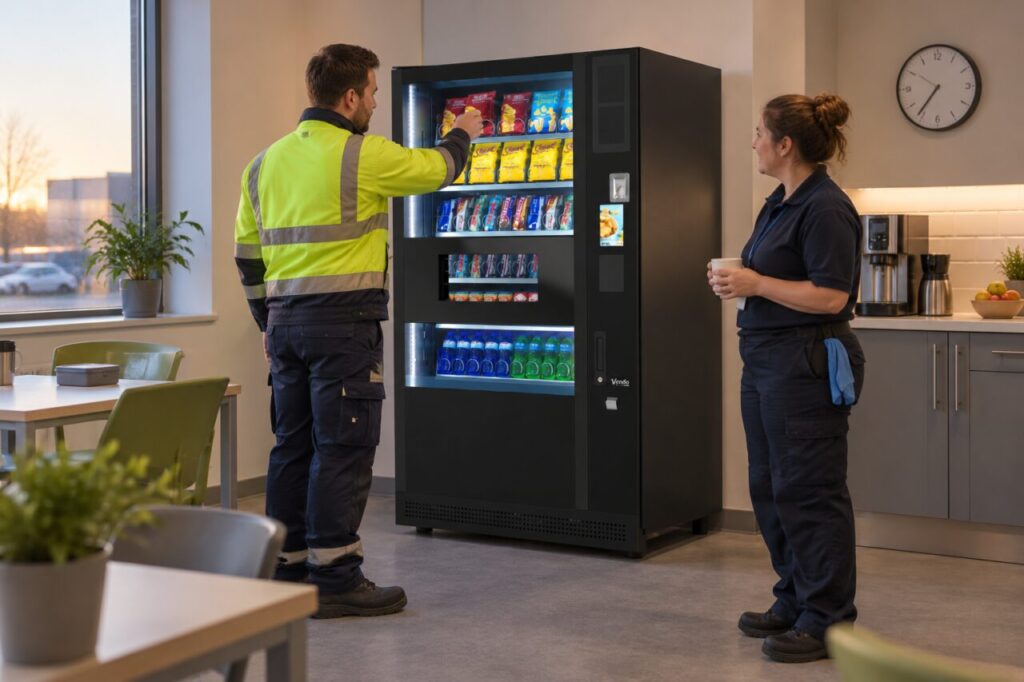
Review the early-start experience directly rather than assuming the daytime arrangement works unchanged. A small number of regular users can reveal practical access problems that disappear by the time the main office team arrives.
Walk the authorised route at the relevant time
Ask a responsible site colleague to check the route during the early working period. Confirm which doors and break areas staff are permitted to use. A vending machine visible through a locked reception area is not a useful refreshments option for someone who cannot access that space before their shift.
Check lighting and wayfinding through the building’s normal facilities process. Do not leave secure doors open or share access codes to make the route easier. If the agreed route changes outside reception hours, explain that clearly to authorised staff and include the correct contact for a building-access problem.
Check the range at the start of the day
Look at what is actually available before the first early break. An afternoon photograph of a full machine does not establish morning availability. Record repeated gaps by product and time, and distinguish them from one unusual busy evening. Avoid assuming that an empty selection proves how many customers wanted it.
Discuss a practical breakfast or early-shift range with the operator using specific requests. People may want a drink, a small snack or something they can carry into an approved eating area. Do not promise fresh food, particular dietary suitability or a daily early refill unless those details have been agreed for the site.
Make the help route usable
Early starters should be able to find the operator’s customer-support information without waiting for reception. Check that the notice identifies the machine or location and explains the reporting route. A colleague’s personal phone number should not become the default help desk simply because they usually arrive first.
The fully managed service offers case logging at any time, while technical attendance follows the issue and agreement. Explain that distinction if staff expect an immediate engineer because support is available. Keep building-access enquiries and vending purchase enquiries directed to the appropriate contacts so neither is lost.
Ask whether contractors and permanent employees have different early access permissions. Keep the review within those permissions; the refreshments information should explain the available route without implying that a vending purchase grants entry to another part of the building.
Review the service with early users
Ask early staff about their experience after any agreed change. A short question about access, availability and payment is more useful than asking only whether they like the machine. Include people who stopped using it, since their absence from sales records will not explain the reason they left.
Use the findings when reviewing office vending arrangements. Compare early demand separately from the main lunchtime peak, especially where different teams work fixed hours. Keep the review proportionate: a clearer route or an adjusted product allocation may solve the problem without new equipment. Record the agreed change and check it at the same early time on a later working day, rather than signing it off during an unrelated afternoon visit.
Related guidance: Office Vending at Weekends: Review Demand Separately from Weekdays.
Planning or reviewing vending at your site? Contact the team with your location, equipment details and the question you would like to resolve.