
Office Vending with a Fortnightly Rota: Review Two Weeks Together
A fortnightly office rota can make one week’s vending figures a poor description of the whole workplace. The same weekday may have a different mix of people in the following week. Before cutting a range or increasing stock, compare the full repeating pattern. Use attendance totals and operating conditions to explain the context without tracking which named employee bought a particular snack.
Define the repeating cycle
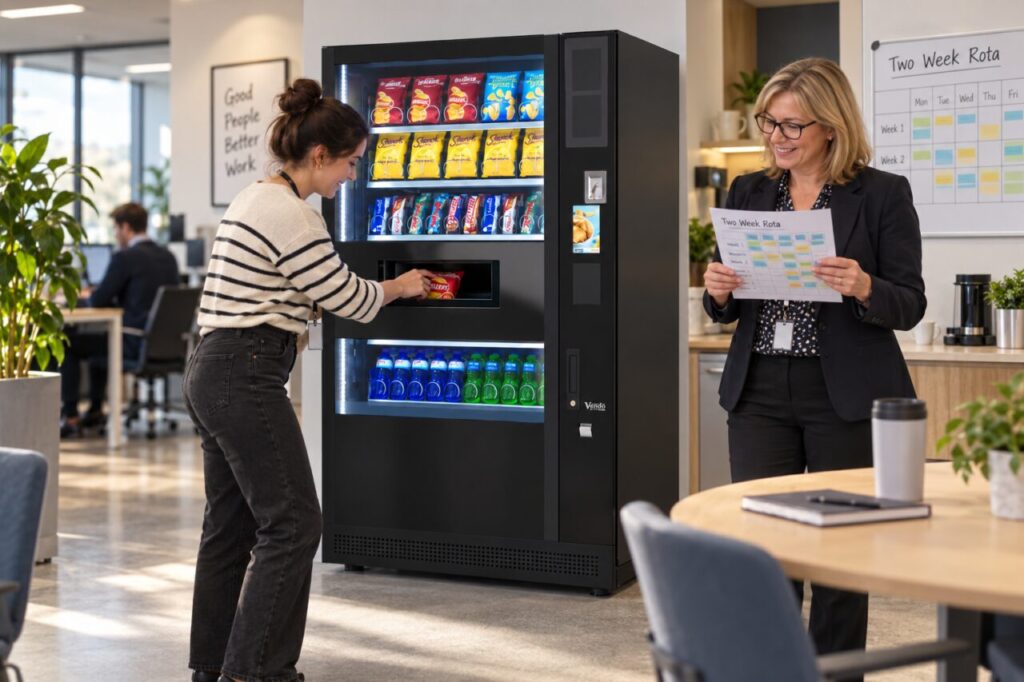
Ask the workplace contact to describe the rota in broad terms: which days differ between week one and week two, approximate numbers present and normal opening hours. Record when the cycle began and whether the pattern is expected to continue. A calendar label such as ‘week A’ only helps if everyone uses the same dates, so include an actual start date in the service brief.
Distinguish the planned rota from exceptional events. Training, visitors or an office closure may affect one day without changing the underlying pattern. Keep a short note of those exceptions when reviewing sales or stock availability. The aim is to give the operator useful context, not to build a detailed attendance record for individuals or infer personal preferences from their scheduled presence.
Compare like days across complete cycles
Review more than one full cycle where practical before concluding that a pattern is established. Compare the equivalent day and rota week, while checking whether the machine and intended products were available. A lower total during week two may reflect fewer people, a stock gap or another circumstance. The rota provides a question to investigate rather than an automatic explanation for every difference.
For example, a quieter first Monday and a busier second Monday should not simply be averaged and forgotten if one repeatedly runs out of a requested drink. Ask whether the refill arrangement can reflect the observed need. Keep the example qualitative until actual records support a change; there is no universal stock uplift that follows from having a fortnightly schedule.
Ask about differences in use
Gather focused feedback from the groups using each part of the cycle. Ask whether they can find the products they need at their normal break, rather than asking only whether they like the machine. Someone attending less frequently may experience an empty selection every visit even when the overall monthly total looks satisfactory. That is a useful availability question for the operator to examine.
Keep product requests separate from faults and access difficulties. If one group reaches the break room at different hours, check whether the same route and payment options are available. Do not attribute the issue to the range until the purchase journey is understood. A concise record of occasion, product and availability is more actionable than a general statement that one rota group is unhappy.
Trial an adjustment and review both weeks
Agree one proportionate change with the operator, such as a stock allocation or visit arrangement appropriate to the service. State which issue it is intended to address and review it over complete cycles. Avoid changing the range, prices and schedule simultaneously if that would make the result impossible to interpret. Record any new exceptions that occur during the trial.
When the office changes its rota, update the vending brief rather than leaving the old pattern in place. Give the operator enough notice to discuss practical implications. The goal is a service that reflects the repeating workplace rhythm, with decisions supported by observable demand and availability. It is not to assume that every attendance increase translates directly into the same increase in purchases.
Explore office vending options and explain your full attendance cycle when discussing the site.
Contact our team to review a suitable workplace vending arrangement.
Related guidance: Office Vending on Hybrid Working Days: Use Attendance Totals Without Tracking Individuals.