
Office Vending on Meeting-Heavy Days: Separate Visitors from Regular Demand
A busy meeting day can produce vending demand that differs from the office’s normal pattern. Visitors may arrive together, use the break area briefly and leave before the usual afternoon peak. Before changing stock levels or interpreting a sales increase, separate this temporary activity from regular staff demand and find out what refreshments are already being provided.
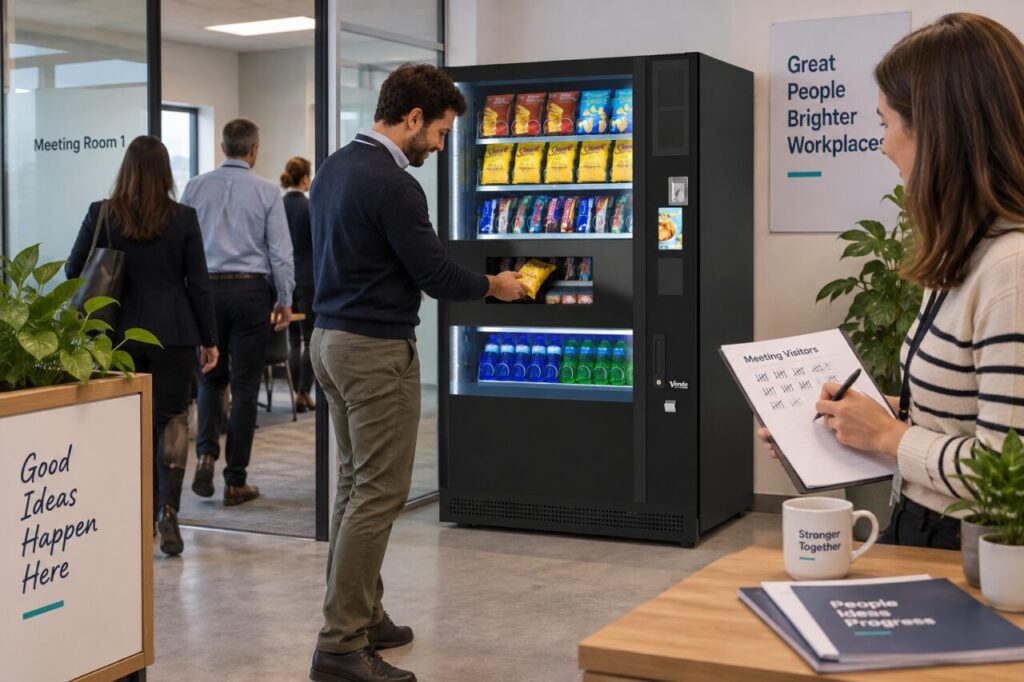
Describe the meeting pattern
Ask the office coordinator for a simple overview of expected attendance and timing. Aggregate numbers are usually enough for this planning discussion; individual visitor names are not needed to estimate a refreshment requirement. Note whether the event is a one-off, a repeating training session or part of a larger change in how the building is used.
Compare the meeting schedule with normal employee attendance. A visitor event may coincide with a quieter staff day or add demand to an already busy period. Explain the pattern when reviewing office vending options. Avoid describing the venue as permanently busier on the basis of one unusually full meeting room or an isolated high-sales day.
Understand what is already catered
Check whether the meeting organiser supplies drinks, snacks or a meal. Vending may fill a different gap depending on that arrangement. Attendees who receive a planned lunch may still want an individual drink later, while another event may provide all refreshments. Ask about the actual plan rather than assuming every visitor represents the same likely purchase.
Clarify whether visitors can use the vending area under the site’s normal access arrangements. Do not direct people through restricted staff spaces merely because equipment is nearby. If the service is intended for visitors, make the route and purchase process understandable. Keep the message accurate about availability and payment rather than implying the organiser has funded products when that has not been agreed.
Plan a proportionate range response
Discuss the expected pattern with the operator before asking for a large temporary increase. Explain the event duration, likely busy times and any known product preferences. The operator can assess the practical refill arrangement and product suitability. A brief meeting does not necessarily justify a permanent range expansion or an additional machine without further evidence.
If specific products are requested, distinguish a confirmed order from a suggestion about what attendees might like. Record any agreed temporary change and what will happen afterwards. Avoid leaving a special-event range in place by accident and then judging normal staff demand against products chosen for a different audience. Keep the event’s purpose visible in the range notes.
For longer temporary occupancy changes, see the guide to project teams and their end dates. Meeting-day planning is shorter in scope, but the same principle applies: identify when the unusual demand ends. This allows the operator and host to return to the ordinary arrangement without relying on someone remembering an informal request.
Review the event in context
After the meeting, note any relevant availability issues and the timing of unusual purchases where reliable information is available. Compare the event with similar days rather than treating it as a new daily baseline. Sales records alone may not identify which customers were visitors, so describe the connection as an observation rather than a measured customer split.
Ask the host whether attendees could find and use the service and whether the range addressed the intended gap. Keep feedback specific: an unavailable product, unclear directions or an unexpected payment question can each suggest a different improvement. A general statement that the vending was busy is less useful for preparing the next comparable event.
The practical outcome is a better plan for the next meeting-heavy day. Record what was agreed, what was observed and what remains uncertain. That helps the site support visitors without distorting the regular staff offer or buying stock on the assumption that every event will produce the same pattern of purchases and product preferences.
Plan workplace vending around your office’s real attendance patterns.