
Office Vending Beside a Microwave: Observe Both Queues Together
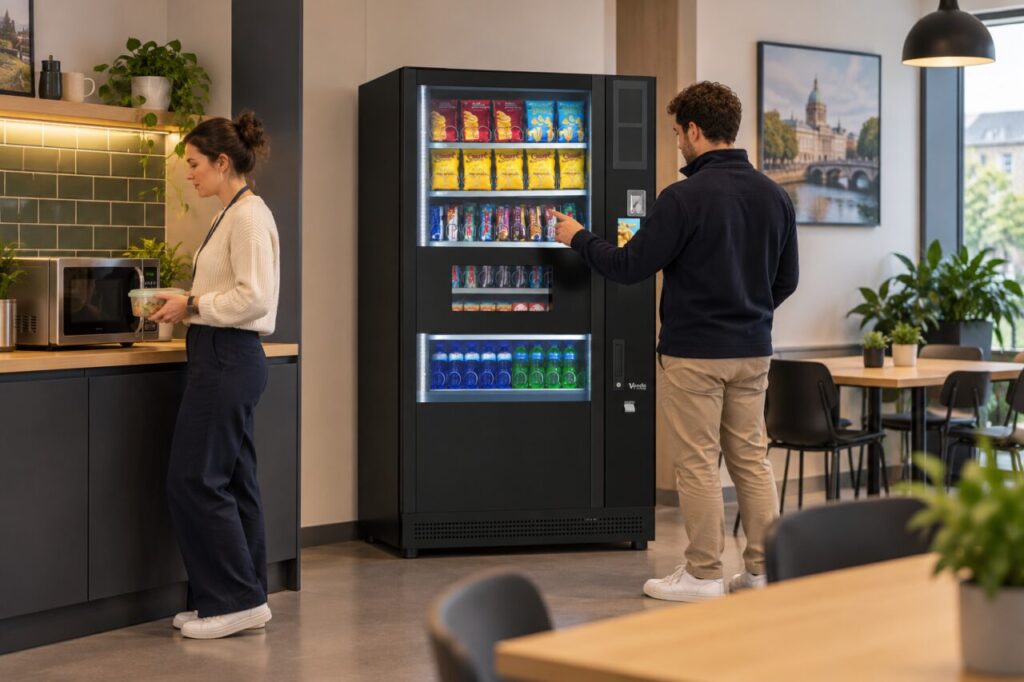
An office kitchenette can contain two separate queues that become one obstacle at lunchtime: people heating their meals and people buying from the vending machine. Each appliance may have enough space when considered alone. The problem appears when users wait, collect items and return to a counter at the same time. Observe the combined activity before deciding that more vending capacity is the answer.
Watch a representative lunch period
Choose a normal busy day and note where people stand while waiting for the microwave, where they put lunch containers and how they approach vending. Record short observations without photographing identifiable colleagues unnecessarily. Look for repeated crossing movements, such as a person carrying hot food through the place where customers collect snacks or drinks.
Repeat the observation on another day if attendance varies significantly. One unusually busy meeting or a broken appliance can distort the picture. Separate the number of people buying from the machine from those merely standing nearby. A crowd beside vending does not necessarily show a vending queue, particularly in a small room shared with several other facilities.
Identify the task that creates the delay
Ask whether the issue occurs during selection, payment, collection or waiting for the other appliance. These call for different responses. Clearer vending instructions may help a hesitant buyer, while they will not shorten a microwave cycle. Likewise, an additional machine may add cabinet space without improving the route through a cramped kitchenette.
Notice whether people leave containers or personal items on surfaces needed by others. Discuss an appropriate waiting and preparation arrangement with the facilities team. Avoid placing a makeshift table beside equipment if it obstructs servicing or narrows the customer route. The supplier should review changes close to the vending cabinet rather than learning about them at the next visit.
Test a modest layout change
Consider whether signs, a different waiting position or an agreed counter arrangement can reduce crossings. Keep the proposed change understandable to first-time visitors as well as regular staff. Do not rely on an unwritten rule that only long-serving employees know. Any solution should work during the busiest ordinary period, not just while the room is empty.
When discussing office vending, provide a plan showing the microwave counter, seating, doors and other activities. This gives the supplier a more realistic picture than a close photograph of the machine’s intended corner. The managed service assessment is an opportunity to discuss the overall space and customer requirements before an arrangement is agreed.
Check whether the change actually helped
Observe another comparable lunch period after the adjustment. Ask whether users can approach and collect without crossing the microwave waiting line, and whether the counter remains usable. Keep a short note of the result rather than declaring success because the new layout looks tidier. If the problem persists, bring the observations back to facilities and the provider.
Review the room again when attendance, break patterns or appliances change. The useful measure is how comfortably the combined activities work, not the number of machines fitted into the room. A kitchenette plan that recognises meal heating, refreshment buying and ordinary movement together can support a better break without assuming that every lunchtime crowd represents unmet demand for another vending machine.
Related guidance: Vending Queues and Fire Exits: Check More Than the Cabinet Footprint.
Planning or reviewing vending at your site? Contact the team with your location, equipment details and the question you would like to resolve.