
Office Overtime Temporarily Lifts Vending Sales: Separate the Extra Hours in Your Review
A busy overtime week can lift office vending sales without indicating a permanent change in everyday demand. Before expanding the range or increasing routine stock, identify the additional access hours and the people who were present. Keep the exceptional period visible in the review rather than allowing it to redefine a normal week silently.
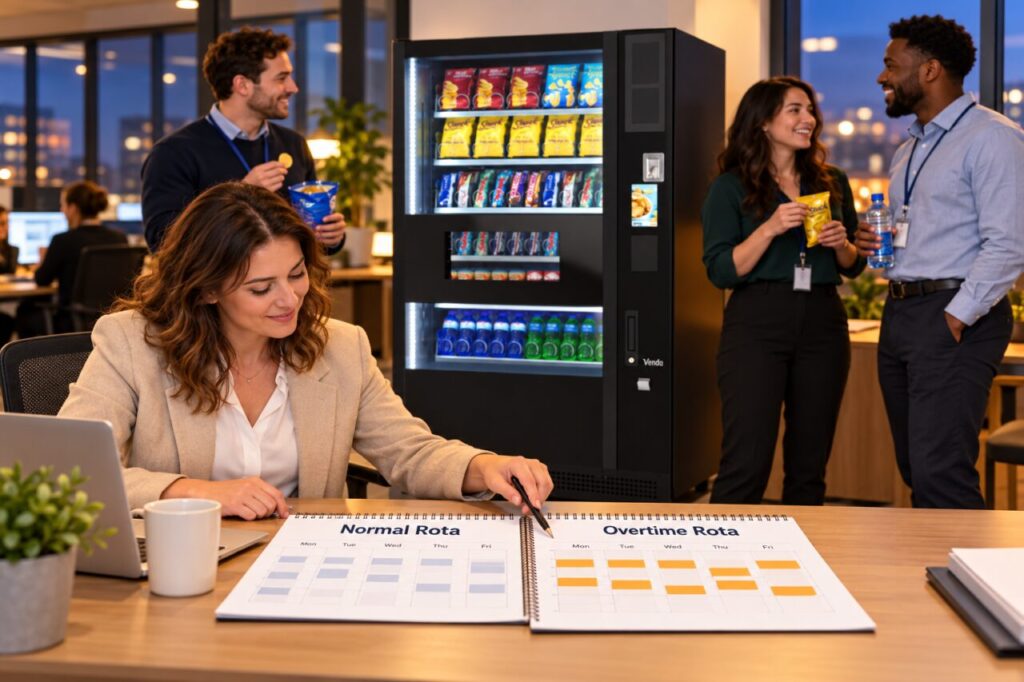
The extra sales are real. The question is what they tell you about future purchasing. A project deadline, inventory count or temporary evening shift may create a short-lived refreshment need. Planning should meet that need while avoiding a lasting stock increase based on an event that has already ended.
Record the change in attendance
Ask the site coordinator for the dates and broad attendance pattern relevant to the overtime period. Aggregate information is usually enough for a vending review; individual payroll records are not needed. Record whether the extra hours involved the regular team, contractors or visitors, because the buying occasion may differ from ordinary office breaks.
Check that customers could actually reach the vending area during those hours. A staffed office and an accessible refreshment room are not always the same thing. Note any doors, reception arrangements or temporary meeting use that changed access. This prevents attributing every sales difference to the overtime announcement alone.
Keep ordinary and exceptional periods separate
Compare the overtime week with a suitable ordinary period, but show both totals. If the report supports reliable time-based detail, review the extra-hours purchases separately. If it does not, state that the total combines normal and overtime activity. Do not manufacture an evening sales estimate from a weekly total without evidence.
For example, a higher weekly total could include stronger daytime demand as well as evening purchases. The attendance change is relevant context, not proof of the cause of every additional sale. Check stock availability and any promotion at the same time so that the review does not ignore other obvious differences.
Plan the next known event
Ask whether the overtime pattern will repeat and when the venue expects confirmation. Treat an approved schedule differently from a possible future project. Discuss a temporary refill adjustment with the operator where the evidence supports it, including access arrangements for service visits outside the usual routine.
Look at the products actually chosen. A few additional late snacks may call for a different response from sustained demand across drinks and food. Keep any change proportionate to the confirmed period and review remaining stock afterwards. Avoid assuming that the entire office wants a permanently larger range because one team worked late.
Return to a clear baseline
After the exceptional work ends, mark the date in the review record and compare subsequent ordinary weeks with the earlier baseline. Do not label a return to normal demand as a sudden service failure. Conversely, do not dismiss a real stock or payment problem merely because sales were expected to fall after overtime stopped.
Keep a short event note with the sales report: dates, known access changes, aggregate attendance context and any temporary stocking decision. That note makes the next comparison easier for someone who was not involved at the time. Over time, repeated events can support better planning, but a single overtime week should remain one observed event rather than a promise of continuing revenue.
Discuss your site and equipment requirements with Vending-Machines.ie, or send an enquiry with the questions your comparison has identified.
Related guidance: Office Vending Survey Response Rate: Show Who Was Invited as Well as Who Replied.