
Office Vending Near Public Reception: Make the Staff-Only Boundary Clear
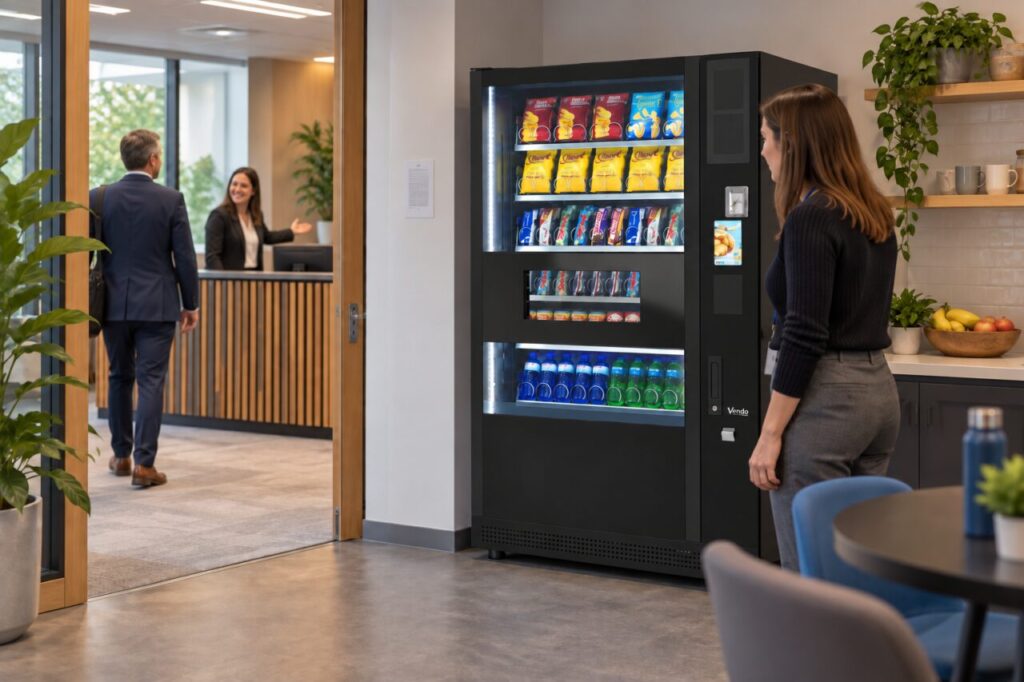
An office vending machine may be visible from reception even when it sits inside a staff-only area. A visitor who can see the machine may reasonably wonder whether they can use it. Resolve that question in the service plan and customer communication. The machine’s location should not leave reception staff improvising access decisions or visitors following someone through a controlled doorway to buy a snack.
Confirm the intended users with the building team
Ask who the service is intended for and whether that matches the access arrangements already in place. The answer may differ between a public waiting area, a shared reception and an internal staff room. Do not change building access rules as a side effect of introducing vending. Any proposal to serve additional users needs the appropriate site approval.
Keep the service agreement and the practical customer route consistent. If visitors are included, establish how they reach and leave the machine through an authorised route. If they are not included, make that boundary clear without suggesting that reception can grant exceptions casually. A useful plan names the responsible contact for access questions instead of leaving the operator to decide during a refill.
Look at the space from a visitor's position
Stand in the normal waiting area and consider what a new arrival can see. A prominent machine, an open doorway and a general refreshments sign may suggest public access even when the intended rule is different. Ask the site team whether the existing information needs clarification. Keep any sign accurate and consistent with the building’s normal wayfinding.
Use plain wording focused on the route or users. A notice should help someone understand where they may go, rather than relying on an unexplained internal department name. Avoid adding promotional language that encourages visitors towards a restricted area. If another refreshment option is available, directions can be helpful, but confirm its actual availability before referring people there.
Give reception a consistent explanation
Provide a short answer that reception staff can use when asked about the machine. Include the relevant access rule and any approved alternative. The explanation should not require them to negotiate equipment policy with each visitor. If the service changes later, update that answer along with signs and visitor information so the old arrangement does not persist informally.
Consider contractors, meeting guests and new staff separately where the building process distinguishes them. A badge or appointment does not necessarily establish the same access for everyone. Let the responsible site team define the categories and communicate them through existing procedures. The vending introduction should support those procedures, not create a parallel permission system.
Review the boundary after launch
Ask reception whether the same questions keep arising. Record the point of confusion, such as a sign seen from the waiting area or directions in a meeting invitation. Review the communication before assuming visitors are deliberately ignoring it. Small changes to an approved notice or introduction may make the intended route much easier to understand.
Include these details when planning office vending. A successful location serves its intended users while fitting the building’s ordinary operation. If the business wants to expand access later, reassess the route and responsibilities before announcing the change. Clear boundaries help both the people buying and the colleagues who welcome them to the site.
Share your office layout through our contact page.
Related guidance: Office Vending with Several Employers: Explain Who Can Use It.