
Scheduling Office Vending Visits Around Meetings and Visitors
A vending refill can be straightforward on an ordinary day and awkward when it coincides with a reception event, a training session or a temporary room booking. Office managers can reduce that friction by giving the operator useful calendar information while keeping the service arrangement practical.
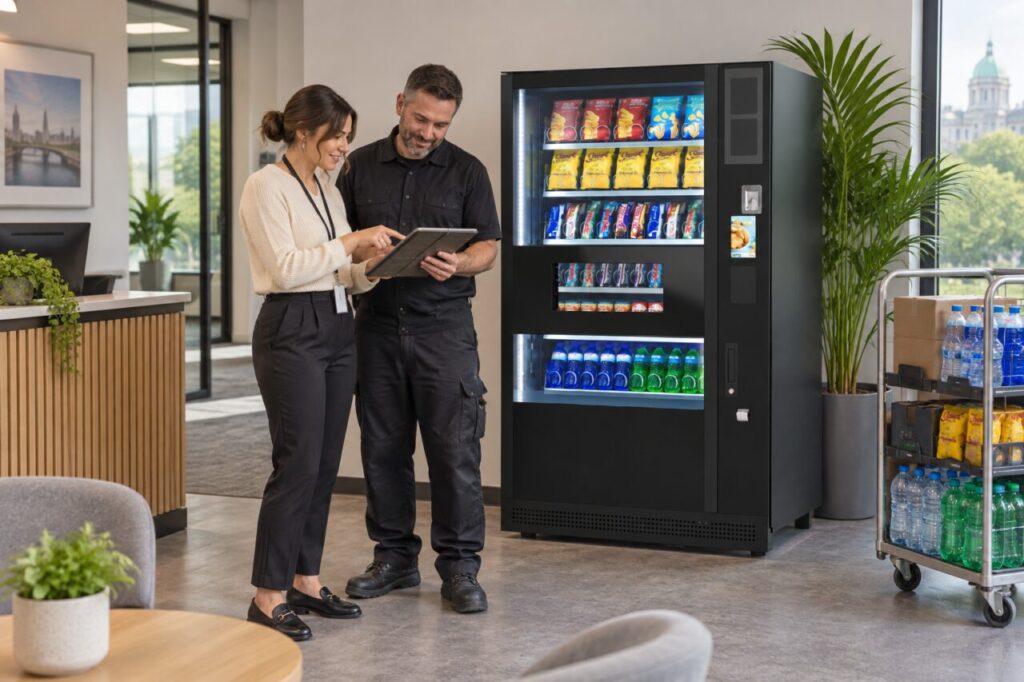
The objective is not to schedule every movement in the building. It is to identify the few predictable restrictions that affect access to the machine, stock handling or the people who need refreshments.
Identify genuine access restrictions
List the times when the machine area or delivery route is unavailable. Distinguish a firm restriction from a preference. A locked meeting suite needs a different response from a corridor that is simply busier than usual.
Walk the route with the person who receives visits where possible. Check who can provide access and whether that person is available during the proposed service window. Avoid promising an operator entry based on a calendar slot if the responsible receptionist or site contact will be elsewhere.
Share changes through one clear channel
Agree how the office will notify the operator of exceptional closures or events. Identify the person who sends the message and the contact who receives it. Do not assume that mentioning an event to a visiting driver changes the next service appointment.
Provide the useful details: affected date, time window, location and the alternative access arrangement you are requesting. Keep unrelated employee schedules or confidential meeting information out of the message. The operator needs to know that a room is unavailable, not the private subject of the meeting inside it.
Consider demand as well as disruption
A large training day may both restrict access and increase refreshment use. Explain the expected change in attendance and the length of the event, clearly labelling estimates. Ask the operator whether a different stock plan or visit timing is appropriate.
Do not order a large permanent increase for a one-day event without a plan for what remains afterwards. Our capacity planning guide can help frame the conversation about concentrated breaks. Use event information to support a practical decision rather than predict exact purchases.
Agree what happens when plans change
Ask how much notice is useful and what happens if an event is cancelled or access is unexpectedly blocked. The answer will depend on the agreed service and route. Avoid assuming that a missed visit can always be repeated immediately.
Choose a fallback contact who can make an access decision when the usual person is absent. Record the boundary of that person’s authority so an operator is not asked to improvise around security arrangements. A clear alternative is more useful than a list of contacts who each expect somebody else to decide.
Review the arrangement after a busy period
Look at whether the planned visits took place, whether staff could reach the machine and whether stock was available when needed. Separate a scheduling problem from an unexpected change in demand. This helps you make a specific adjustment for the next event.
A useful exception notice might state that the usual entrance is unavailable during a training event and name the authorised alternative contact. Ask the operator to acknowledge the change through the agreed channel. Sending a message is not the same as confirming a revised visit, especially when the request arrives close to the planned appointment.
Our office vending service can be discussed alongside your building’s working pattern. Keep a short calendar of relevant exceptions and share the site requirements when requesting a proposal. Good coordination gives the operator actionable information and gives office staff a more predictable service.