
Office Vending on Several Floors: Report Availability by Location
In an office with vending on several floors, a message saying the snacks are gone is not specific enough to organise a useful response. One machine may lack a favourite while another still has a different range. Record availability by the actual machine and location, then communicate alternatives only when they have been checked.
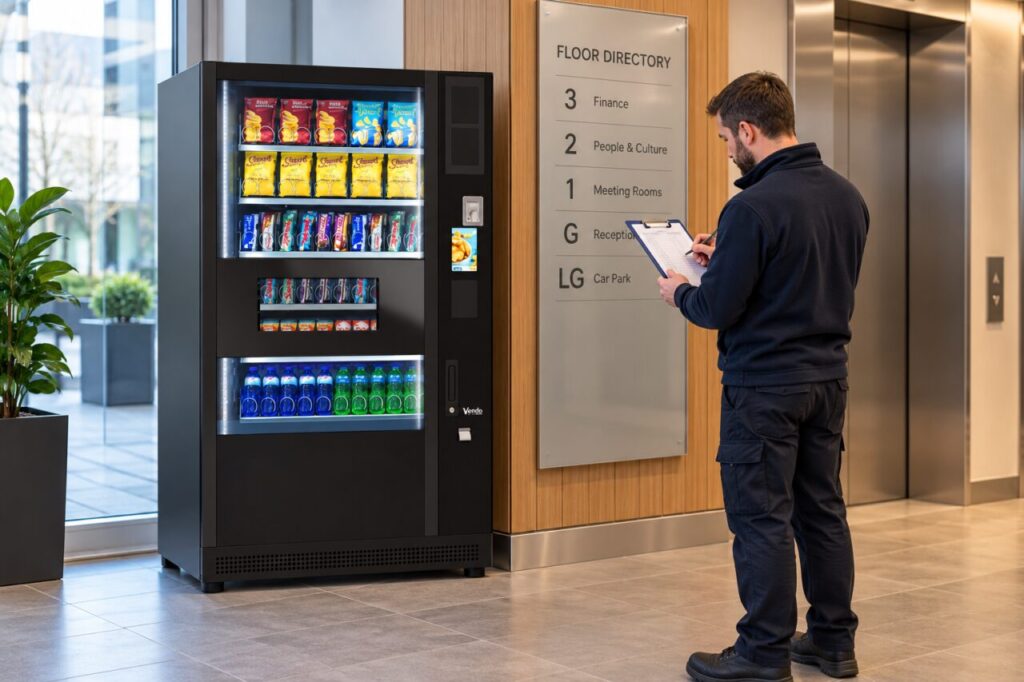
This does not require staff to patrol the building constantly. A consistent naming system and a clear reporting route can make ordinary observations much more useful. The aim is to prevent a local shortage becoming a misleading statement about the whole office.
Use names people can recognise
Identify the floor and the room or landmark customers actually use. Combine that description with the machine identifier where available. A label such as second-floor kitchen is more useful to an employee than a stock-system name they have never seen, while the identifier helps the operator distinguish similar cabinets.
Keep the names consistent across notices, support reports and internal directions. If the building uses mezzanine or ground-floor conventions that visitors may misunderstand, clarify them. Do not assume that a floor number alone explains which side of a large office contains the machine.
Describe the availability issue precisely
Say whether the concern is one product, several selections, payment availability or access to the room. These are different problems. A locked kitchen does not establish that its machine is empty, and an empty favourite does not mean every snack has sold out.
Add the time of the observation. Availability can change between a report and the next person’s break, so a checked alternative should not be presented as a permanent promise. If the operator supplies a status update, keep it linked to the relevant location rather than overwriting a general office-wide message.
Make alternatives useful and realistic
Before directing colleagues to another floor, check whether they are allowed to access it and whether the route is practical for them. Avoid assuming that every employee or visitor can use the same doors, stairs or staff-only areas. The site team should provide appropriate directions within the building’s normal arrangements.
Be clear about what is known at the alternative location. Saying that another machine was available at a particular time is different from guaranteeing the same product or price there. If the range differs, describe it as another option rather than an equivalent replacement for a specific item.
Review the pattern across locations
When recurring reports arrive, compare similar periods for each machine. A busy meeting floor may have different demand from a quieter office wing. Separate attendance, access and range differences before concluding that stock should simply be distributed equally throughout the building.
Ask the operator to review the evidence with the site contact. A repeated shortage at one location might call for a different product allocation or visit arrangement, but that decision should be based on the actual pattern. Moving stock between machines without a record can make the next review harder to interpret.
Keep the resulting communication short: which machine, what issue, when observed and where the update will appear. Colleagues should not need to search several chat groups to find out whether a reported problem has been addressed. Clear location-based reporting supports the wider office vending arrangement without promising that every floor will have an identical range.
Related guidance: read Office Vending Is Shared by Two Shifts: Separate Access Problems from Stock Problems for the connected question.
Include the number of locations and their access arrangements in your enquiry.