
Partly Refilled Vending Selections: Keep Different Stock Dates Traceable
Topping up a partly filled vending selection can leave stock from more than one delivery in the same area. A refill record that says only added twelve bars may not explain what was already there or which product dates are now present. Plan the record and handling method before the visit. The objective is to keep the stock understandable without assuming that a recent refill means every item is newly delivered.
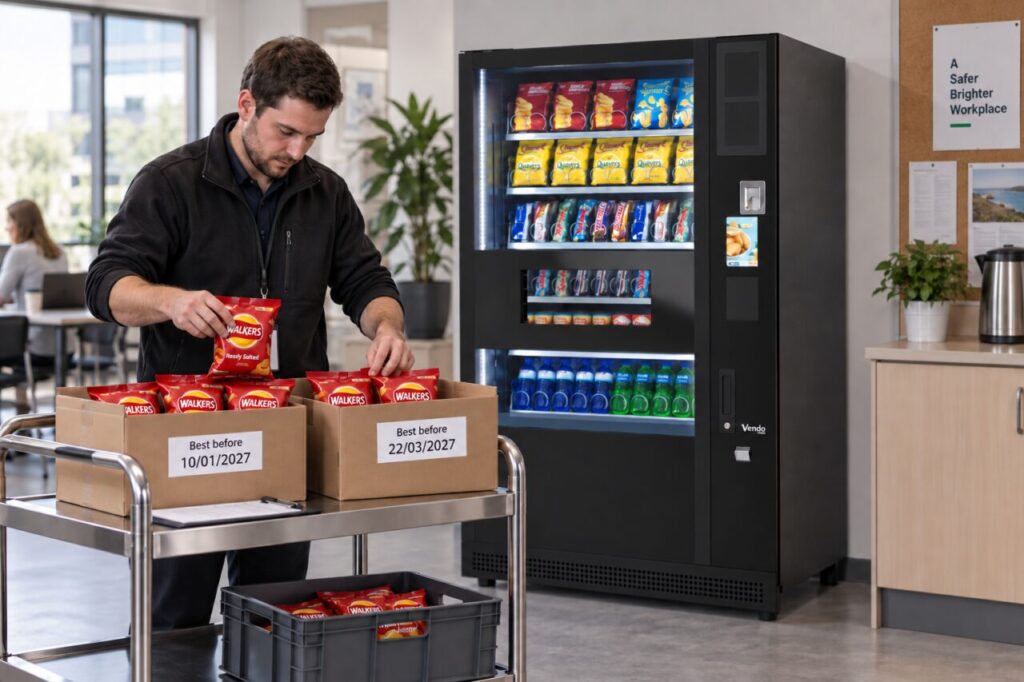
Start with the stock already present
Follow the operator’s approved checking procedure for the actual products and machine. Identify the selection, the quantity remaining and any relevant date or batch information. Do not rely on the outer carton alone when individual packs carry information needed for stock control. If a label cannot be read or the product condition is uncertain, refer it to the responsible person under the site’s process.
Avoid interpreting this checklist as permission to sell, relabel or extend the life of any product. Product handling and food-safety decisions belong with the responsible operator and applicable procedures. The useful administrative step is to make existing stock visible in the record. That helps prevent a later colleague from assuming the selection contains only the newest batch simply because it looks full.
Keep the incoming stock identifiable
Before filling, match the product and pack format to the planned selection. Similar packaging can hide a different variant or size. Record the delivery information required by the operator’s traceability system and keep it connected to the refill. Do not discard the only available identifying information before confirming how it will be retained. A photograph can supplement a record where the agreed process allows it.
If more than one date or batch is involved, ask how the operator wants that distinction recorded and arranged. Follow its documented rotation method rather than improvising a sequence from memory. The method must also suit the machine’s approved loading arrangement. Do not force packs into an unsuitable position merely to make a date order appear tidy or to use up a remaining quantity.
Make a partial refill different from a full replacement
Record whether stock was added to existing items, removed, transferred or replaced completely. These actions have different meanings when somebody later investigates a product query. A simple note that a selection was filled does not necessarily capture them. Use consistent terms so different staff describe the same action in the same way, and record the machine and visit time accurately.
If the actual work differs from the planned refill, record what happened rather than copying the plan. For example, a product may have been withheld pending a check, leaving fewer items available than expected. That is a useful operational fact. It should not be hidden by recording the intended quantity as completed or by treating an unresolved product question as routine saleable stock.
Leave the next operator a usable picture
At handover, the record should show what is present and what remains to be checked. Keep unresolved stock separate under the applicable procedure and identify the person responsible for the decision. The Food Safety Authority of Ireland’s traceability guidance is a useful starting point for discussing food-business records with the responsible operator; your actual system needs to match your operation.
When discussing a vending service, ask how partial refills are recorded, not only how often visits occur. A clear method supports later enquiries and makes cover between operators easier. Review it when the range or packaging changes, and keep the focus on accurate identification rather than adding paperwork that nobody can use during a real stock query.
Discuss your stocking responsibilities with the team.
Related guidance: Vending Refill Records: Connect Each Food Batch to Its Machine.