
A Protective Mat Under a Vending Machine: Get the Installation Detail Approved
A protective mat may look like a simple way to prevent marks beneath a vending machine. However, it changes the surface on which the equipment stands. Before buying a mat or asking the delivery team to position the machine on one, include that proposal in the installation assessment. The useful question is whether this particular floor treatment is suitable for the quoted equipment, its loaded weight and the work needed around it.
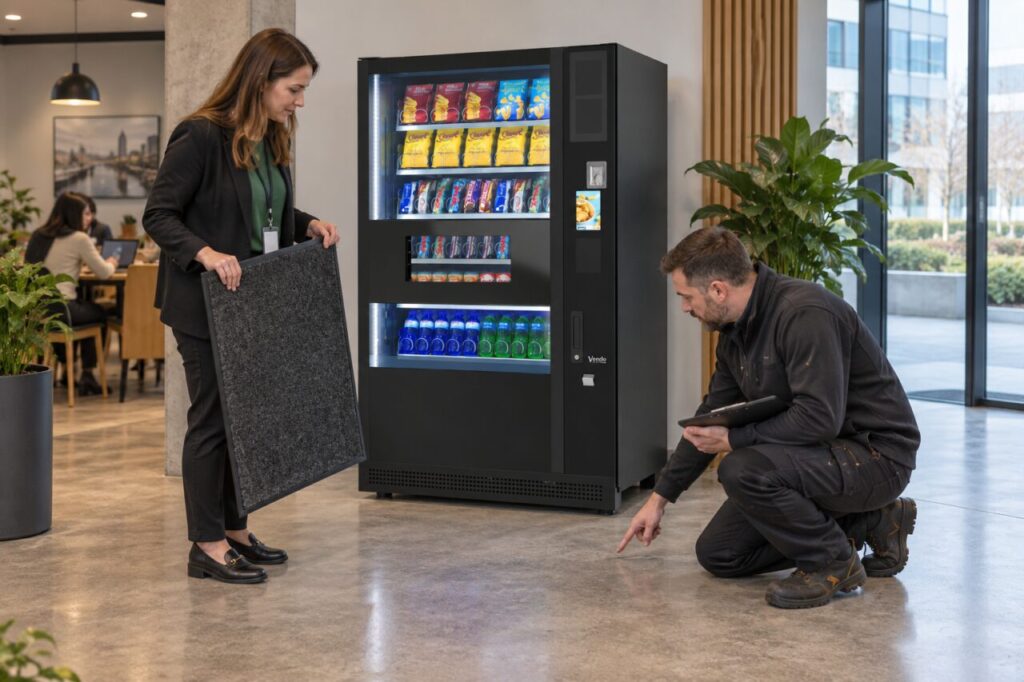
Explain what you are trying to protect
Tell the supplier whether the concern is scratching, indentation, cleaning water or a requirement from the landlord. These are different problems. A loose entrance mat is not automatically an appropriate answer to any of them. Photograph the actual floor and identify its finish if you know it, without guessing the construction beneath it.
Ask the building contact whether there are existing restrictions on heavy equipment or floor coverings. Pass those details to the installer before ordering. The installer needs the proposed finished arrangement, not simply a photograph of an empty room taken before the protective material was considered. Keep the floor manufacturer’s guidance available where relevant.
Get a decision about the complete arrangement
Provide the proposed mat’s dimensions, thickness, material and product information. Ask whether the equipment supplier accepts it for this installation and whether the building team needs to assess the floor separately. Do not infer approval from a general description such as commercial grade. The machine’s feet, levelling requirements and loaded condition all belong in the discussion.
The SandenVendo G-Snack Evolution catalogue is a useful starting point for identifying equipment, but it does not approve your site’s floor treatment. Use the exact model documentation and installation advice. If the proposed material is unsuitable, ask for an alternative arrangement that addresses the original concern rather than adding another layer underneath it.
Consider the edges and the working area
A floor covering can extend beyond the cabinet into the route used by customers or staff replenishing stock. Show its full outline on the plan. Consider where people stand, where a trolley stops and how the area is cleaned. An exposed edge that moves or curls deserves attention before the machine is positioned, not after the room opens.
Also discuss what happens if the floor needs inspection or the material eventually needs replacing. A covering trapped beneath a heavy machine is not an ordinary daily cleaning item. Agree who can arrange access and movement. Site staff should not improvise by lifting corners, inserting packing or dragging the equipment to retrieve a shifted mat.
Record the approved floor detail
Add the agreed arrangement to the installation notes: the product accepted, its position, who supplies it and when it must be ready. If approval depends on further information, leave that item visibly open. A delivery date is not evidence that every proposed floor change has been accepted. Send revisions to both the site contact and the delivery coordinator.
At handover, check that the installed arrangement matches what was approved and record any discrepancy before normal use begins. Keep those notes with the machine’s site information so a later cleaning or refurbishment team does not change the support surface casually. For a new vending machine enquiry, mention floor protection early; it is easier to resolve while the location is still being planned.
Related guidance: Vending on an Uneven Floor: Ask for a Site Assessment Before Ordering.
Planning or reviewing vending at your site? Contact the team with your location, equipment details and the question you would like to resolve.