
Returning to Vending Operation After a Long Gap: Plan a Practical Refresher
Someone who operated a vending machine last year may return to a different range, payment setup or reporting process. Familiarity with the cabinet does not tell you which parts of the job have changed. A practical refresher should start with those changes and finish with supervised routine tasks on the actual equipment. It should give the returning operator confidence about what they can do and a clear route for anything outside their agreed responsibilities.
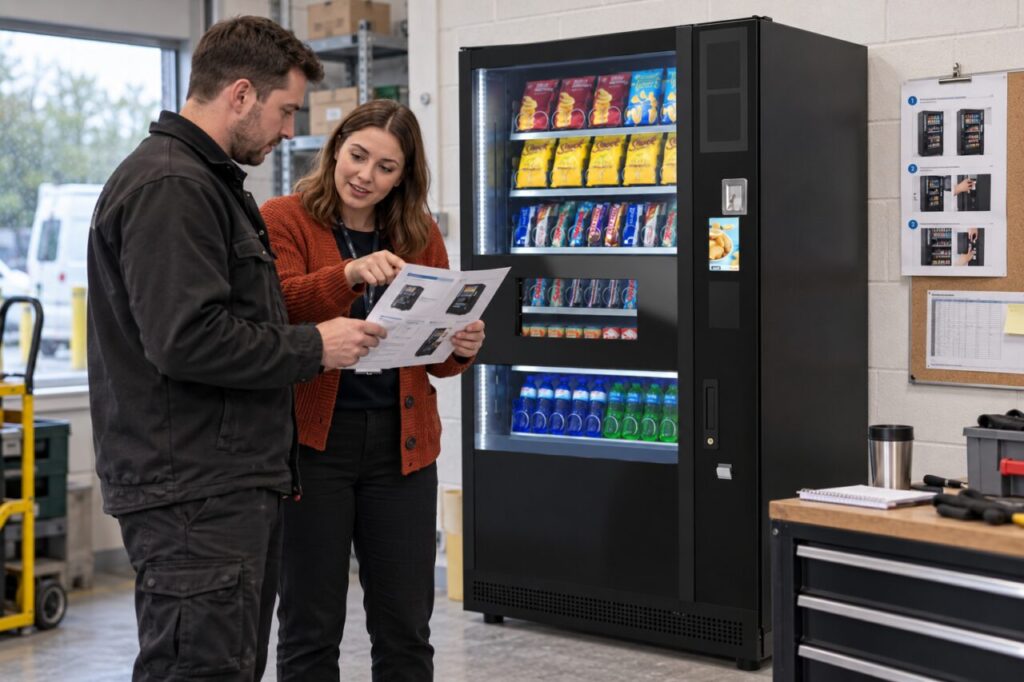
Find out what changed during the gap
Review the equipment record with the person currently responsible for the site. Ask about changes to the machine, controls, stock layout and support contacts. Include routine paperwork and software access where relevant. A returning colleague may remember the old process accurately, which makes an unexplained change particularly easy to miss. Give them the current version of each working instruction rather than a mixture of old and new copies.
Separate confirmed changes from matters still being reviewed. For example, a proposed range change is not yet a loading instruction. Keep the refresher focused on the setup that is in service today, then identify how future updates will be communicated. This prevents the colleague leaving training with a set of possibilities but no clear understanding of the current routine.
Practise the ordinary work first
Choose representative tasks from the operator’s actual duties. These might include checking a delivery, matching a pack to its selection and recording stock used during an approved test. Let the colleague carry out the task under the agreed supervision instead of only watching a demonstration. Ask them to explain what they are checking so that assumptions become visible before independent work resumes.
Use the current products and documents. An empty case or an obsolete pack can be useful as an illustration, but it should not replace practice with the materials the operator will encounter. If the colleague’s role is limited to observing stock and contacting the provider, rehearse that role rather than teaching cabinet access they are not expected or authorised to use.
Rehearse an exception without creating one
Discuss a realistic scenario, such as finding a product that does not match the loading list or receiving a customer report with an unclear payment outcome. Ask where the colleague would record it and whom they would contact. There is no need to create a fault or make speculative purchases. A short conversation can reveal whether the escalation route is understood.
Make the boundary between routine action and technical work explicit. Returning experience is valuable, but it should not become permission to repeat an old repair method on a changed setup. The provider should explain any equipment-specific limits. Keep the current manual and support details available in the place the operator will actually use, not only in a manager’s email archive.
Agree when independent work resumes
Record the tasks covered, the current documents used and any remaining questions. If one area needs further practice, name it specifically and arrange the follow-up. A broad statement that training has been completed is less useful than a short record showing what the colleague can now carry out. Avoid turning the refresher into a test of memory about processes that no longer apply.
When arranging vending equipment and operator support, ask how refresher training can be organised as staff responsibilities change. The aim is a smooth return to the real job, with current instructions and sensible supervision. That approach respects previous experience while recognising that equipment, products and site arrangements may have moved on during the absence.
Discuss operator training needs with our team.
Related guidance: Vending Training Videos: What Still Needs Hands-On Practice?.