
Ask for a Sample Vending Report Before Choosing a Managed Service
Before choosing a managed vending arrangement, ask what information your site will receive after the machines are operating. A sample report can reveal whether the proposed service answers your practical questions or simply provides figures without context. Ask for anonymised or illustrative data rather than another customer’s private records.
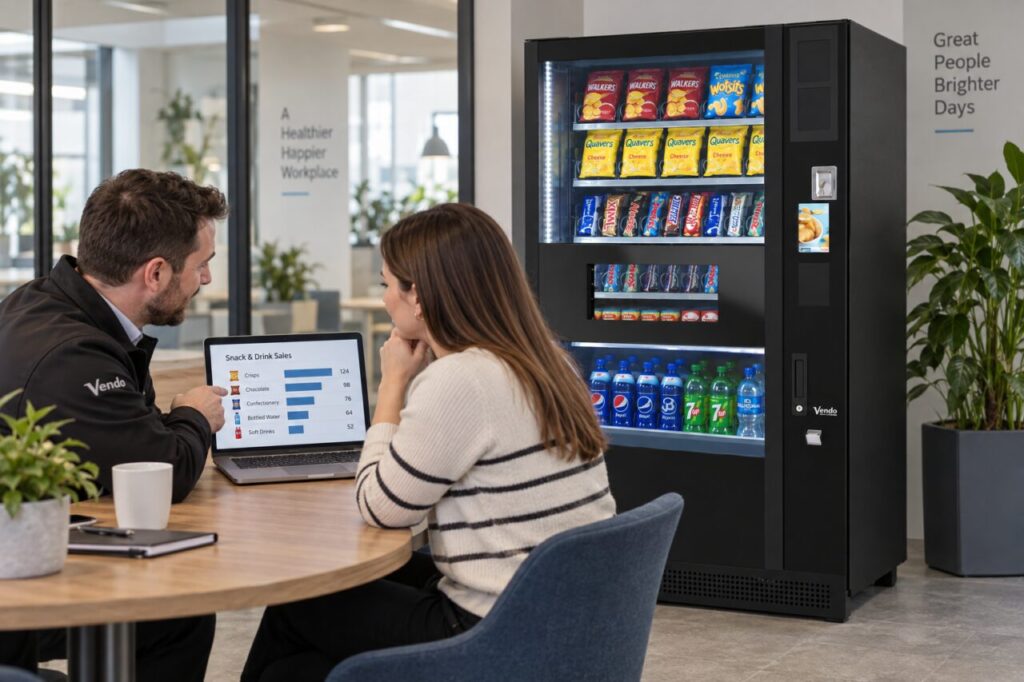
Start with the decisions your site contact needs to make. They may need to understand product requests, unresolved issues or an agreed commercial summary. The best sample is one you can explain to a colleague without needing to guess what the headings mean.
Choose a small set of questions
Write down three or four questions that matter to your arrangement. For example, which requests remain open, what changed in the range, and what needs a decision from the site? Keep those questions distinct from information that only the operator needs for its internal work.
Ask the supplier to show where each answer appears in the sample. If a required answer is absent, discuss whether it can be provided and at what frequency. Do not assume that every available software field will automatically be included in the customer reporting service.
Check the reporting period and scope
A report should make clear which site, machine and dates it covers. Ask how newly installed equipment, temporary closures or missing data are identified. Comparing a full month from one machine with a partial period from another can create a misleading impression unless the difference is visible.
Also ask what the figures represent. Products sold, transactions and revenue are different measures. If the arrangement includes a financial summary, have the responsible colleague review its definitions. Avoid treating an unfamiliar total as profit or a bank settlement without an explicit explanation.
Look for actions as well as totals
Numbers are more useful when they support an operational decision. Ask how a stock concern, recurring fault or customer request becomes an action with an owner. A sample can show whether unresolved issues are carried forward or disappear when a new reporting period begins.
Connect this discussion with your service visit records. The customer report need not reproduce every technical note, but it should make the agreed service status understandable. Ask how your team can raise a correction if a reported action does not match the site’s experience.
Agree access and distribution
Clarify whether the report arrives by an agreed channel or is accessed through a portal. Choose authorised recipients and avoid collecting unnecessary personal information. If a site manager changes, the reporting arrangement should have a clear process for updating access and the main contact.
Ask what can be shared internally and whether an export is available where your business needs one. Keep the request proportionate. A small workplace may need a concise periodic summary, while a larger arrangement may need a structured view across several sites and machines.
Include the report in the service discussion
Save the agreed sample or report description with the proposal, including frequency and any limitations. When reviewing vending services and equipment, compare the usefulness of the information rather than the visual complexity of the dashboard. More charts do not necessarily make the service easier to manage.
After the first reporting period, compare the actual report with the agreed example. Ask for clarification where necessary and refine the useful questions. This gives the reporting process a practical purpose from the start, instead of leaving it as a file nobody confidently uses.
To discuss the reporting needs of your site, contact the team with the decisions your service contact needs to support.