
Delivery, commissioning and training on different days: plan the vending handover
A vending cabinet can arrive before its payment setup is complete, and the person who will refill it may not be available that day. Treat delivery, commissioning and training as separate milestones when they occur on different dates. That gives your venue a realistic opening date and prevents a machine in reception being mistaken for a service that customers can already use.
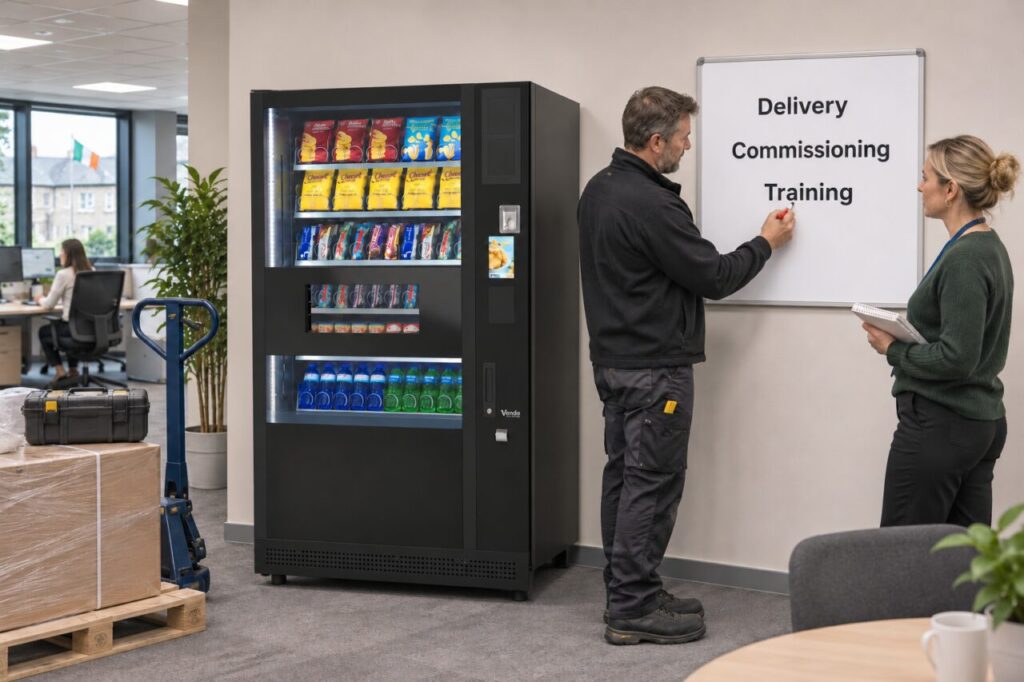
Define what delivery actually completes
Confirm whether the delivery team brings the cabinet only to the agreed receiving point or also positions it at its final location. Record the equipment identity, visible condition and any supplied accessories. Have an authorised person receive the delivery and keep the paperwork. If the installer will attend later, agree how the cabinet will be protected and who may access it meanwhile.
Do not fill or switch on equipment merely because it has been delivered. Follow the supplier’s model-specific instructions and agreed handover sequence. The HSA’s work-equipment guidance supports using appropriate instructions and competent personnel. Delivery staff, site staff and commissioning engineers can have different responsibilities; write down who owns each unfinished step.
Give commissioning its own acceptance record
Ask the supplier what commissioning includes for the quoted configuration. Relevant checks might concern dispensing, cooling, the proposed payment method and the correct support contact. These are questions for the installer, not a universal technical procedure for every model. Include the exact stock and payment arrangement intended for opening so that the test resembles ordinary customer use.
List any remaining exceptions explicitly. For example, a cabinet may dispense correctly while an employer-funded payment scheme is still awaiting setup. Record whether ordinary purchases may start and who makes that decision. A vague note saying everything is almost ready leaves reception and customers interpreting the machine differently. Use a specific status, responsible person and next appointment instead.
Train the people who will do the work
Book the actual refill operator and a suitable deputy, rather than whoever happens to be free on delivery day. Ask the trainer to cover the tasks those people are authorised to perform, the records they should keep and when to stop and call support. Avoid treating a short demonstration to a buyer as proof that every shift can operate the machine.
Have attendees explain the process back in their own words and demonstrate permitted routine tasks under supervision. Keep manuals and contact details somewhere the team can find them later. Arrange how a new starter will receive training. For vending equipment bought for a workplace, the practical handover matters as much as agreeing the cabinet specification.
Connect the milestones to the commercial dates
Ask which event starts hire, service cover, warranty and any remaining payment obligation. Do not assume all four start on the same date. Request written clarification if the order uses installation without defining whether that means physical placement or completed commissioning. This is a comparison of the offered terms, not a statement of universal contractual rights.
Tell staff the customer opening date only when the responsible operator has accepted the service as ready. If the dates move, update the notice and the people covering reception. Keep the transport information with the delivery record, and retain commissioning and training records separately so a later query reaches the correct evidence quickly.