
Shared-Building Vending: Who Can Approve a Change?
In a shared building, several tenants may use one vending machine while only one organisation holds the service agreement. A request from a regular customer is useful feedback, but it may not be an authorised instruction. Make the decision route clear before competing requests cause confusion.
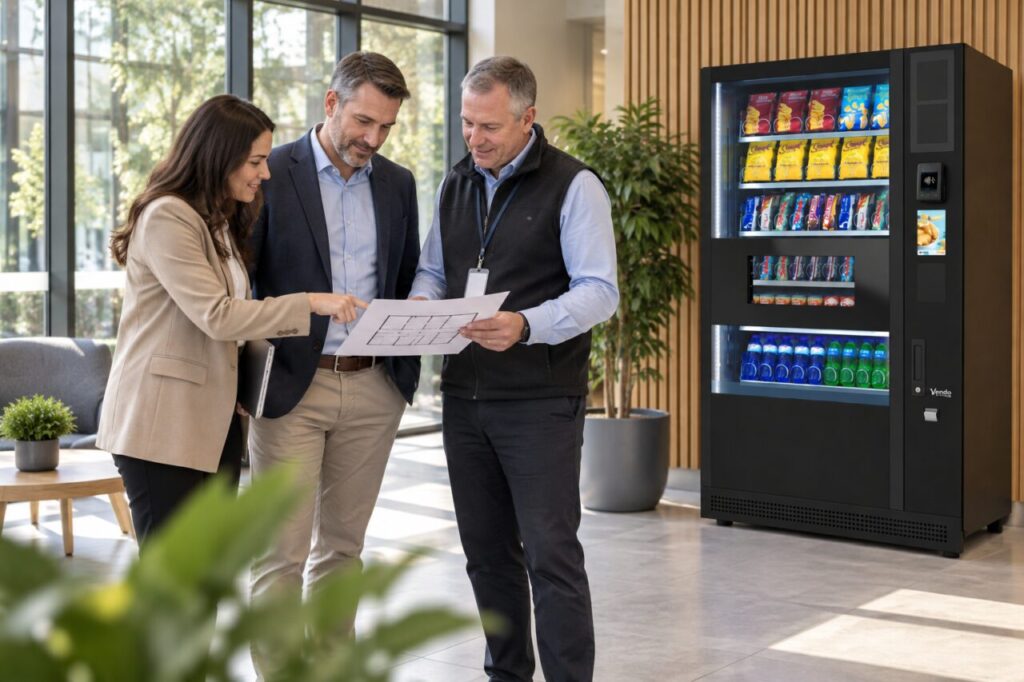
Identify the responsible parties
Record who owns the machine, who holds the service arrangement and who manages the common area. These may be different people. Ask the relevant parties to confirm which decisions each can make. A tenant’s office manager may understand staff preferences without having authority to approve a machine move or a change to a building-wide service.
Separate feedback from approval
Give users one clear way to suggest products or report problems. Then identify who reviews suggestions and passes approved changes to the operator. Avoid treating the loudest request as a decision for the whole building. Keep a brief record of the problem, the proposed change and the people affected so useful feedback does not disappear into informal conversations.
Set rules for different changes
Product suggestions, selling-price changes, relocation and access arrangements do not necessarily need the same approver. Agree a practical decision table with the parties involved and the operator. The scope of a managed service should be checked against the actual agreement, even where a supplier describes stock and maintenance support. Do not assume a general service description settles every building-specific responsibility.
Communicate the final decision
Tell the requesting tenant what was agreed, who will carry it out and when the result will be reviewed. If a request is declined, explain the practical reason rather than leaving an unexplained silence. Update the common-area instructions when necessary. One clear owner for each change helps the operator act consistently while still hearing the needs of different users.
Further guidance: managed vending service information. For a related practical checklist, see Vending Service Agreement: Questions for Site Managers.
For help planning an arrangement for your site, contact Vending-Machines.ie about your requirements and available managed vending services.