
Staff can buy extra vending items after using an allowance: make the boundary clear
A workplace vending allowance can cover some purchases while leaving employees free to buy more with their own money. Make that boundary clear before launch. Staff should be able to understand when employer-funded credit applies, what happens after it is used and whether a further purchase requires a separate payment method. Do not promise functions the installed system has not demonstrated.
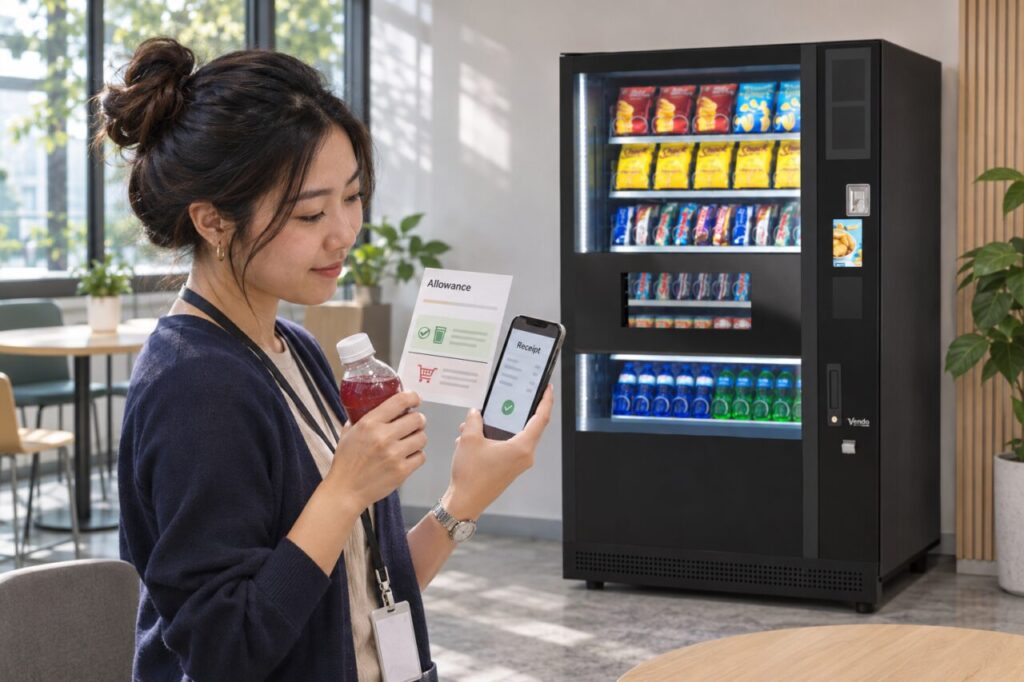
Describe the allowance in concrete terms
State what the employer has agreed to fund and the period it covers. Explain whether the allowance is a monetary balance, a number of eligible items or another defined benefit. Identify excluded products where relevant. Avoid using free vending as the whole description when customers can also encounter ordinary paid prices on the same cabinet.
Keep the policy consistent with the supplier’s actual setup. Ask the provider to demonstrate the intended rule on the exact payment arrangement. If the system cannot divide a purchase between remaining benefit and personal payment, explain what the customer must do instead. Do not infer split-payment capability from a general claim that the machine supports staff accounts.
Test the transition from funded to paid purchases
Use agreed test accounts and representative products, without using an employee’s credentials informally. Check a purchase while sufficient allowance remains, a purchase after the allowance is exhausted and any relevant boundary case. Record what the screen shows before the customer commits. The test should establish whether the customer can distinguish a funded purchase from one charged personally.
A hypothetical allowance of three eligible drinks does not tell you how a fourth drink will be handled. It might require a bank card, another approved account or a separate transaction flow. Ask the supplier to show the configured result. Keep test purchases identified in the commissioning record so they do not appear as ordinary benefit usage in the first report.
Give staff a short, usable explanation
Place the essential information where people select and pay, without obscuring machine controls or product details. Explain how to check entitlement and who can answer an account question. Use plain wording such as employer allowance and personal purchase if those terms fit the arrangement. Avoid a long policy document being the only way to understand a small everyday transaction.
Provide an assistance route for somebody who believes a purchase used the wrong funding source. Ask for the relevant time, amount and machine reference through the approved process, not full card information in a public message. Keep employer scheme questions separate from technical faults and ordinary product refunds so the enquiry reaches the person who can resolve it.
Reconcile the two kinds of activity
Agree what reporting the employer receives and how funded purchases are distinguished from personal sales. Do not assume all purchases by a staff member belong on the employer’s invoice. Review the first reporting period against the configured rules and investigate discrepancies with the provider. Correcting a report and changing an employee’s balance are separate actions that should remain traceable.
When discussing an employer-supported vending arrangement, describe both the benefit and the desired paid-purchase option. The guide to shift-based subsidies addresses another policy variation. Keep each rule explicit, test their interaction and update staff guidance when the employer or provider changes the arrangement.