
Temporary Building Closures: Update Vending Access Information
A vending machine can remain in place while a building closure changes who can reach it. Refurbishment, an event or a temporary restriction may affect the customer route even when the equipment itself is ready. Treat access information as part of the service plan. Staff and visitors should not be directed towards a purchase point they cannot reach, and the operator needs the current arrangements for any agreed visit.
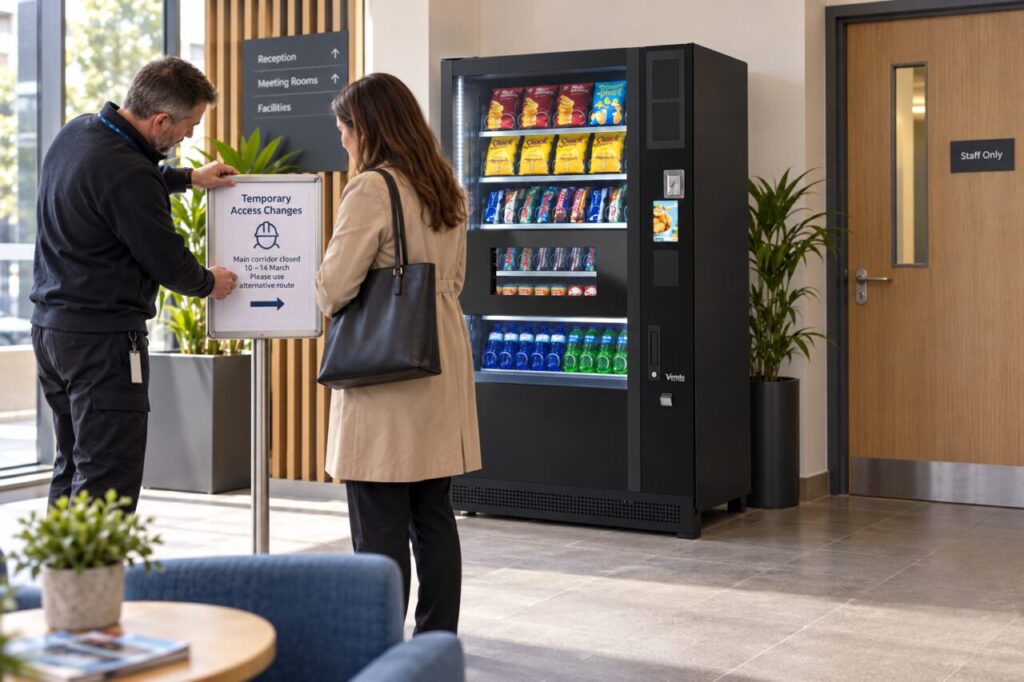
Separate equipment status from building access
Confirm which area is closed, the relevant dates and the people affected. A corridor restriction may prevent public access while authorised staff still use another route. Do not describe the machine as faulty if the actual issue is a building restriction. Equally, do not advertise normal availability simply because the cabinet remains powered and stocked behind a closed door.
Ask the building’s responsible contact to define any permitted alternative route. Do not create an informal shortcut through restricted rooms or prop open a controlled door to preserve vending access. If there is no approved route, communicate that limitation plainly. Keep the vending operator informed so its service planning uses the same facts as the site’s customer-facing message.
Find every place that gives directions
Review reception instructions, internal notices and any site information you control that directs people to the machine. Identify the person responsible for each item and request a dated temporary update. Do not alter another organisation’s material without agreement. The aim is consistent information across the routes customers actually use, not a large collection of notices repeating the same message.
Include the affected hours if the restriction applies only during part of the day. A general closed notice can be misleading when the service is available at other times, while a small timing note can be easy to miss. Ask a first-time visitor to describe the current access arrangement from the information provided. Revise any wording that depends on knowledge of the old layout.
Coordinate planned service visits separately
Tell the operator whether receiving, restocking or maintenance access is affected. A contractor booking may need a different entrance, escort or appointment window from normal customer access. Confirm the actual procedure with the people responsible for the building. Do not assume that the operator can attend simply because its usual visit appears on a calendar created before the closure was planned.
Keep the equipment and stock responsibilities clear during the restriction. Any change to operation, product handling or machine position should be assessed and performed through the authorised process. This article does not provide a shutdown or relocation method. Record the agreed actions, their owners and any unresolved decisions so the site does not confuse an access notice with a complete equipment-management plan.
Plan the reopening update before the closure starts
Assign somebody to confirm when the approved route is available again and to remove or replace temporary directions. The original planned end date is not proof that building work has finished. Ask the relevant contacts to confirm readiness and coordinate any necessary operator checks. Update reception and the affected staff groups using the same channels that announced the restriction.
For vending arrangements across Irish sites, a short access-change record can prevent a surprisingly persistent problem: yesterday’s directions surviving after today’s layout has changed. Keep the dates, affected purchase point and responsible contacts together. Review the record after reopening and note any remaining restriction rather than treating the return of one route as confirmation that every aspect of access is back to normal.
Discuss planned access changes with the team.
Related guidance: Office Closing Temporarily? Plan the Vending Service Before You Leave.