
Two engineers attend one vending repair: how is the labour charged?
Two people arrive to repair one vending machine, but the quotation only gives an hourly labour rate. Before work starts, establish whether that rate covers the visit, each technician or a named team. The difference matters when comparing offers and checking the eventual invoice. It also avoids asking the people on site to negotiate an arrangement that their office should have explained.
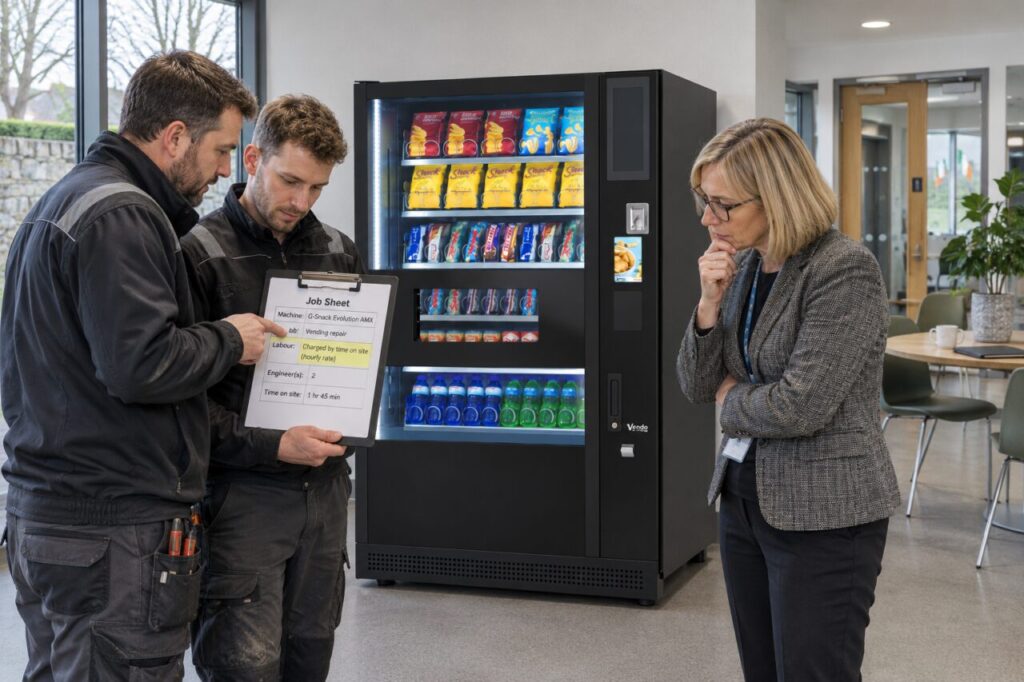
Ask why the job needs two people
The supplier may have planned a particular lifting operation, specialist diagnosis or a supervised task. Ask for a plain description of the intended work and the staffing needed. Do not assume the second person is unnecessary because only one appears to be using tools. Equally, do not assume that every person who attends is separately chargeable. The quotation should answer that commercial question.
Explain any site rule that requires an escort or a second authorised person. Identify whether the venue supplies that person and whether the role involves supervision rather than technical assistance. A receptionist who opens the door is not automatically a member of the repair team. Keep the supplier’s technical staffing decision separate from the site’s access arrangements.
Translate hours into a worked example
Use hypothetical numbers to test the wording. If two chargeable technicians each work for two hours at €60 per technician-hour, labour is €240 before any applicable VAT or other charges. If the quote instead specifies €60 per team-hour for the same period, labour is €120. These are arithmetic examples, not advertised rates or a prediction of what a vending repair should cost.
Ask how travel, diagnosis, waiting for access and testing are treated. Establish whether both technicians’ clocks run throughout the visit or whether their attendance differs. If the quote has a minimum charge, check whether it applies once to the job or separately to each person. Request the answer in the estimate so that the person approving the purchase has the same information.
Put a limit around additional work
Agree who can approve extra time if the diagnosis changes. A useful instruction is to contact the named approver before exceeding the agreed scope or amount, while leaving the equipment safe if work must stop. Make sure that person will be reachable during the visit. Otherwise an engineer may be waiting while reception tries several people who cannot authorise a decision.
Record what the estimate excludes, especially parts and any return visit. Our published service arrangements distinguish maintenance cover from replacement parts; check the exact terms offered for your machine. Comparing annual cover with individual visits is easier once labour and materials are separated consistently.
Check the record before closing the case
The service report should identify the equipment, work performed, attendance and outcome. Compare that record with the agreed charging basis rather than guessing from the time the van was parked outside. Ask for clarification of an unfamiliar line while the details are recent. Keep the explanation with the invoice for the next person who reviews the maintenance budget.
For a site considering vending equipment and ongoing support, an explicit labour basis is a practical buying criterion. It does not tell you which engineer is better, but it lets you compare the same scope and recognise when a lower headline rate produces a higher total.