
Used Vending Equipment: Why the Cabinet and Controller May Have Different Ages
When a used vending machine is described as five years old, it is reasonable to ask what that age refers to. The cabinet, controller and payment equipment may not all have entered service together. A replacement component can be useful, but it does not automatically make the entire machine newer or prove that every function has been tested. Assess the offered equipment as a documented working configuration.
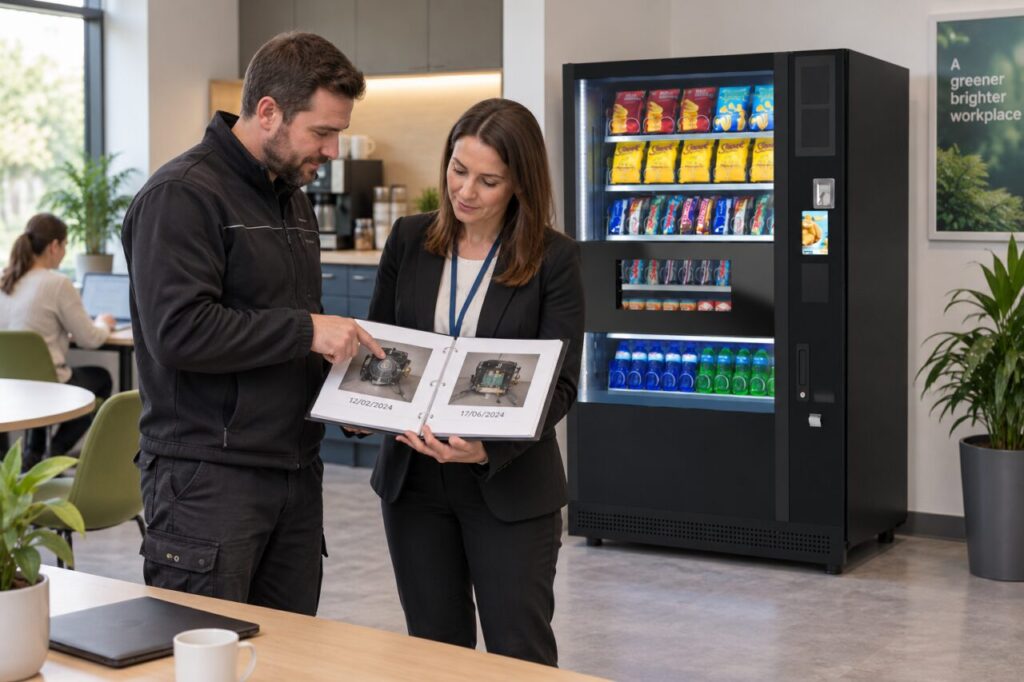
Build a short component history
Start with the cabinet model and identification record. Ask the seller to explain the basis of the stated age and provide the available equipment history. Then identify significant replacements relevant to operation: for example, the controller or payment reader. The purpose is to understand what is installed, not to demand a perfect history that the seller does not possess.
For each known replacement, ask when it happened, who carried out the work and what record remains. Distinguish a newly manufactured part from a used replacement part. Where the answer is unknown, write unknown. A confident description without supporting information should not quietly become a verified date in your purchase file. Photographs of identification labels can help the supplier match records without requiring you to open equipment.
Test the offered configuration
A newer controller does not, by itself, confirm that your intended payment option or product setup will work. Ask for a demonstration using the machine being offered and the functions included in the sale. A demonstration of another unit can explain the operating process, but it cannot establish the condition of this particular combination of components.
Bring a concise list of intended uses: products, payment methods and any reporting features you need. Ask the seller to show the relevant operations and record what was actually demonstrated. If a feature requires later activation, configuration or a separate service agreement, keep that dependency visible. Avoid signing a general statement that everything works when an important function was neither available nor tested during the viewing.
Ask which history matters for support
Share the component information with the proposed service provider before committing to purchase. Ask whether they can support the installed configuration and what information they need to answer. A familiar cabinet name may be insufficient if the internal setup has changed. Equally, a documented replacement should not be treated as a defect merely because it differs from the original build.
Clarify the offered warranty in writing, including which equipment it covers and the arrangements for labour, attendance and exclusions. A seller’s statement about a recently replaced part is not a substitute for the warranty supplied with your purchase. If support depends on bringing the equipment into a different configuration, obtain the proposed scope and cost before comparing it with another machine.
Compare evidence rather than a single age
Create a small comparison sheet for shortlisted machines. Include the stated cabinet age, documented significant replacements, demonstrated functions, unresolved questions and support proposal. Two offers with the same headline age can then be compared more sensibly. Do not invent a remaining life estimate from the dates alone; condition, history and proposed use also need competent assessment.
Use the vending equipment buying information to frame the discussion around your actual requirements. A lower purchase price may still be worthwhile, but only if the known limitations and outstanding work fit your plan. The decision should make clear what you are buying today, which records support it and what must happen before customers use it. Keep that agreed configuration with the handover file for future service enquiries.
Ask about equipment suitable for your site and the documentation needed to compare options.
Related guidance: Refurbished Vending Machine for Sale: Ask What Work Was Actually Completed.