
Used Vending Equipment: Check the Documentation Before Collection
When buying used vending equipment, paperwork can be as important to the handover as the cabinet itself. A machine may look familiar while its configuration, service history or instructions remain unclear. Ask about the available documentation before collection so missing information becomes a question to resolve rather than a surprise at your site.
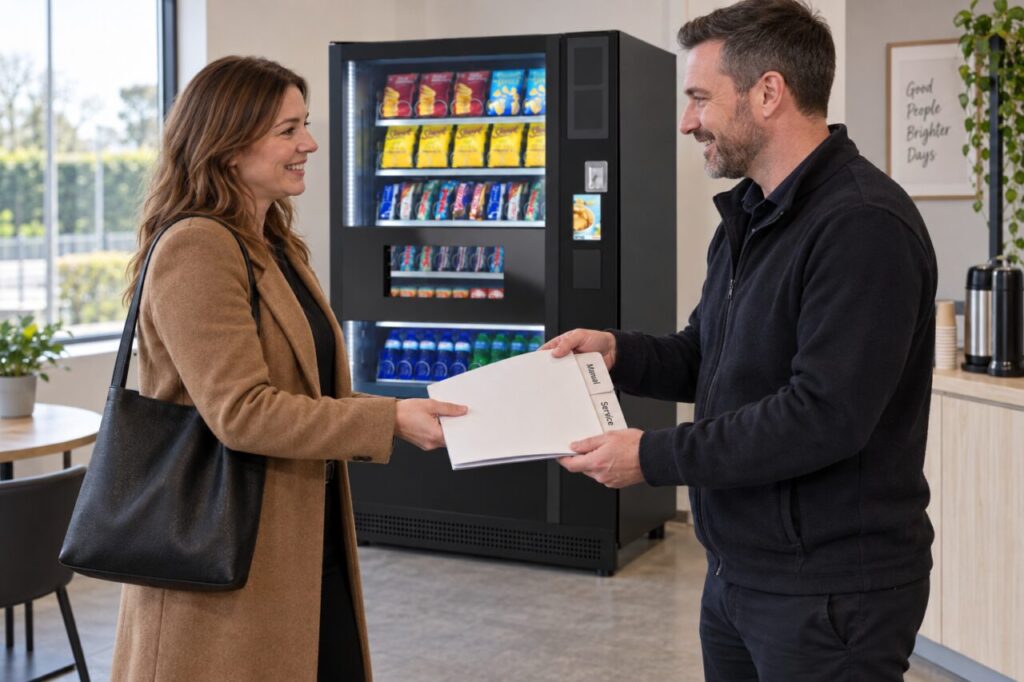
This does not mean every used machine will have a complete historical file. It means you should understand what is available, what has been confirmed and what is unknown. Keep those distinctions visible when deciding whether the purchase and the proposed support arrangement suit your needs.
Match documents to the equipment
Start with the machine identification supplied by the seller. Ask which manual or operating instructions apply to that model and configuration. A document for a similar-looking cabinet may not cover the controls, payment equipment or other components fitted to the unit you are considering.
Where a manual is provided digitally, check that you can open it and that its identity is clear. Keep the source and version with your equipment record. If the seller points to a manufacturer’s resource, ask for the relevant document rather than downloading an unrelated manual because the product name seems close.
Understand what the records show
Review service entries for dates, the equipment identified and the work described. A record of one visit does not establish an uninterrupted maintenance history. Equally, missing paperwork does not prove a particular fault. Treat each record as evidence of the activity it actually documents and ask about gaps without inventing explanations.
If the equipment is described as refurbished, request a written account of what was checked or replaced. Distinguish completed work from recommended future work. Keep photographs or invoices supplied as evidence with the corresponding description, while avoiding unnecessary copies of private details belonging to previous customers.
Include separate fitted systems
Payment equipment, software services or other accessories may have their own instructions and arrangements. Ask what documentation is included and which provider handles support. Do not assume that ownership of the cabinet automatically transfers an account, subscription, login or service entitlement associated with a separate system.
Record any transfer process as an open action until the responsible provider confirms it. Use authorised channels for account information and avoid accepting shared passwords as a substitute for a proper handover. The buyer needs clarity about access and support, not another person’s private account credentials.
Close the collection checklist
Before arranging collection, list the documents expected, their format and any items still outstanding. Decide with the seller how unresolved questions will be handled. Keep this documentation checklist alongside the equipment and accessory inventory, so the receiving person knows that the handover includes more than physical boxes.
Our guide to a current video walkthrough of used equipment complements this paper review. The video shows a current demonstration; the records explain the information available about the machine. Neither should be presented as a complete technical assessment of every component or future performance.
When exploring vending equipment options, explain whether you already have a particular used unit in mind. Ask what information a supplier or service provider needs before discussing support. A clear file makes that conversation more productive and helps the next person responsible for the machine understand the starting position.
Ask our team about the information needed to assess your equipment requirement.