
Vending Across Several Irish Sites: What Should Be Standardised?
When a business introduces vending across several locations, using the same machine and product list everywhere can seem like the simplest approach. Yet a small office, a busy warehouse and a visitor reception may need quite different arrangements.
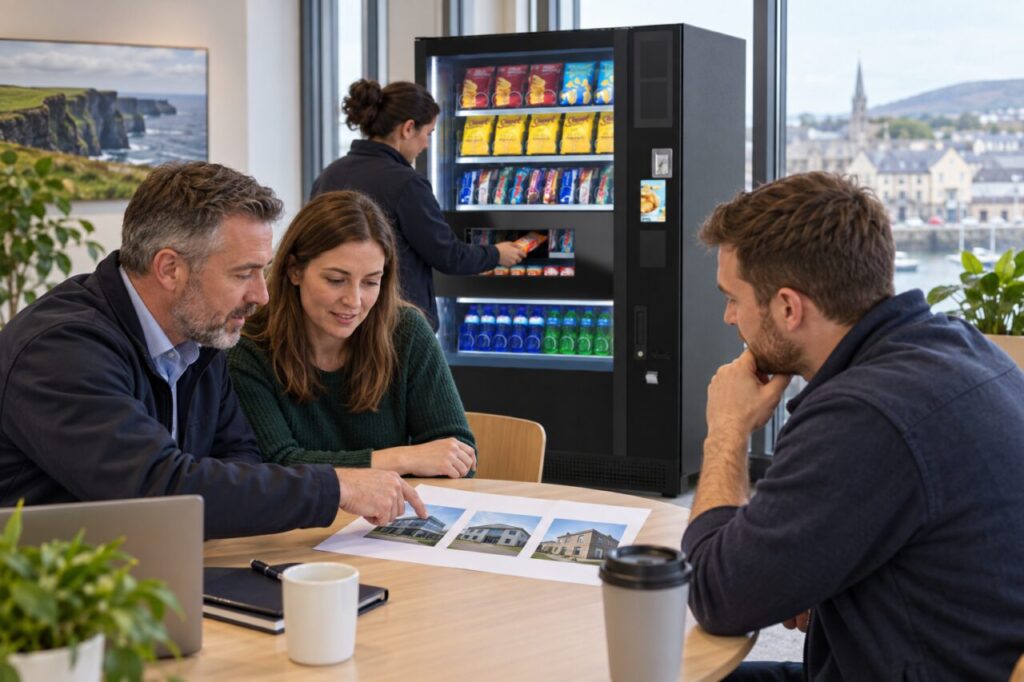
A better starting point is to standardise the customer experience and the management process, then allow justified differences at each site. This gives the business a consistent service without assuming that every building or workforce behaves in the same way.
Define the standards everyone should share
Decide what a user should be able to expect at any of your locations. That could include clear prices, an obvious support contact, readable selection information and a consistent way to report an issue.
For managers, agree how service requests are logged and how unresolved issues are escalated. Specify what information should accompany a report, such as the site name, machine identifier and description of the problem.
These standards do not require identical equipment. They make the service easier to understand and help avoid a situation where each location invents its own process.
Give every location a short site profile
Prepare a separate profile for each building. Include opening hours, expected users, delivery access, available space and local contacts. Record any restrictions that could affect installation or replenishment.
Ask local managers what works differently at their site. A late shift may rely on vending after other food services close. A visitor-facing machine may need clearer instructions than one used daily by the same employees.
Compare those profiles before deciding whether all locations should launch together. A common launch date is only helpful if each site is actually ready. Unresolved access or utility requirements should remain visible in the rollout plan.
Standardise product categories, then adapt the range
A shared framework might require a balance of drinks and snacks, with room for agreed staff preferences. The exact products and quantities can then reflect local demand, machine compatibility and availability.
Avoid comparing sites solely by whether they stock the same brands. A useful comparison is whether each location offers an appropriate choice and keeps popular products available. Two sites can meet that standard with different layouts.
Vending-Machines.ie offers coordinated managed vending across Ireland and Northern Ireland. Share the full site list so that equipment and service arrangements can be assessed together, rather than assuming one site’s agreement automatically covers the rest.
Agree which decisions stay local
Clarify who can request a product change, approve a new location or agree a change in service scope. A local contact may report a problem while a central manager approves spending or contractual changes.
Record those roles in one place. This prevents delays caused by requests being passed between people who each assume someone else has authority.
Give local teams a route to explain exceptions. A requirement that seems unnecessary centrally may solve a real problem for a night shift or a site with limited food access. Ask for the reason and agree how the exception will be reviewed.
Compare outcomes fairly after launch
Use the same reporting definitions across sites, but interpret the results in context. A location open five days a week should not be judged against a round-the-clock operation on total sales alone.
Review availability, user feedback and service issues alongside purchases. Identify whether a weak result reflects product choice, access, opening hours or genuinely low demand before proposing a change.
Start with a shared review template and a named contact for each site. When discussing vending solutions for an Irish multi-site business, bring both the common standards and the individual profiles. This helps build a consistent service that still responds to the people using it.